
After eluting the Tc-99m generator for the afternoon clinic, the technologist runs the routine dose-calibrator check and finds the molybdenum-99 reading above the allowed limit for that eluate. The radiopharmacist pulls the vial and asks the staff to name the product-quality attribute that failed and what it means for the patient. Which statement correctly identifies the failed attribute and its clinical effect?
Select an answer to reveal the explanation.
Short Explanation
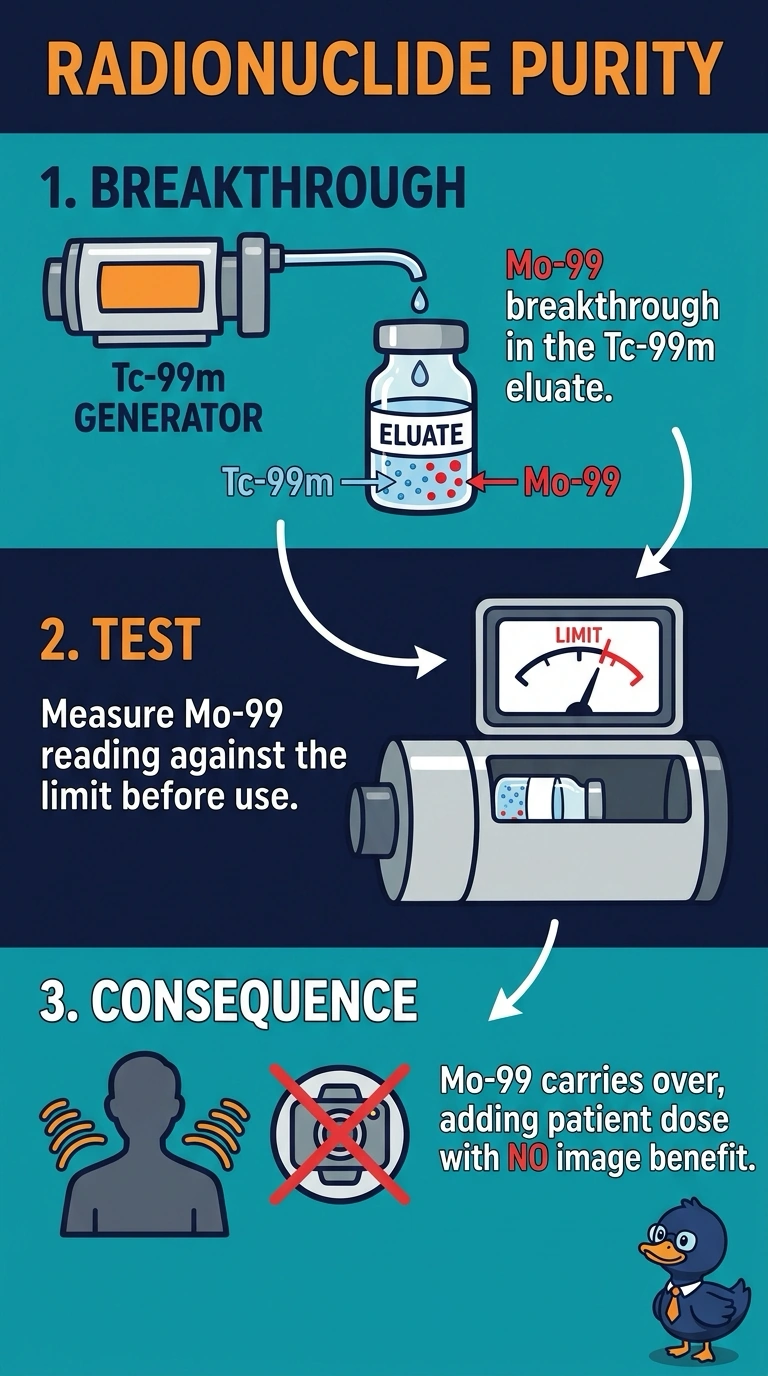
The molybdenum assay answers one question: is the radioactivity actually the element you expect? When molybdenum-99 slips through, a radionuclide impurity is riding along, so the patient's dose goes up while the image gains nothing. It's like checking the guest list at the door instead of inspecting the furniture.
Full Explanation
Radionuclide purity is the fraction of total activity present as the intended nuclide, and for a generator eluate the main threat is molybdenum-99 washing through the column with the technetium. Molybdenum-99 has a far longer half-life and emits higher-energy radiation than technetium-99m, so even small carryover adds unnecessary dose while contributing nothing usable to the image; that is why every eluate is assayed and an out-of-limit result means the vial is quarantined and discarded. The radiochemical purity approach fails because it measures whether the technetium sits in the intended chemical form, established by chromatography on a labeled preparation rather than by an activity assay on the eluate. The chemical purity approach fails because it concerns non-radioactive contaminants such as tin or alumina that can disrupt labeling but carry no activity. The physical form approach fails because it describes whether the product is a clear solution, a colloid, or a suspension, which changes where it goes rather than which atom is emitting. Exam caveat: other breakthrough tests, including aluminum, also belong to generator quality control, so keep straight which impurity each one reports. Practical check: run the assay in the correct dose-calibrator setting with the specified shield, and confirm the reading is within the allowed limit before drawing any activity.