
A 72-year-old is booked for a myocardial perfusion study using a pharmacologic stress agent. Department protocol requires baseline vital signs before any stress medication, continuous ECG with blood pressure checks during the stress phase, and escort-level assistance afterward because the patient has dizzied when standing before. Two cameras are running with staff split between them. Which monitoring plan covers every requirement for this stress study?
Select an answer to reveal the explanation.
Short Explanation
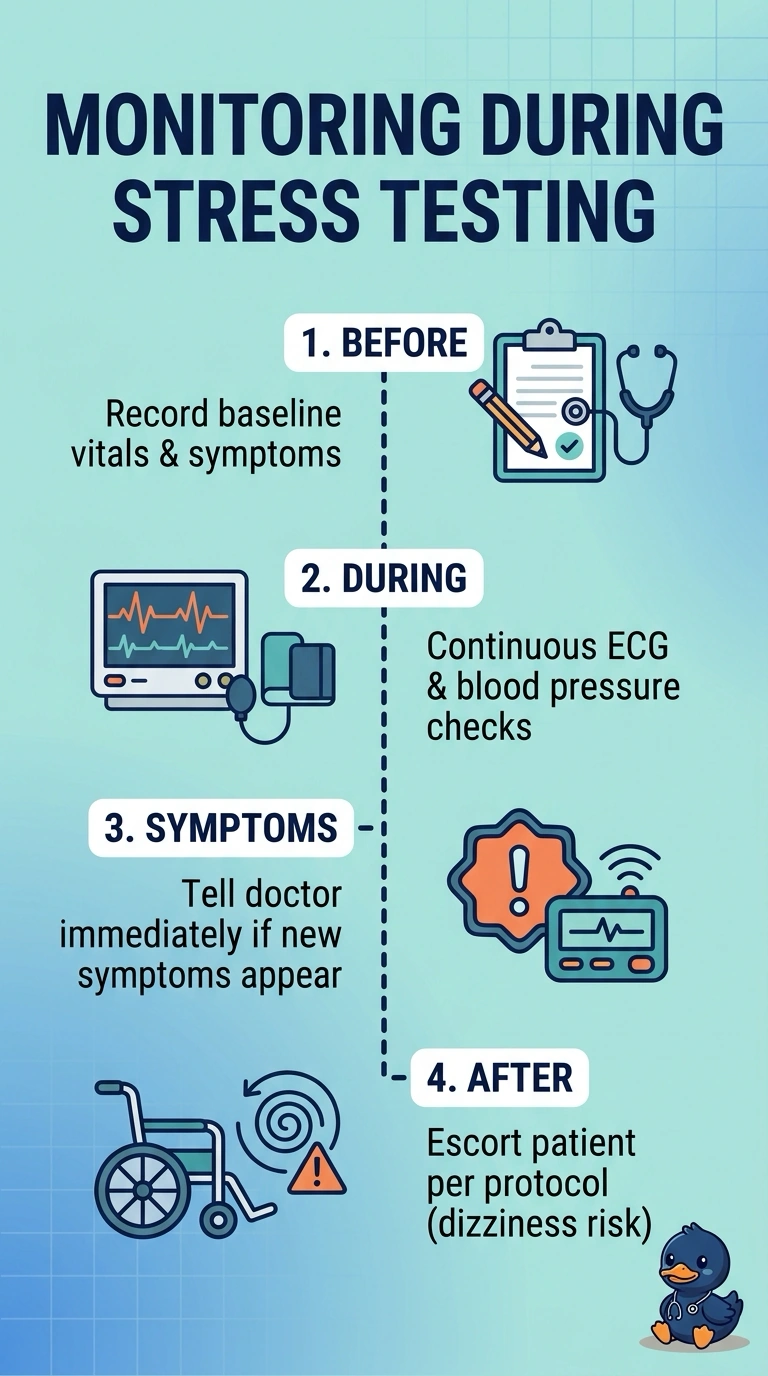
Baseline vitals give you a reference, the stress phase is exactly when a reaction would surface, and the fall risk doesn't vanish when the camera stops. Miss one link and your monitoring chain has a gap you can't see later. It's the before-during-after rule: each stage needs its own check.
Full Explanation
Each element of the plan covers a different risk window, so all three are required. Baseline vital signs and a symptom review establish what is normal for that patient before any stress medication goes in, which is what lets you judge later readings and decide whether a pressure drop or new chest discomfort signals a reaction. Continuous ECG with blood pressure checks during the stress phase catches events that appear only while the agent is acting, because vasodilator stress can produce transient rhythm changes and pressure dips that resolve quickly if noticed. Escort assistance afterward addresses residual dizziness from standing quickly after lying flat or from lingering vasodilation, and a hallway fall would spoil an otherwise successful study. Omitting the baseline fails because later numbers lose their reference point. Checking pressure only at the end fails because short-lived reactions during the stress phase can slip by unnoticed. Letting the patient walk back unassisted fails because dizziness may occur after a position change. Exam caveat: intervals and the observer's role vary by protocol and by the agent used, so follow the written procedure. Practical check: keep the protocol at the bedside and confirm each required item aloud before the medication is pushed.