
After outpatient I-131 therapy, a patient is cleared to go home to a spouse and a grandchild who visits daily. The record holds a written directive for the therapy, an estimated dose of 2 mSv to the household member most likely to receive the highest dose, written safety instructions, and a teach-back in which the patient repeated the key rules correctly. Which documented conditions support releasing this patient under the NRC release criteria?
Select an answer to reveal the explanation.
Short Explanation
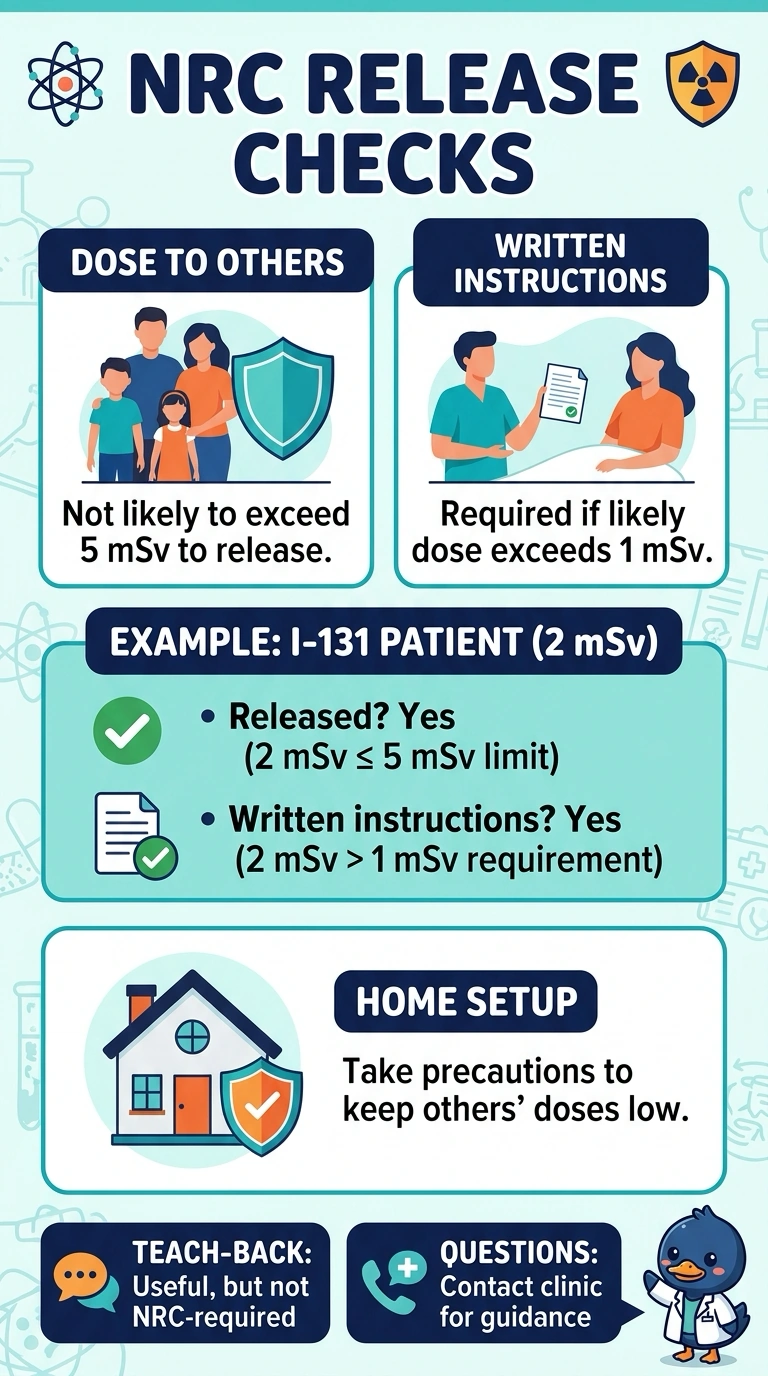
You can release the patient when no other individual is likely to receive more than 5 mSv. Because the highest estimated household dose is 2 mSv—above 1 mSv—you also need written safety instructions, and the successful teach-back supports safe implementation.
Full Explanation
The NRC release criterion focuses on the dose to any other individual: release is supported when no individual is likely to receive more than 5 mSv. The 2 mSv estimate for the household member most likely to receive the highest dose is below that limit, and the record must support the finding that no other individual is likely to exceed 5 mSv. Written safety instructions are required when an individual is likely to receive more than 1 mSv; the recorded instructions and successful teach-back support safe implementation. Requiring every household member’s dose to be below 1 mSv substitutes a more restrictive threshold, which may serve as a conservative planning goal but is not the NRC release limit. Using a household average below 5 mSv does not establish that no individual is likely to exceed 5 mSv, because the release test applies to each person, not the group average. Applying the 5 mSv limit correctly for release but making written instructions necessary only above 5 mSv sets the instruction trigger too high; it applies above 1 mSv. Exam caveat: distinguish the 1 mSv written-instruction threshold from the 5 mSv individual-dose release threshold. Practical check: document the basis for the highest likely individual dose and verify that instructions address the patient’s actual household contacts and living arrangements.