
An adult is discharged the same day after outpatient I-131 therapy for thyroid cancer and meets the regulatory release criteria for going home. At home a pregnant spouse shares the bed, a toddler is in the house, and a second bathroom is down the hall. Which I-131 release instructions best protect the family at home?
Select an answer to reveal the explanation.
Short Explanation
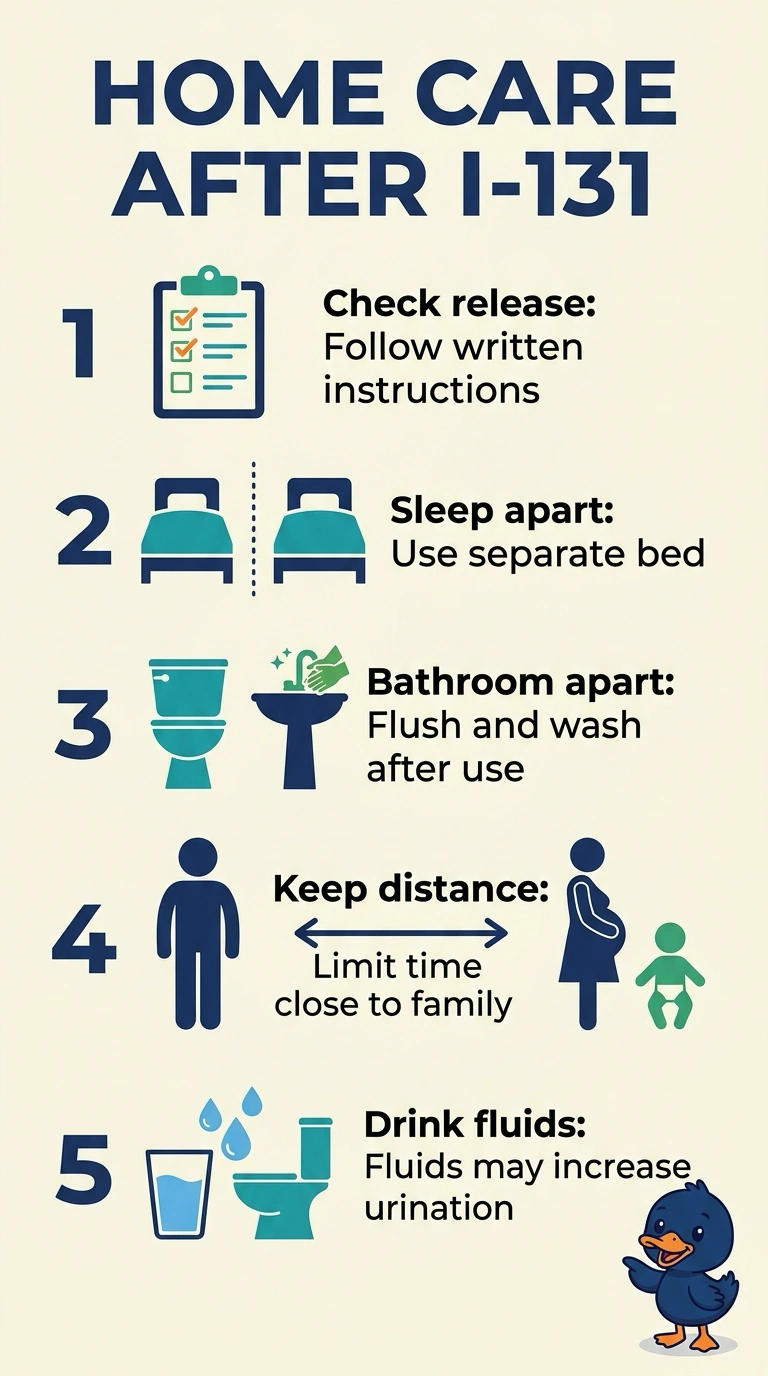
At home, you can reduce exposure by separating sleeping and bathroom routines and limiting close contact with the toddler and pregnant spouse. Fluids support clearance, and your written release instructions should be individualized to your household.
Full Explanation
Most unbound I-131 leaves the body in urine, so home precautions address both time near other people and contact with excreted material. Sleeping in a separate bed limits the overnight dose a spouse would otherwise receive; using the available second bathroom keeps activity out of a shared toilet. Limiting close contact protects the toddler and pregnant spouse, and extra fluids may increase urination and help clear I-131. The plan with separate sleeping, a separate bathroom, contact limits, and fluids covers these key routes. Handwashing after toileting is useful hygiene, but without a separate bathroom it does not address activity deposited in a shared toilet. Brief family visits do not replace separate sleeping, which limits prolonged overnight exposure. Separating personal laundry is not a substitute for limiting close contact with the toddler and pregnant spouse. An exam caveat is that exact precautions and their duration depend on treatment and household circumstances, so follow the patient's written, individualized release instructions. A practical check is to confirm those instructions address sleeping, bathroom use, contact limits, and fluids.