
A patient is lying still for a gated blood pool study, but the acquisition display shows most heartbeats being rejected, and the ECG trace on the monitor looks small and noisy. The detector is centered over the heart and the patient has removed all jewelry from the chest. Which action will most likely produce a properly synchronized gated acquisition?
Select an answer to reveal the explanation.
Short Explanation
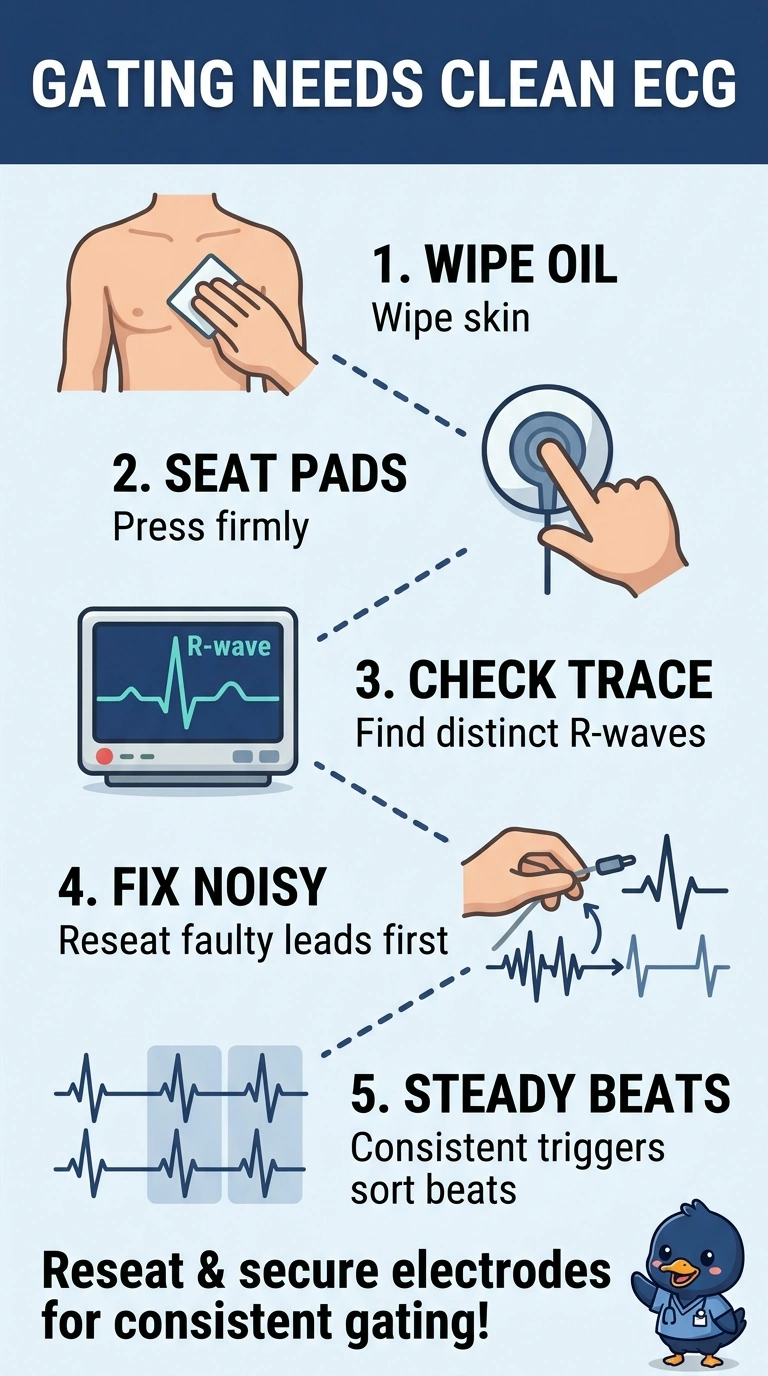
You need a clear R-wave signal to mark each heartbeat, and the small, noisy trace suggests the electrodes are not detecting it reliably. Reseat and secure them so the acquisition can stay synchronized with each beat.
Full Explanation
Gated acquisition divides each heartbeat into segments of the cardiac cycle, so it needs a consistent ECG R-wave marker to assign beats to those segments. Reseating and securing the ECG electrodes can improve contact and make the trigger more reliable, reducing rejection caused by poor signal quality. Increasing acquisition time can collect more counts, but it addresses count statistics rather than synchronization and will not correct an unreliable trigger. Moving the patient closer to the detector may improve sensitivity or geometric resolution, but the detector is already centered, and this change does not fix the ECG signal. Repeating the tracer injection assumes that low blood-pool activity is disrupting beat sorting; the ECG trigger is electrical and does not depend on tracer quantity. A caveat is that some beat rejection may occur with frequent ectopy, so the rhythm should be assessed and documented and the plan adjusted as appropriate. Before beginning, check that the electrodes are firmly attached to clean skin and that distinct R waves appear on the ECG trace.