
A thyroid-cancer patient returns two days after a therapeutic dose of iodine-131 for a whole-body scan. The camera offers low-, medium-, and high-energy parallel-hole collimators plus a pinhole head, and the energy window is still on the preset left by the previous technetium study. The schedule allows full imaging time, so contrast matters more than raw count rate. Which collimator and energy window should be set for this acquisition?
Select an answer to reveal the explanation.
Short Explanation
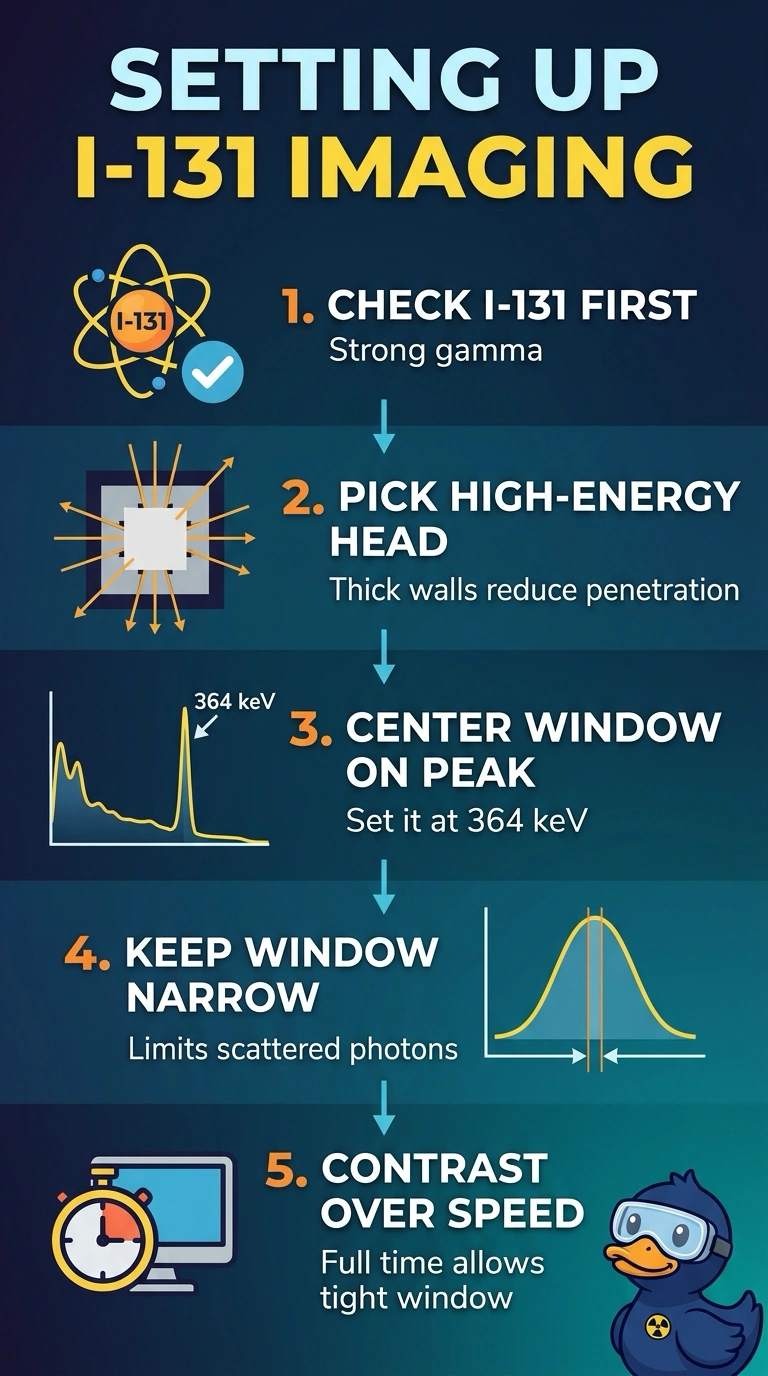
You want the collimator matched to iodine-131’s principal 364 keV gamma so septal penetration does not blur your image. A high-energy parallel-hole collimator with a narrow window centered on the photopeak supports contrast, which matters more than count rate here. Before you start, make sure the window is no longer set for the previous technetium study.
Full Explanation
Collimator choice follows photon energy because septa must be thick enough to reduce photons passing through the lead and degrading resolution. Iodine-131 emits its principal gamma at 364 keV, so a high-energy parallel-hole collimator with a narrow window centered on that photopeak is appropriate for whole-body planar imaging. Keeping the window narrow helps limit scatter and preserve contrast; since the schedule allows full imaging time, count rate is less important. A medium-energy parallel-hole collimator is less suitable because its septa are more susceptible to penetration at this energy, which can lower resolution and increase background. A high-energy collimator with a wide window may capture more counts, but it also admits more scattered counts and can reduce contrast, a trade-off to consider when count rate is limiting. A pinhole collimator provides magnification over a small field of view, making it unsuitable for covering the whole body in one planar pass. Exam caveat: a window preset left from a previous technetium study is a classic error source, so verify the settings rather than trusting the console. Practical check: confirm the collimator label, photopeak center, and window width, then acquire a quick static image to judge sharpness.