
A research coordinator is enrolling hospitalized adults into a nuclear medicine study that adds an extra imaging session and a research-only radiopharmaceutical. One candidate has a DNR documented and another has an advance directive limiting certain interventions. Which consent requirement must be satisfied before either patient is enrolled?
Select an answer to reveal the explanation.
Short Explanation
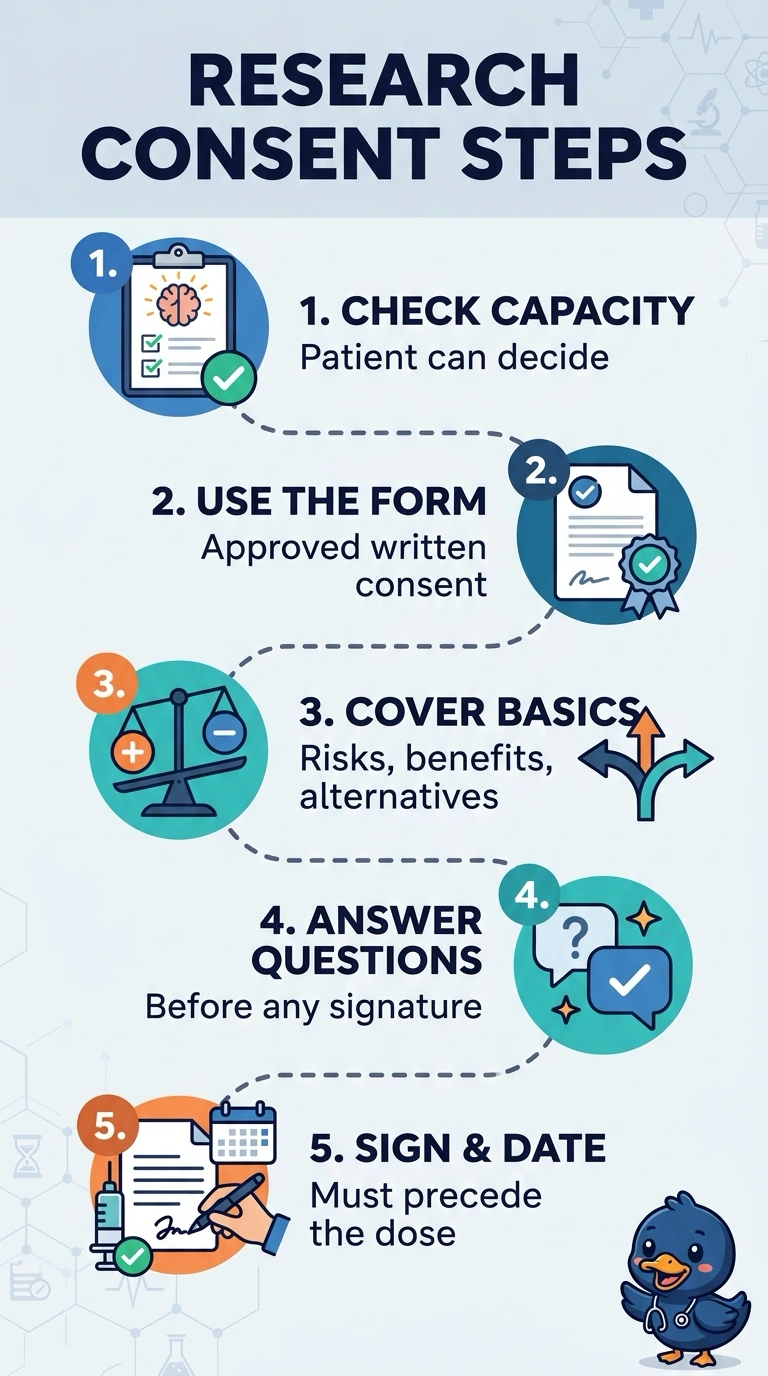
You need the patient’s own written agreement after they receive the full study disclosure, including the right to withdraw. A DNR or advance directive does not by itself prevent a capable patient from consenting. Informed consent must be voluntary, specific, and complete.
Full Explanation
Before enrollment, the patient must provide written informed consent covering the study’s risks, potential benefits, alternatives, and right to withdraw. The extra imaging session and research-only radiopharmaceutical make this research participation, not simply routine clinical imaging. A DNR order or advance directive does not automatically remove a capable patient’s ability to consent; respect those documents and consider relevant limitations, but do not treat them as a substitute for the patient’s informed decision. Written consent describing risks, benefits, and alternatives but not the right to withdraw omits a required disclosure. Written consent covering risks, benefits, and withdrawal but not alternatives also leaves out required information. Documenting verbal agreement after discussing all four elements does not meet the written-consent requirement in this scenario. Exam caveat: regulations or an approved ethics-board waiver may allow exceptions to signed documentation in particular circumstances, but do not assume an exception applies. Practical check: confirm that the current approved consent form covers every required element, is signed by the patient before research procedures, and is consistent with the patient’s capacity and documented care preferences.