
A gated rest SPECT reports that most beats were rejected and gives an implausible ejection fraction. The patient has frequent premature contractions, caffeine abstention was followed, and the cardiologist needs a dependable ejection fraction. Which acquisition change best improves this gated study?
Select an answer to reveal the explanation.
Short Explanation
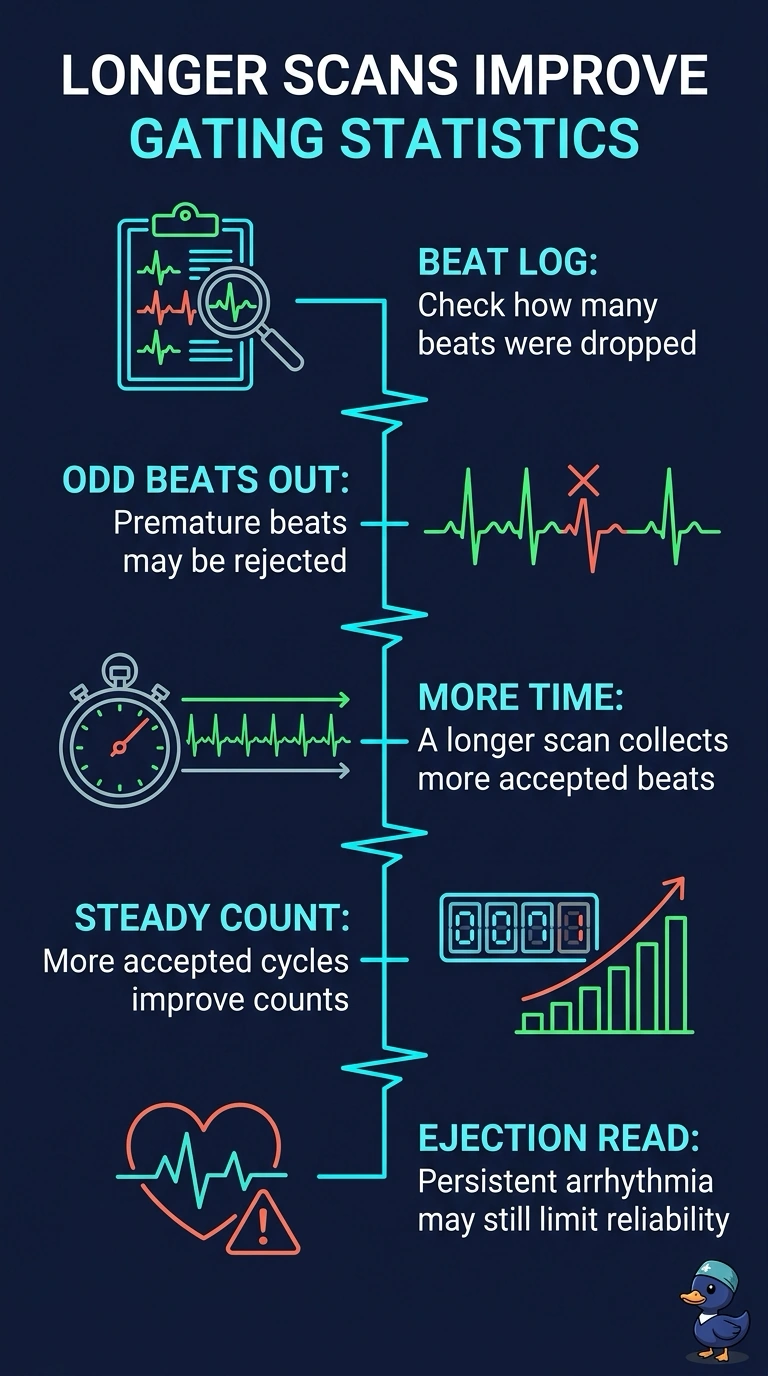
Your gating system sorts beats like a bouncer, rejecting cycles that fall outside the accepted range. If premature beats leave too few usable cycles, a longer acquisition can collect more normal beats and improve the counts, though it may not fix persistent arrhythmia; widening the window can let irregular beats distort the measurements.
Full Explanation
Electrocardiographic gating divides cardiac cycles into frames keyed to the R wave. The system accepts cycles within a set tolerance and rejects cycles outside it; frequent ectopic beats can therefore reduce the number of accepted cycles and the counts available for gated analysis. Extending the acquisition can collect more acceptable cycles and improve count statistics, but it does not guarantee a dependable ejection fraction if the arrhythmia persists. Widening the acceptance window may admit irregular cycles and distort wall-motion and ejection measurements. Turning gating off can provide perfusion images, but it does not provide the gated motion and ejection data requested. Using fewer frames per cycle increases counts per frame but reduces temporal resolution and does not recover rejected beats. Rejection windows and count targets vary by workstation, so review the system settings, beat-rejection rate, and count totals before repeating the acquisition.