
A fresh kit of a particulate radiopharmaceutical has just been prepared for a patient booked in the next room. The prep log shows only the time since reconstitution and a note that the vial looks clear. Which release checks should be documented?
Select an answer to reveal the explanation.
Short Explanation
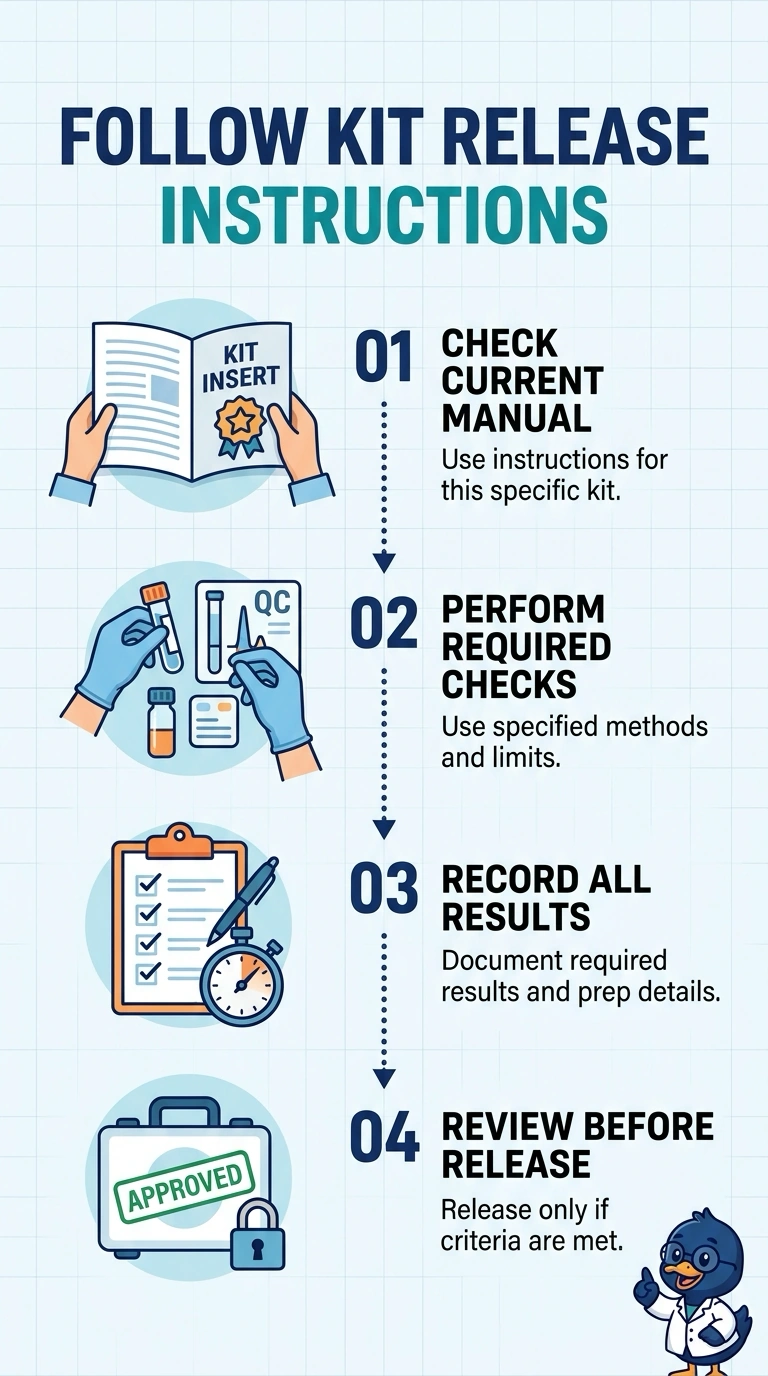
A clear vial and a time entry are like checking two boxes on a longer checklist, so they don’t confirm the kit is ready for release. You’ll want to follow the kit’s current manufacturer instructions and document every required quality-control check, including any specified radiochemical-purity or appearance checks.
Full Explanation
The correct approach is to consult the instructions for the specific kit and document every quality-control check they require, including any specified radiochemical-purity test or appearance assessment. The time since reconstitution and a note that the vial looks clear do not establish that all required checks were performed or recorded. A validated local protocol and standard purity testing can be useful, but they do not ensure that kit-specific instructions have been followed; those may call for additional checks or particular acceptance criteria. Recording pass/fail status is also useful, yet it is incomplete when the instructions require a quantitative purity result, since the value is needed to assess the result against the stated limit. Likewise, a clear-vial note does not replace a separately required visual inspection at the specified stage: the inspection must be performed and documented as required, not inferred from an earlier observation. Exam caveat: do not assume that every kit requires the same tests or that a particular purity assay is always mandatory; requirements vary by product and current instructions. Practical check: verify the kit name, lot, and current package insert, then compare its release criteria with the completed QC record before dispensing.