
After outpatient I-131 therapy, an adult returns home to a house where a young grandchild stays overnight, and department policy gives every therapy patient written home precautions at discharge. Which release basis and instruction content best fits this discharge?
Select an answer to reveal the explanation.
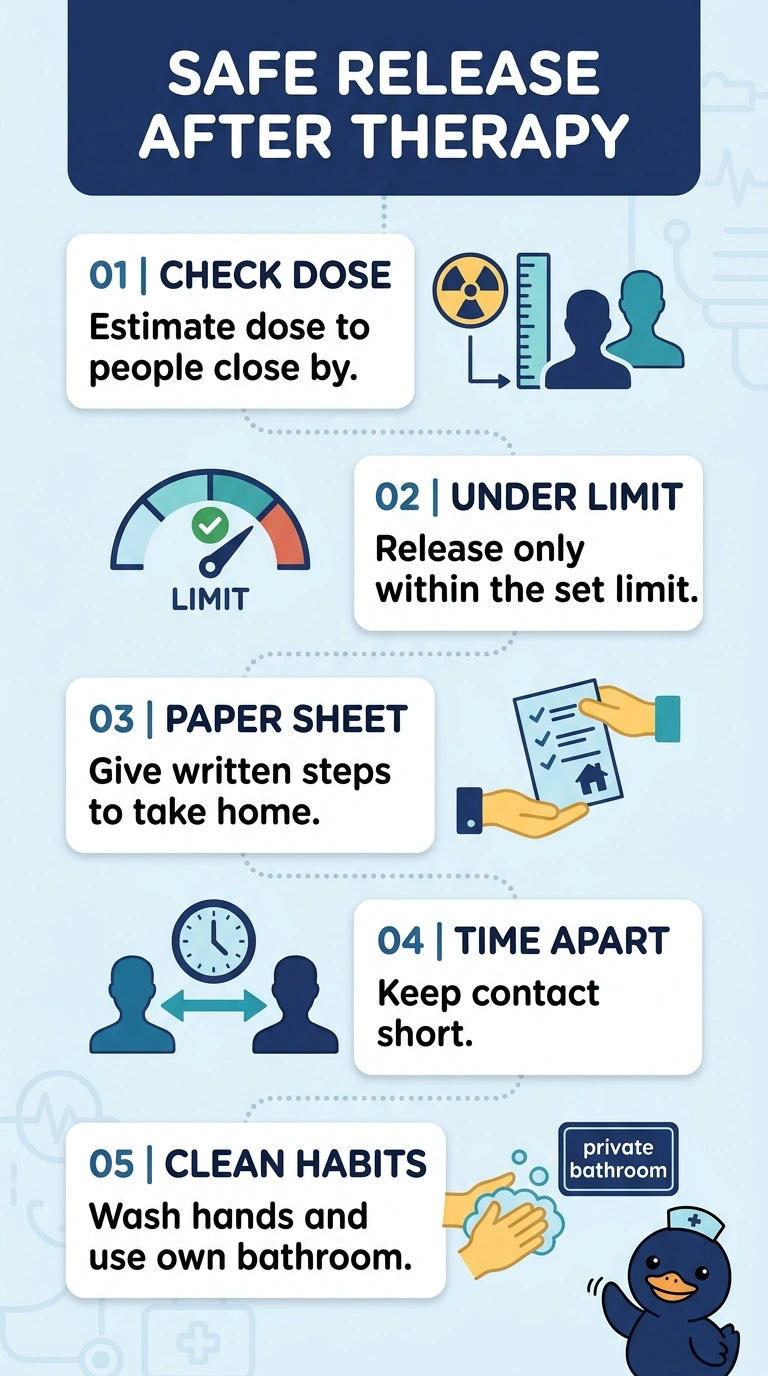
Short Explanation
You base release on the documented dose to others, not on how clear a skin survey looks, and you give the patient written instructions to take home. A contamination survey alone cannot assess the hours of contact ahead. Pair a documented dose assessment with written contact, distance and hygiene steps to help protect the household.
Full Explanation
Release is appropriate when the documented dose to other people is within the limit and the patient receives written home precautions covering contact, distance and hygiene. Written instructions matter because department policy requires them at discharge, and a young grandchild staying overnight makes clear, usable guidance about reducing exposure especially important. A plan that includes the dose assessment and written contact and distance steps but omits hygiene guidance leaves the required instruction set incomplete. A negative removable-contamination survey can help assess contamination, but it does not establish that the projected dose to others meets the release limit; it cannot replace the dose-based release criterion. Adult precautions without an overnight plan for the grandchild fail to address the stated household exposure, even when the dose is within the limit. Exam caveat: a contamination survey, dose estimate and counseling answer different questions and are not interchangeable. Practical check: before discharge, verify the documented dose criterion and confirm the patient receives written, understandable contact, distance and hygiene instructions that account for who will be in the home.