
A patient who is profoundly deaf and speaks limited English arrives for a bone scan with her adult son, who has been interpreting casually throughout the visit. The upcoming injection requires explaining allergies, radiation precautions, and how to respond to discomfort. Which interpreter arrangement should the technologist use for this injection discussion?
Select an answer to reveal the explanation.
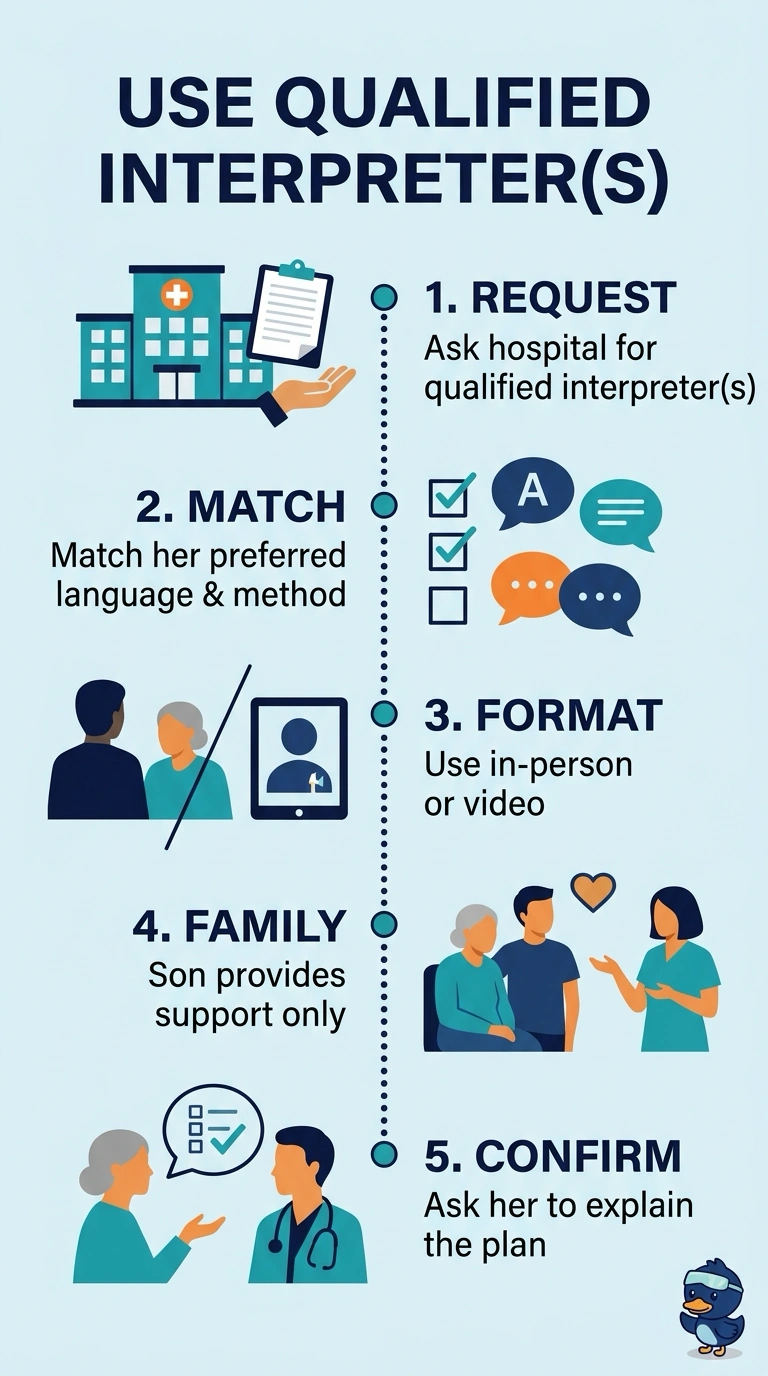
Short Explanation
You can think of family interpreting like letting a teammate grade your own paper: important details may not get passed along accurately. Qualified interpreter(s) help you discuss allergies, radiation precautions, and discomfort clearly, while her son stays nearby for support. You can use an in-person or video interpreter who matches her preferred language and communication method.
Full Explanation
The safest arrangement is to use qualified interpreter(s) fluent in the patient’s preferred language and communication method for the entire injection discussion, in person or by video. This supports clear communication about allergies, radiation precautions, and how to respond to discomfort; her son can provide support without interpreting. When her son interprets questions she directs to him, communication is no longer consistently handled by a qualified interpreter, creating a risk of omissions or misunderstandings during a safety-sensitive discussion. Having an interpreter explain allergies and radiation precautions but relying on translated written instructions for discomfort does not ensure that she receives an interactive explanation of what to do through her preferred communication method. Using a video interpreter and her son for support but waiting until after the injection to discuss discomfort leaves her without that information beforehand. Exam caveat: written material may reinforce an interpreted explanation, but it should not replace accessible, interactive communication about key information before a procedure. Practical check: before injecting, ask the patient directly through the interpreter to explain how she will signal discomfort and what she should do if it occurs.