
After a therapeutic administration, a wipe survey shows removable contamination above the limit specified in the facility’s written procedure on the exam couch and floor of a room with two more patients scheduled that morning. The procedure requires restricting and posting the area, documenting the finding, and verifying decontamination before reuse. Which actions satisfy these requirements?
Select an answer to reveal the explanation.
Short Explanation
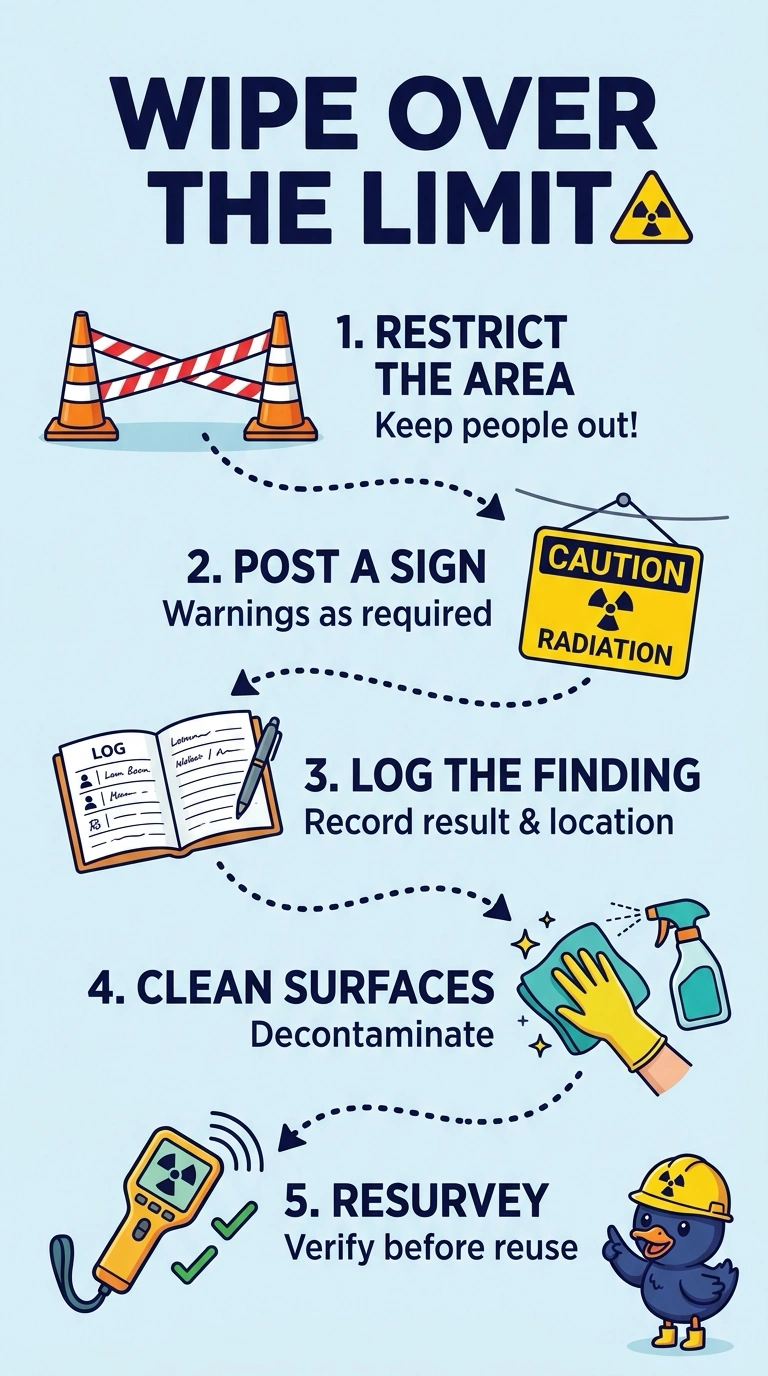
You’ll want to restrict and post the area, record the result and location, then clean and resurvey before anyone uses the room again. That way, you know the required checks are complete before the room returns to service.
Full Explanation
Restricting and posting the area, recording the result and location, and resurveying after cleaning satisfy the written procedure: access is controlled while contamination is present, the finding is documented, and a follow-up wipe verifies decontamination before reuse. Logging the finding, cleaning both surfaces, and resurveying before scheduled use includes documentation and verification, but without restricting and posting, it does not control access while the contamination is present. Restricting and posting, logging, and cleaning followed by visual inspection does not verify that removable contamination is below the specified limit; appearance cannot replace a wipe survey. Restricting and posting, cleaning, and resurveying below the limit verifies the surfaces, but omits documentation of the finding and its location, which the procedure requires. Exam caveat: use the facility’s written limit and release process rather than assuming a generic threshold or treating a visually clean surface as radiologically acceptable. Practical check: before reuse, confirm the record identifies the result and location and that post-cleaning wipe results meet the facility’s release criterion.