
An adult scheduled for a brain FDG PET/CT to evaluate memory decline arrives having followed the fasting instructions, and a fingerstick glucose still has to be checked before the dose is drawn. The referring clinic wants the exam finished before noon, and the patient is restless and asks to walk the corridors. Which preparation plan should the technologist follow for this CNS study?
Select an answer to reveal the explanation.
Short Explanation
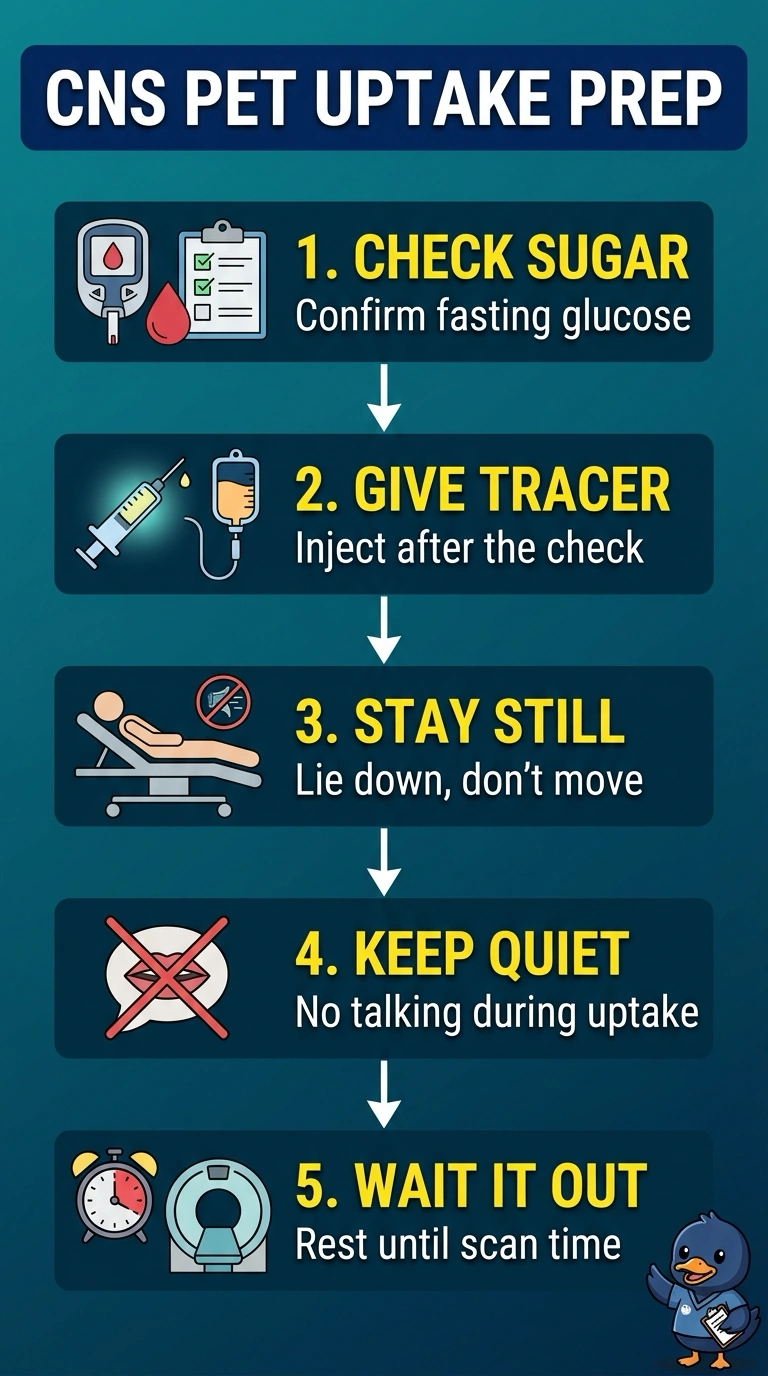
Your tracer maps the brain's resting fuel use, so anything that wakes it up distorts the picture. It's like a snapshot that catches the subject mid-jump. Confirm the glucose first and you protect a calm uptake window.
Full Explanation
Brain FDG imaging depends on tracer being phosphorylated and trapped in proportion to glucose use, so the uptake window reflects the brain's metabolic activity during that period. Verifying the fasting glucose before injection documents the patient's glucose level and allows protocol-specific action if it is outside the accepted range, while keeping the patient still, quiet, and minimally conversing helps prevent activity-related uptake in cortex, eye, and neck muscles from masking the pattern you are trying to see. Encouraging magazine reading or conversation treats anxiety by adding neural and muscular activity that can degrade the study, and a corridor walk adds motion and muscle use during a session timed to the minute. Checking glucose only after the scan leaves no chance to address an out-of-range value before the tracer is committed. Exams often test whether preparation happens before injection rather than after it. As a practical check, confirm the glucose result and the plan for a calm, motionless uptake room before you inject, then keep the patient in that state until you position for the scan.