
A community nuclear medicine department runs thyroid uptake measurements every morning with an uptake probe, a neck phantom, and a well counter. The manufacturer's service engineer replaced the probe's photomultiplier tube yesterday. Which quality control check should be completed first to verify the probe's energy response before any patient is counted?
Select an answer to reveal the explanation.
Short Explanation
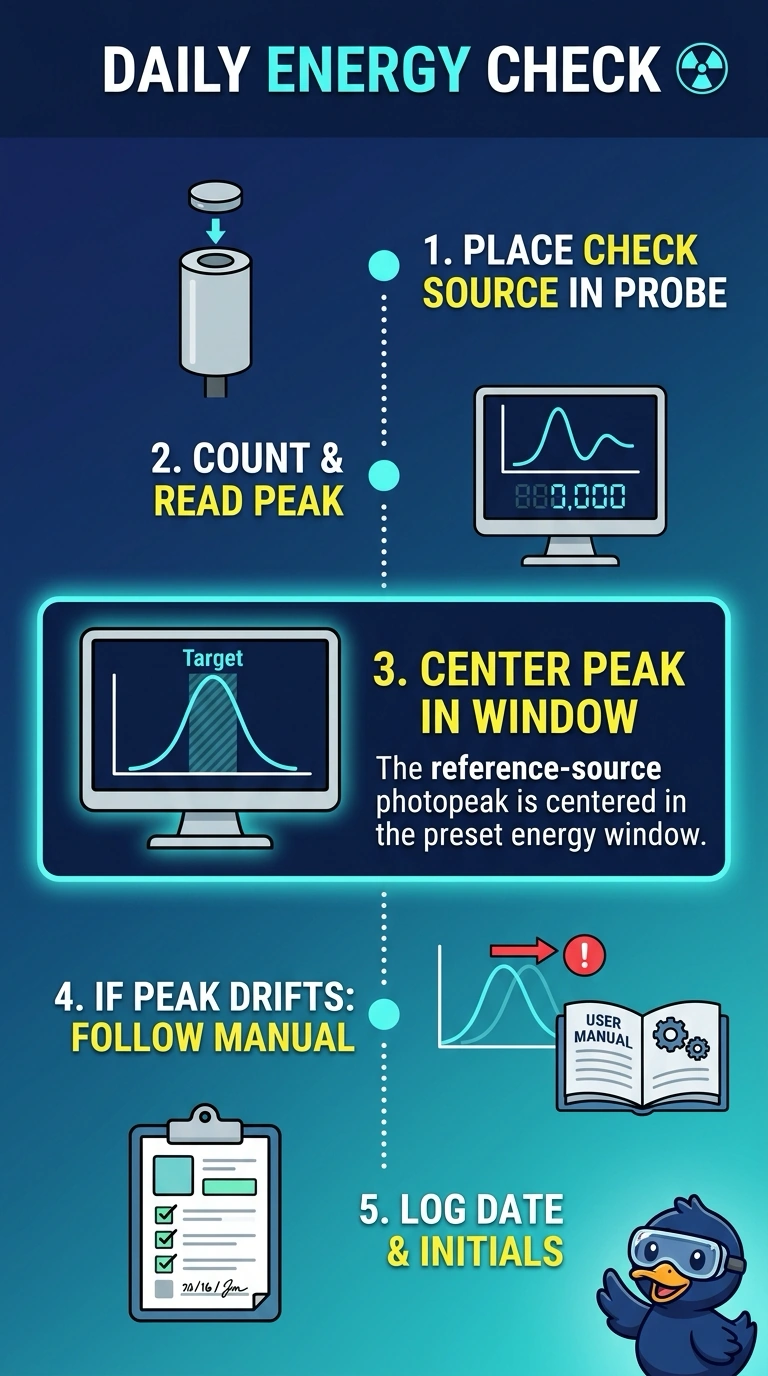
Because the new photomultiplier tube can shift the probe’s gain, you should first confirm that a reference-source photopeak is centered in the preset energy window. It’s like checking a scale’s zero before weighing anyone: energy calibration comes first.
Full Explanation
A photomultiplier tube sets detector gain, so replacing it can shift where the photopeak falls relative to the preset energy window. Confirming that the reference-source photopeak is centered verifies the probe’s energy response before patient counts begin. If the peak has shifted, counts may fall outside the window, energy discrimination can degrade, and efficiency or patient results may be affected. Checking a well air count against its daily action level monitors background, but it does not reveal a gain shift because no source peak is involved. Comparing standard well-count efficiency with the prior quarter assesses sensitivity; efficiency may appear acceptable even when the peak is mispositioned. Recording phantom relative SD at the preset counting precision assesses counting-statistical repeatability, not peak position. One caveat is that some systems display automatic peak verification at startup, but you still need to confirm and document correct positioning. As a practical check before the first patient, verify the reference peak is centered in the preset window, then complete the usual background and efficiency measurements.