
During an afternoon dispensing run, a small, low-activity Tc-99m spill is confined to the hot-lab bench; the floor is clean, and a hand survey shows no staff contamination. Under the lab’s written minor-spill procedure, which cleanup, monitoring, and documentation steps are appropriate before the bench is reused?
Select an answer to reveal the explanation.
Short Explanation
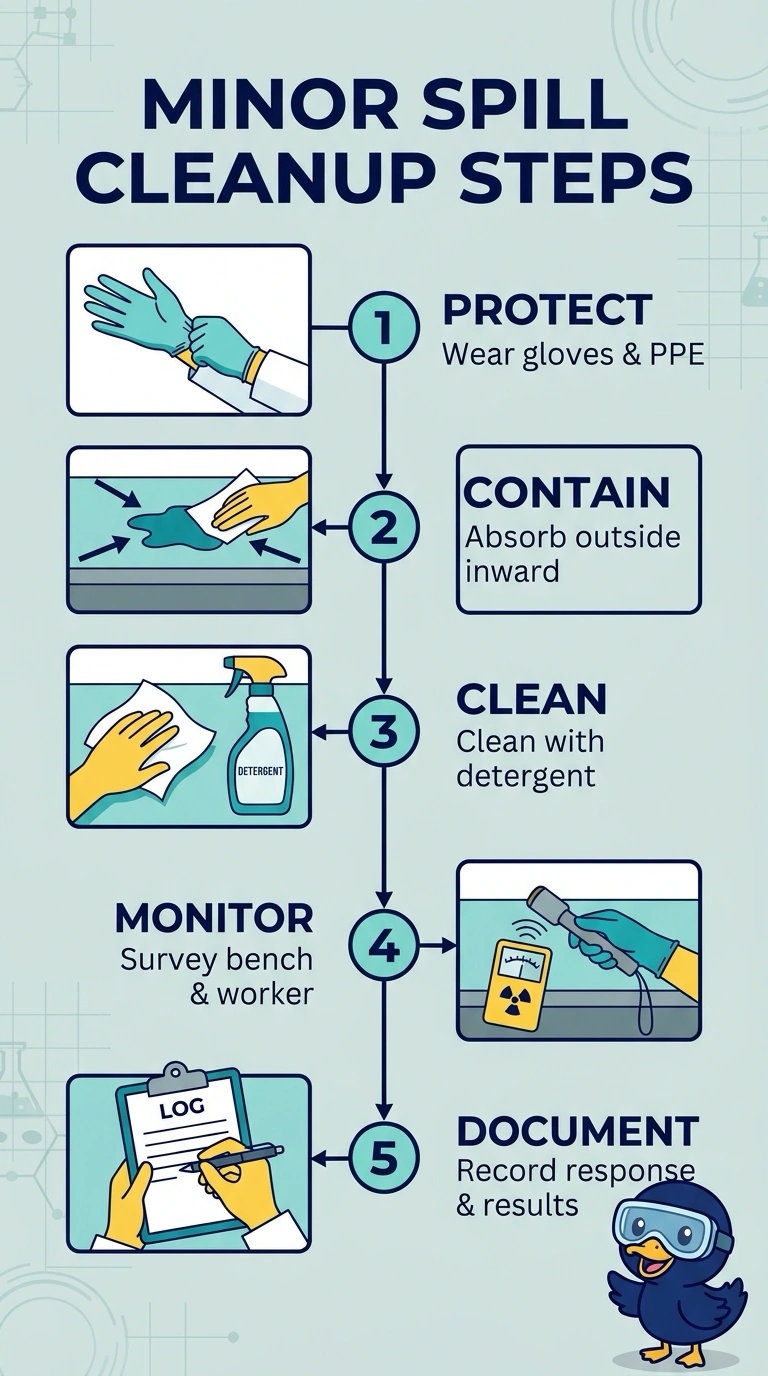
Put on gloves, then absorb the spill from the outside inward—like blotting a spot so it doesn’t spread—and clean the bench with detergent. Before reusing it, survey both the bench and yourself, then document the results as your lab’s procedure requires; a clean-looking surface alone isn’t enough.
Full Explanation
The correct approach follows the written minor-spill procedure for a small, contained event: gloves provide basic contamination protection, absorbing from the outside inward helps keep activity from spreading, and detergent cleaning removes residual contamination. Surveying both the bench and the worker checks that the work surface is suitable for reuse and that no contamination was transferred to personnel. Recording the survey results and cleanup provides the required traceable record. Absorbing from the center outward uses otherwise appropriate protective, cleaning, monitoring, and documentation steps, but can push contamination beyond the spill’s original boundary. Surveying the bench while omitting the worker check verifies the surface but does not establish that the person who handled the cleanup is uncontaminated; both are specified here. Noting only that cleanup was completed is not equivalent to documenting the results, because it leaves out the monitoring findings needed to support reuse and close out the event. Exam caveat: follow the facility’s written procedure and escalation thresholds; a spill that is larger, spreading, or associated with personnel contamination may require a different response. Practical check: before releasing the bench, confirm that the recorded surveys cover both the cleaned area and the worker, and that results meet local release criteria.