
An inpatient with suspected Clostridioides difficile diarrhea used the nuclear medicine anteroom restroom before an injection appointment. Housekeeping removed the visible contamination, but staff must reuse the room within the hour. Which control measure best breaks the chain of infection in this restroom?
Select an answer to reveal the explanation.
Short Explanation
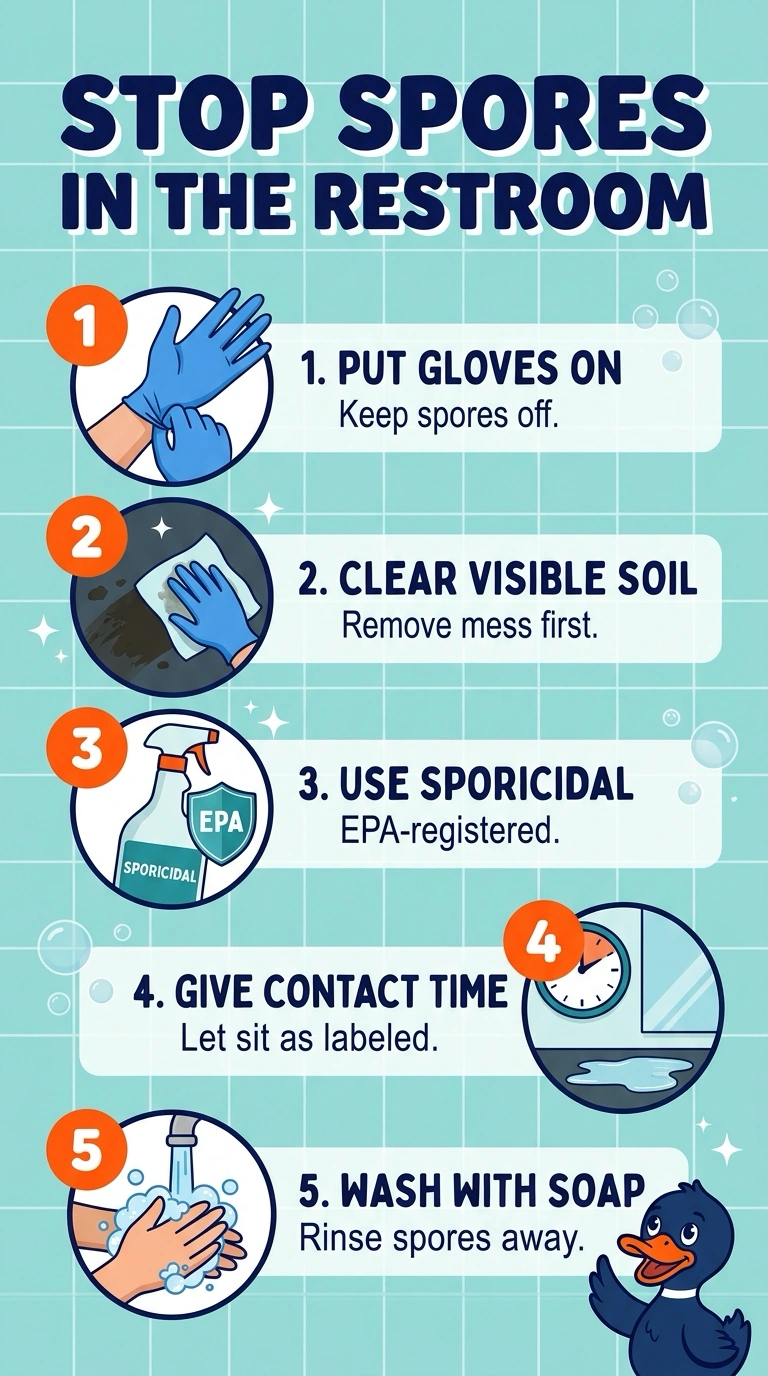
C. difficile spores can linger like stubborn glitter, so routine cleaning may not be enough. Use an EPA-registered sporicidal disinfectant as directed, then wash your hands with soap and water—you can’t rely on hand sanitizer.
Full Explanation
The effective measure addresses both the persistence of C. difficile spores in the environment and the limits of routine hand antisepsis. An EPA-registered sporicidal disinfectant, used according to its label, can inactivate spores on contaminated restroom surfaces; washing with soap and water physically removes spores from your hands. Using a sporicide but choosing alcohol-based hand rub after glove removal fails because alcohol hand rub is useful in many routine situations but is not a reliable method for removing C. difficile spores. Removing visible soil and applying a hospital-grade quaternary disinfectant labeled for routine restroom use, followed by handwashing, fails because a routine quaternary ammonium disinfectant may not be sporicidal; removing visible soil alone does not ensure spores are inactivated. Applying a sporicide only to high-touch surfaces and washing hands fails because contaminated surfaces elsewhere in the restroom may remain untreated. Exam caveat: “EPA-registered” alone does not mean a product is effective against C. difficile spores; confirm its sporicidal claim and required wet contact time. Practical check: verify that housekeeping can keep all relevant surfaces visibly wet for the labeled contact time before the room is returned to service.