
A patient with metastatic pancreatic neuroendocrine tumor has somatostatin receptor-positive disease in lymph nodes and liver on receptor imaging, a clear bone survey, and progression despite long-acting octreotide. The team plans receptor-mediated radionuclide therapy. Which targeted treatment best matches the receptor target?
Select an answer to reveal the explanation.
Short Explanation
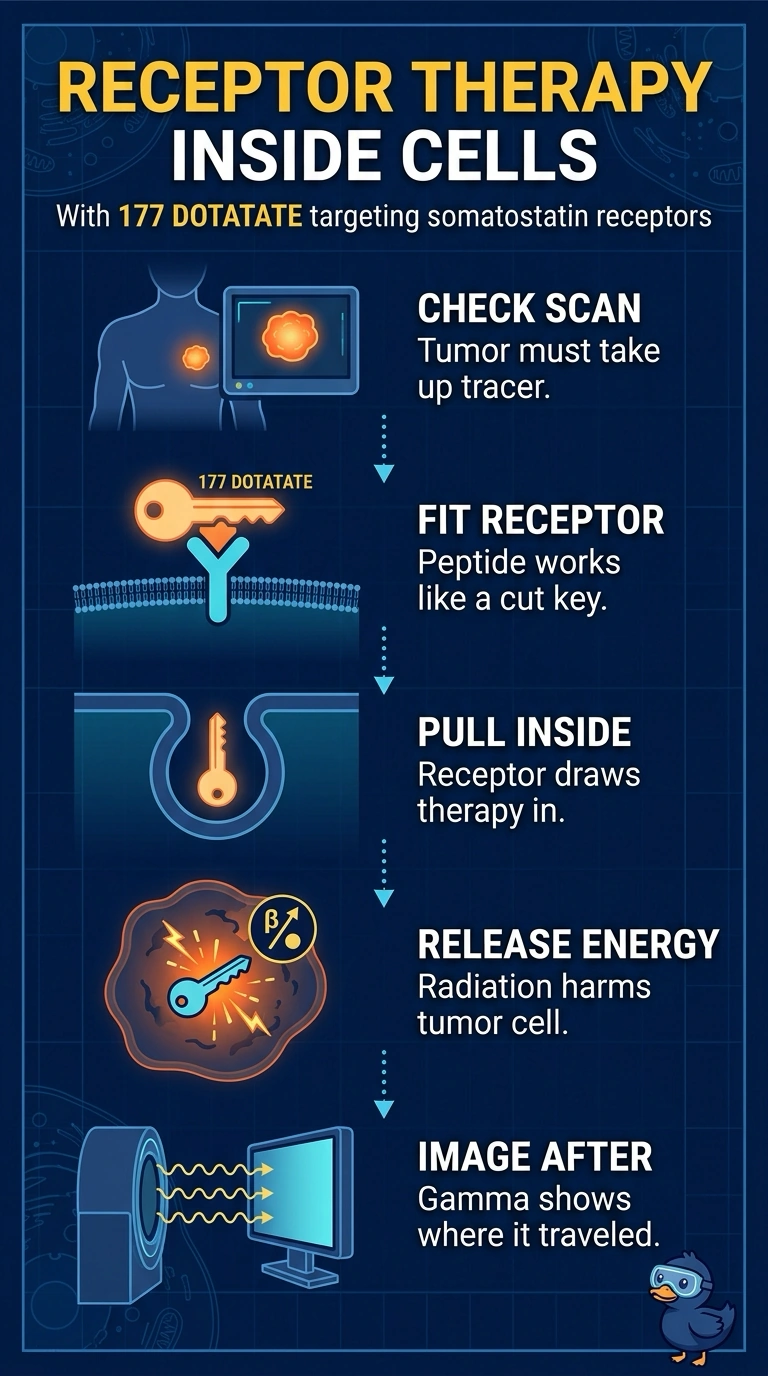
Your tumor’s somatostatin receptors are the target, and lutetium-177 DOTATATE is like a key that fits those receptors to deliver radiation. Treatments aimed at PSMA, liver tumors, or bone turnover target something different.
Full Explanation
Peptide receptor radionuclide therapy attaches a therapeutic radionuclide to a peptide that binds receptors overexpressed on the tumor. Lutetium-177 DOTATATE binds somatostatin receptors on many neuroendocrine tumors and delivers beta radiation; its gamma emissions also allow post-therapy imaging. PSMA ligand therapy binds PSMA, a target associated particularly with prostate cancer, rather than somatostatin receptors. Yttrium-90 microspheres deliver radiation primarily to liver tumors through the hepatic artery, so they would not treat the nodal disease. Radium-223 targets areas of increased bone turnover, and the bone survey is clear. Before therapy, confirm adequate uptake at disease sites on recent receptor imaging and assess renal function and blood counts.