
During a slow therapy infusion the pump sounds a downstream occlusion alarm and stops. The tubing is visibly kinked where it passes under the patient's arm, the IV site shows no swelling or redness, and vital signs and oxygen saturation are normal. Which action should you take first to address the alarm and, if appropriate, resume the infusion?
Select an answer to reveal the explanation.
Short Explanation
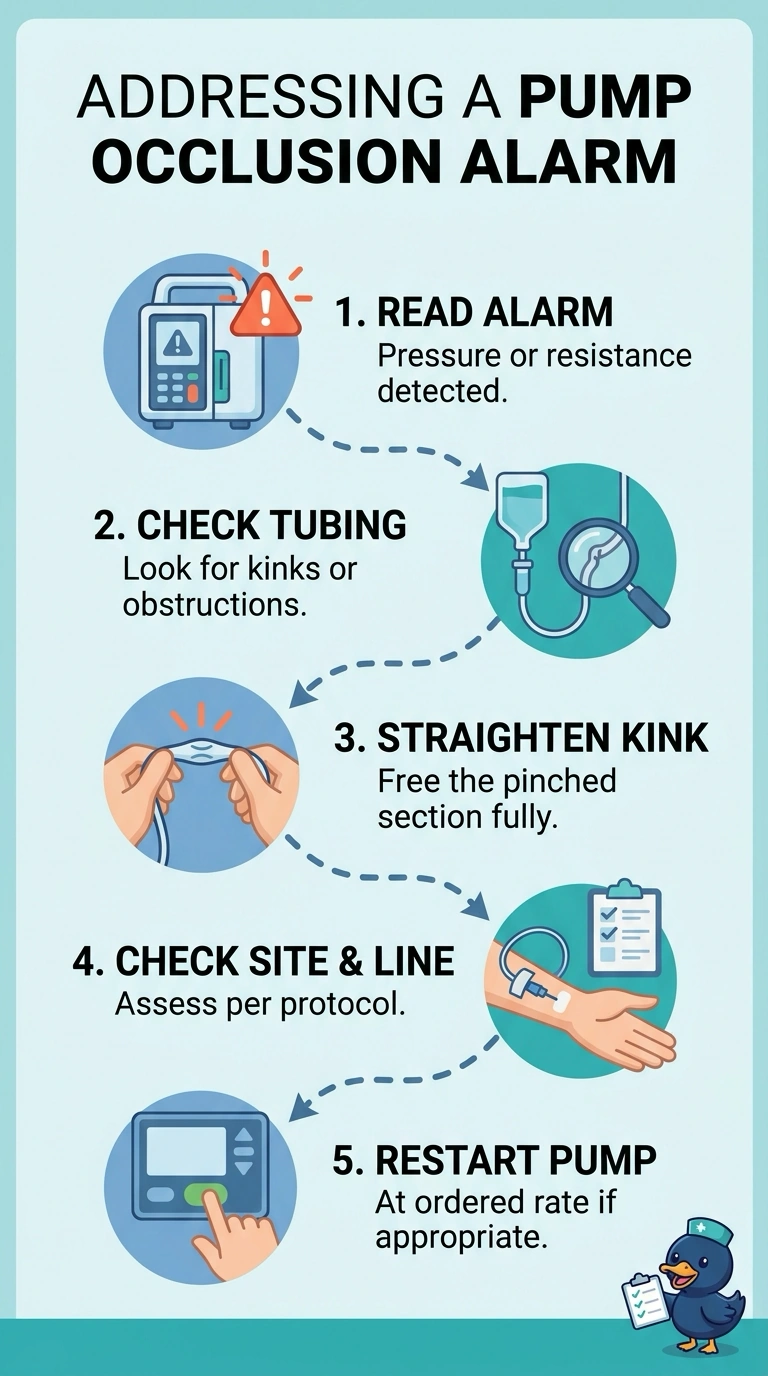
You can think of the kink as a pinched garden hose that’s blocking the flow. Straighten the tubing, assess the site and line per protocol, then restart the pump at the ordered rate if it’s appropriate.
Full Explanation
An occlusion alarm indicates that the pump detected pressure or resistance beyond its mechanism; it does not identify the cause by itself. Here, the visible kink is a likely cause, so straighten it, assess the site and line according to facility protocol, and restart at the ordered rate only if appropriate. Swapping pumps would not address the kink. Warm compresses do not correct the kink, and the stated findings do not indicate a need for them. The patient’s normal vital signs and oxygen saturation do not support starting oxygen. If the alarm recurs or another alarm occurs, follow the applicable procedure and escalate as needed. After any restart, monitor the site and confirm that the infusion is running as intended.