
A patient with severe left ventricular dysfunction after an anterior infarction is being evaluated for bypass surgery, and the heart team must separate hibernating myocardium from dense scar. The patient cannot exercise, and the study must supply perfusion and metabolic information in the same session so the mismatch pattern can be read. Which viability protocol should be planned?
Select an answer to reveal the explanation.
Short Explanation
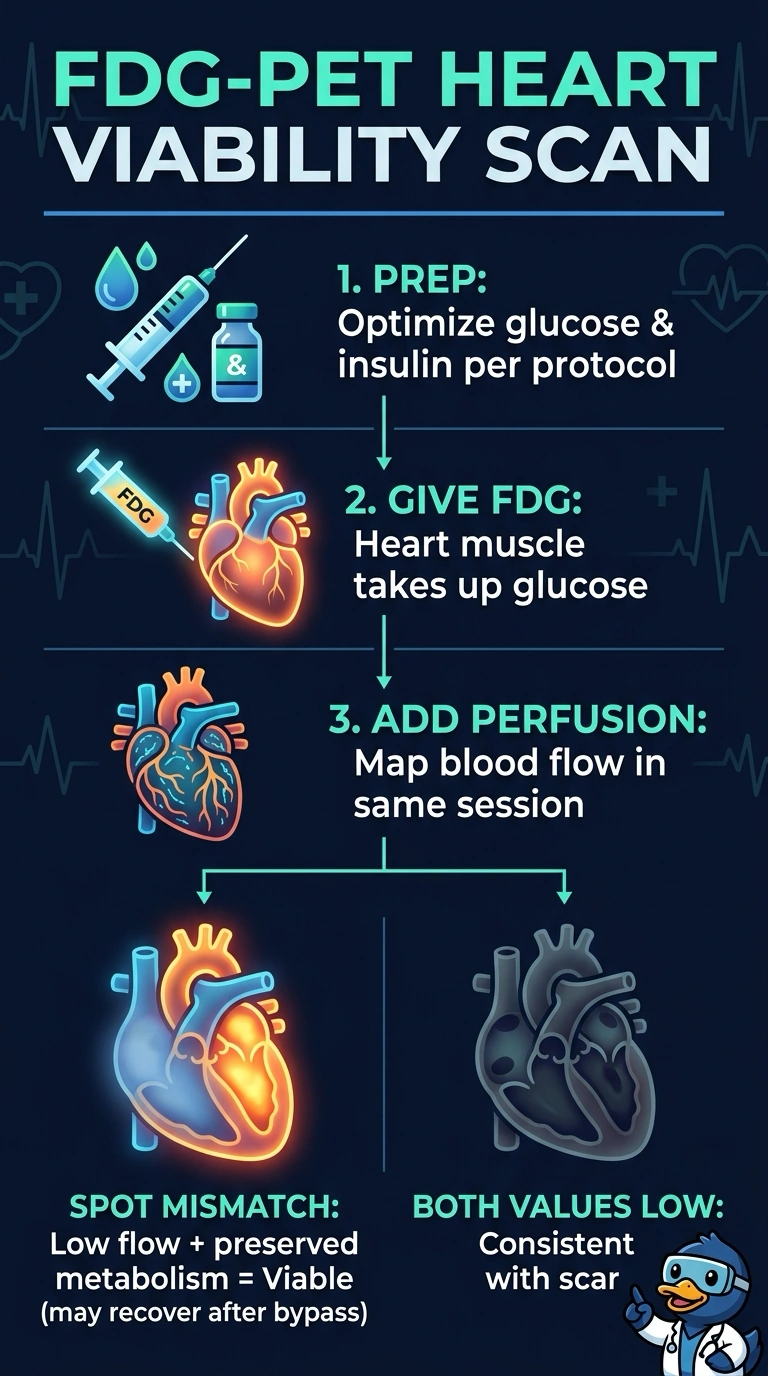
You’ll want FDG-PET with a perfusion tracer in one session, so you can compare glucose use with blood flow without exercise. It’s like checking both a tissue’s fuel use and delivery: low flow with preserved FDG uptake suggests viable heart muscle that may recover, though recovery isn’t guaranteed.
Full Explanation
Viability assessment compares metabolic activity in dysfunctional myocardium with its perfusion. FDG-PET combined with a perfusion tracer provides both measurements in one session: a segment with reduced perfusion but preserved FDG uptake is viable and may recover after bypass, while a segment with reduced perfusion and markedly reduced FDG uptake is consistent with scar. Recovery is not guaranteed. Dobutamine echocardiography assesses contractile reserve rather than measuring perfusion and glucose use. Rest-redistribution thallium-201 SPECT is a legitimate rest-based viability method, but it assesses tracer retention as a marker of viability rather than directly measuring glucose metabolism. Nitrate-augmented rest perfusion SPECT assesses perfusion; it does not provide the required metabolic information. Tracer choices and preparation schedules vary by laboratory, so follow the local protocol for patient preparation and acquisition.