
A patient with a biopsy-proven melanoma on the dorsum of the right foot is scheduled for sentinel node lymphoscintigraphy the day before surgery. The lesion has intact overlying skin, and the surgeon wants the draining nodal basin mapped before the incision. Which injection plan best demonstrates lymphatic flow from this skin lesion?
Select an answer to reveal the explanation.
Short Explanation
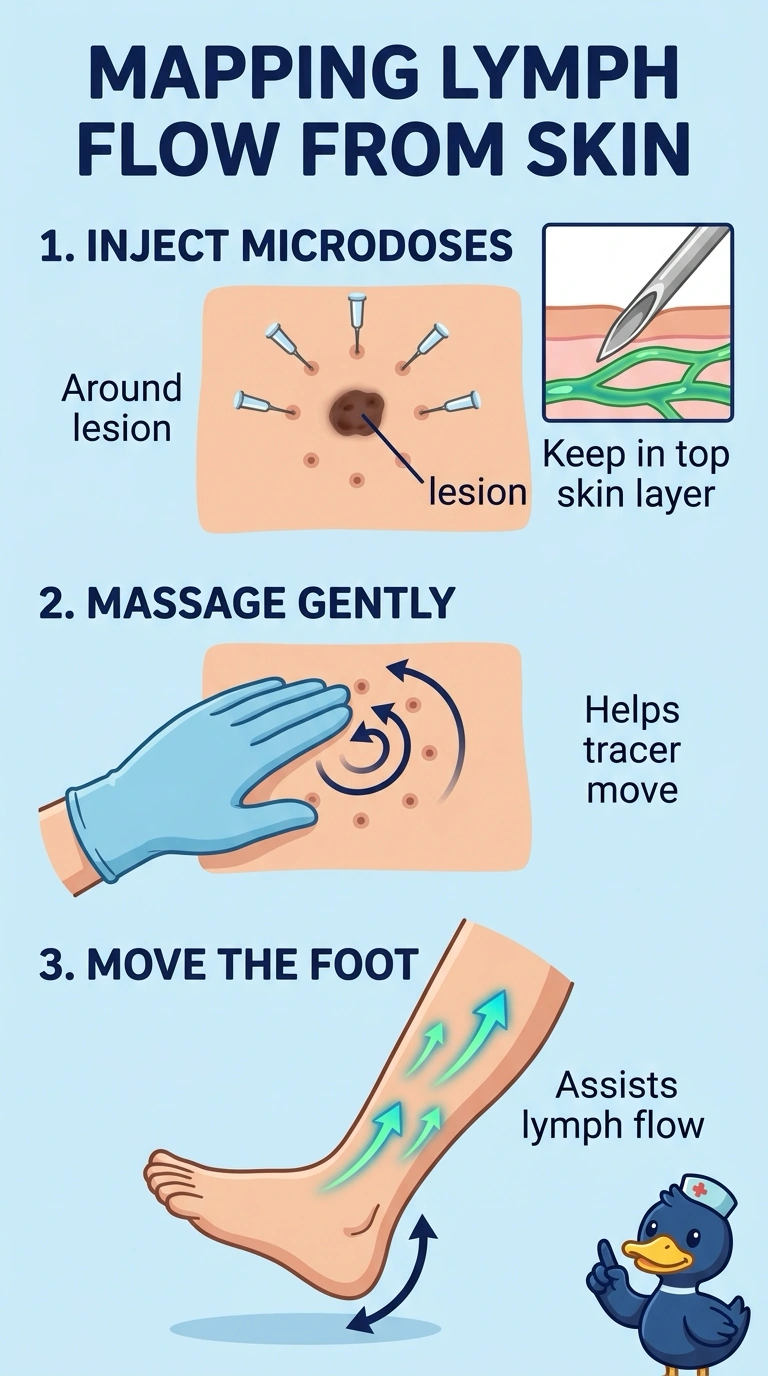
You’ll want the tracer in the skin’s own lymphatic network, so place several tiny injections just under the skin around the lesion, like marking its drainage routes. Gently massage the area and move your foot to encourage flow; the key is an intradermal injection.
Full Explanation
For an intact cutaneous melanoma, perilesional intradermal radiocolloid microdoses place tracer in the superficial lymphatic network that drains the skin lesion. Massage and foot movement can promote tracer transit, and imaging the day before surgery identifies the draining basin before the planned incision. Injecting intradermally and massaging while keeping the foot still uses the appropriate route but omits movement that can encourage drainage. Perilesional subcutaneous injection is used in some mapping protocols, but it does not target the skin’s superficial lymphatics as directly as intradermal injection for this intact lesion. Intradermal injection with massage and movement promotes drainage, but imaging on the day of surgery does not meet the requested day-before timing. An exam caveat is that the injection route, movement, and imaging timing all matter: a suitable injection alone does not ensure that the study answers the preoperative mapping question. In practice, confirm the radiotracer protocol, injection depth, and timing with the nuclear medicine team, and verify that images are available to the surgeon before incision.