
An outpatient arrives for an equilibrium gated blood pool study to evaluate ventricular function. The department uses the modified in vivo-in vitro red blood cell labeling method (stannous pyrophosphate pretreatment, then blood withdrawn for ex vivo technetium incubation), and the patient is at the first step of the prep sequence. Which preparatory step must be completed before the blood sample is drawn for labeling?
Select an answer to reveal the explanation.
Short Explanation
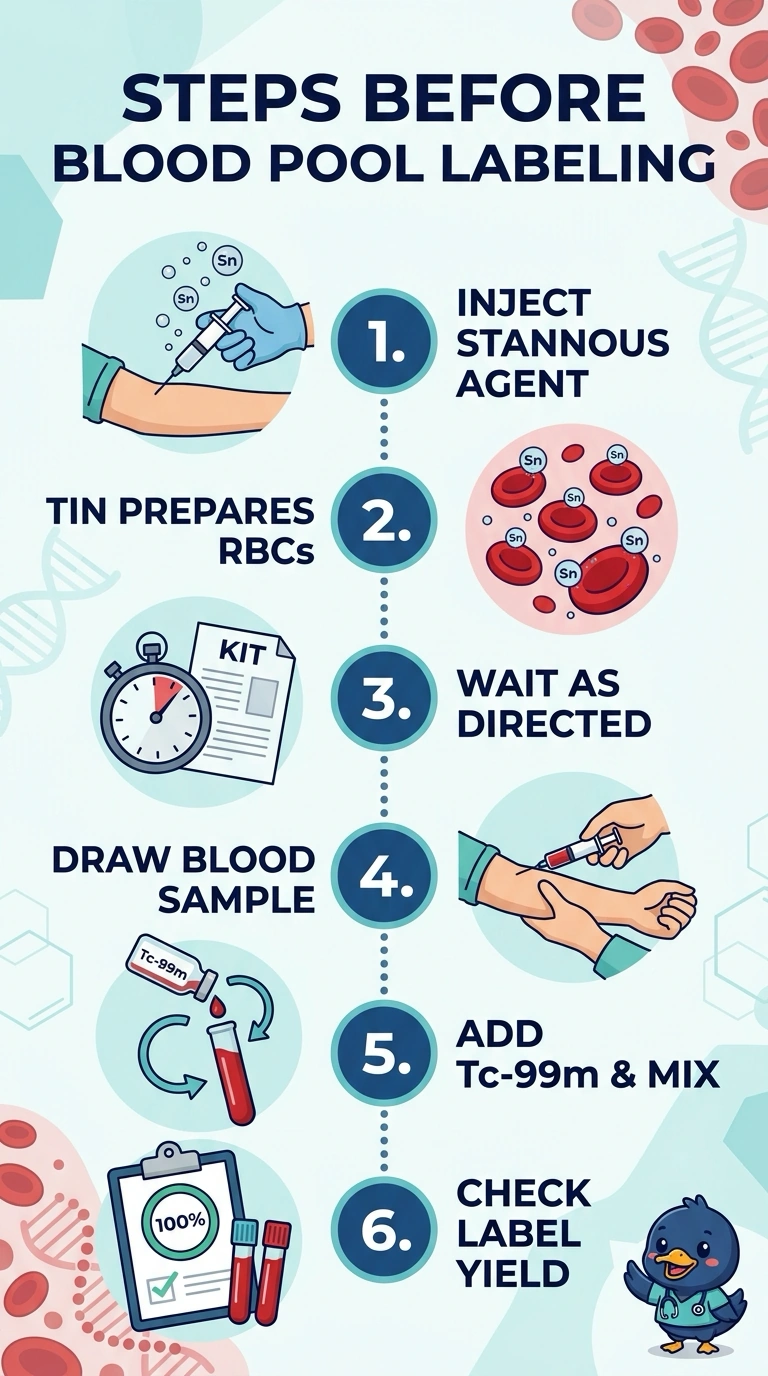
Before drawing the blood, you give stannous pyrophosphate intravenously and wait for the interval specified in the kit instructions. This pretreatment prepares the red cells to retain technetium-99m when it is added ex vivo.
Full Explanation
In the modified in vivo-in vitro method, you administer stannous pyrophosphate intravenously and wait the interval specified in the kit instructions before drawing blood. Stannous ions enter the red cells and prepare them to bind technetium-99m during the subsequent ex vivo labeling steps. Giving the agent and drawing blood immediately uses the right pretreatment agent but skips the required interval, so the cells may not be adequately primed. Drawing blood first and adding the kit’s stannous reagent ex vivo describes an in vitro labeling approach, not this method, which requires patient pretreatment before phlebotomy. Giving stannous pyrophosphate, waiting, and then injecting pertechnetate intravenously describes modified in vivo labeling; it does not include the blood draw and ex vivo labeling required here. Exam caveat: RBC-labeling sequences vary among in vitro, modified in vivo, and in vivo methods, so do not transfer steps from one protocol to another. Practical check: verify the kit instructions and document the stannous administration time to ensure the specified interval has elapsed before collecting the sample.