
A 68-year-old woman with painful bone metastases from breast cancer aches in several bones even after radiation to her spine. Her oncologist expects her to live well beyond a few months, her platelet count is safe, and the team wants a systemic radiopharmaceutical labeled for painful skeletal metastases from her cancer. Which palliative bone therapy agent best fits this patient?
Select an answer to reveal the explanation.
Short Explanation
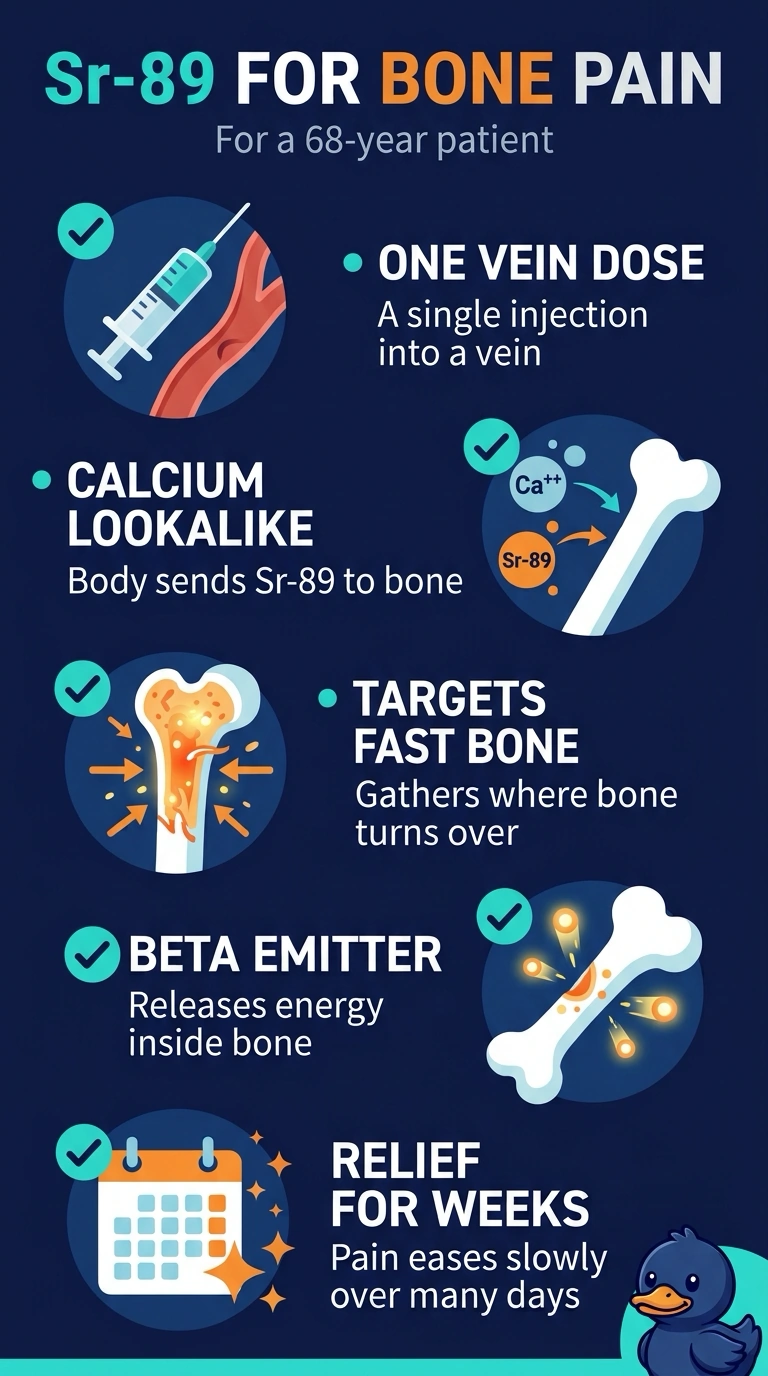
Nice work: you picked strontium-89, which behaves like calcium and settles into fast-turning bone so one dose can ease pain for weeks. Radium-223 isn't labeled for her cancer, and the bisphosphonate and radiation choices aren't radiopharmaceuticals.
Full Explanation
Strontium-89 behaves like a calcium analog, so after intravenous administration it clears quickly from blood and localizes in bone mineral where new bone is forming. It is a pure beta emitter, and its labeled purpose is relief of bone pain from painful skeletal metastases. Radium-223 is also a systemic radiopharmaceutical that targets bone-forming lesions, but its label restricts it to castration-resistant prostate cancer with symptomatic bone metastases and no known visceral disease, so it fails the tumor-type requirement. Zoledronic acid, an infused bisphosphonate, can reduce skeletal events and ease bone pain, but it is not radioactive. Palliative external beam radiation treats selected bone sites locally rather than circulating through the body, so it is not a systemic radiopharmaceutical. Confirm the indication, review recent counts against label precautions, and complete the pretherapy checklist before releasing the dose.