
At the end of a busy day the hot lab holds leftover unit doses, a partly used multi-dose vial and contaminated syringes from injections. The safety officer wants every item tracked until it can leave the radioactive materials program. Which storage and disposal practice should the department follow for eligible short-lived radioactive waste?
Select an answer to reveal the explanation.
Short Explanation
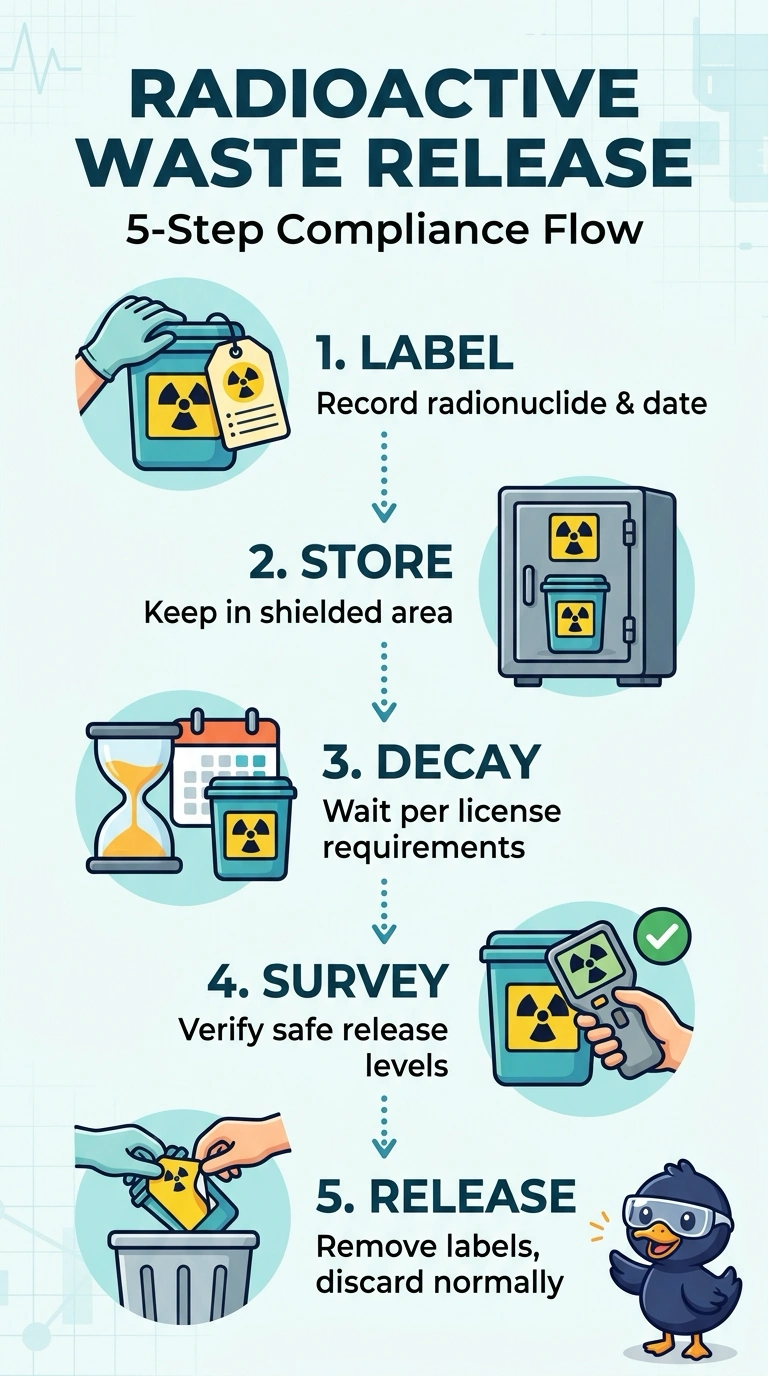
You can keep eligible short-lived waste in a labeled, shielded area until it has decayed—like letting a timer run before moving on. Then survey it under your licensee’s procedures, remove or deface radiation labels, and send it to the right waste stream, handling sharps appropriately.
Full Explanation
Decay-in-storage is available only for eligible radionuclides and must follow the applicable license and procedures. Store waste with appropriate labeling and shielding, and keep the required records. Before release, survey it using the required procedure and confirm it meets the applicable release criterion; under NRC rules for decay-in-storage, the radiation level cannot be distinguishable from background. Remove or deface radiation labels before disposal. Route released material to the appropriate nonradioactive waste stream, following applicable requirements for chemical, biological, and sharps waste. A survey at the end of the shift does not establish that the waste has decayed sufficiently, and omitting the required survey does not establish that it can be released. The permitted radionuclides, hold period, survey method, records, and disposal requirements depend on the license and applicable regulations.