
A patient with diabetes calls two days before their first nuclear medicine study, which starts after an overnight fast. They ask what to change at home beforehand and what to do afterward. Which approach gives the best pre- and post-exam instructions?
Select an answer to reveal the explanation.
Short Explanation
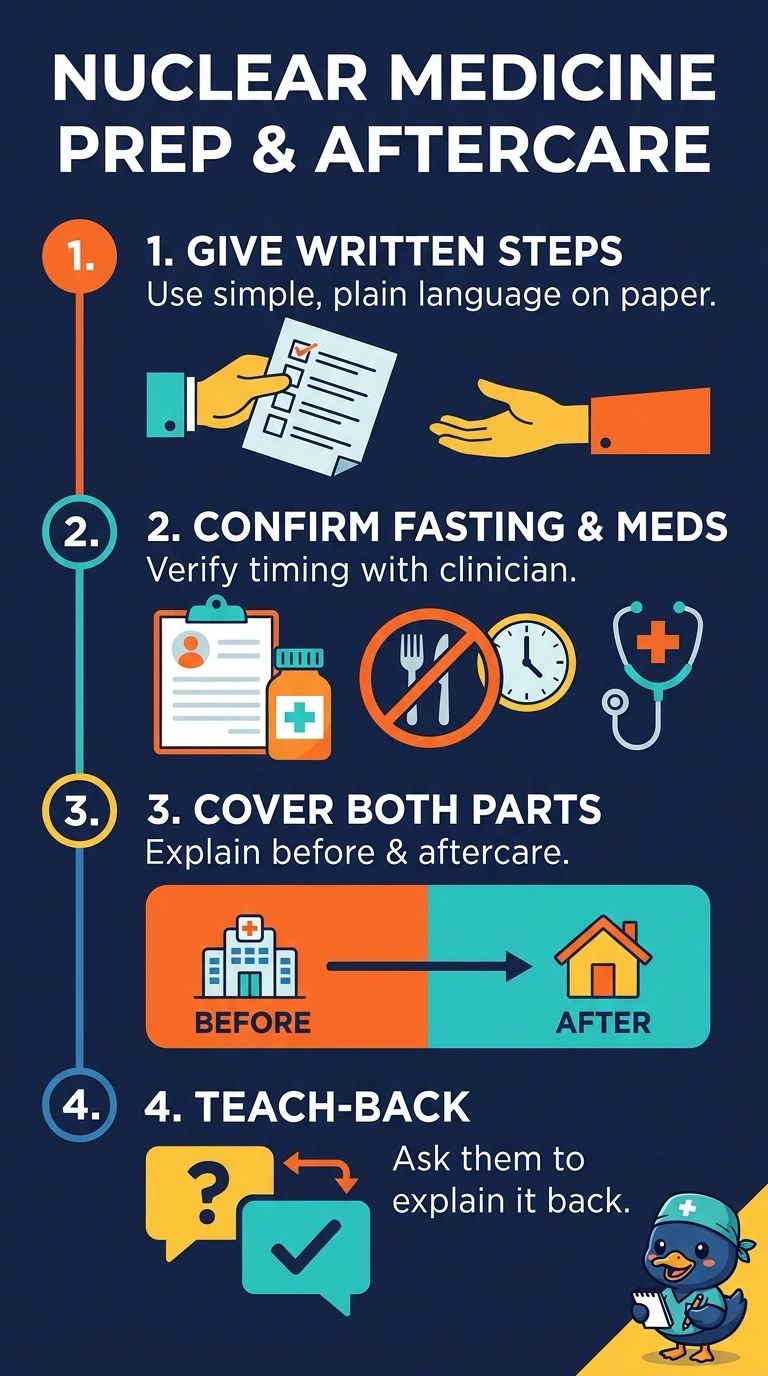
You’ll have clear written steps for before and after the study, with fasting and diabetes medication instructions confirmed for your situation by the authorized clinician. Use teach-back to check your understanding before the discussion is documented, and don’t change medicines on your own.
Full Explanation
The best approach provides plain-language written steps for before and after the study, confirms individualized fasting and diabetes medication instructions with the authorized clinician, and uses teach-back to check understanding before documenting the discussion. Fasting can affect diabetes management, so the patient needs guidance suited to their situation rather than assumptions about medication changes; clear written instructions also help them prepare at home. Providing written steps and obtaining clinician guidance but documenting without teach-back does not check whether the patient understood what to do. Using written steps, a department’s standard diabetes protocol, and teach-back still fails to confirm individualized fasting and medication instructions with the authorized clinician; a general protocol may not fit the patient or study. Waiting until check-in on exam day to provide written steps and use teach-back is too late for someone calling two days ahead who needs to plan for an overnight fast and medication instructions. Exam caveat: fasting and medication guidance can vary by study, diabetes regimen, and local protocol, so do not infer a dose adjustment from a general rule. A practical check is to ask the patient to explain when the fast begins, what to do about their medicines, and whom to contact if instructions are unclear.