
A patient who is unable to bear weight through the legs, unable to stand from the bed, and lacking the arm strength to push up must be moved from bed to a wheelchair this morning. Two staff members are available, the patient follows directions, and the room has space to work. Which patient transfer method fits this mobility and staffing situation?
Select an answer to reveal the explanation.
Short Explanation
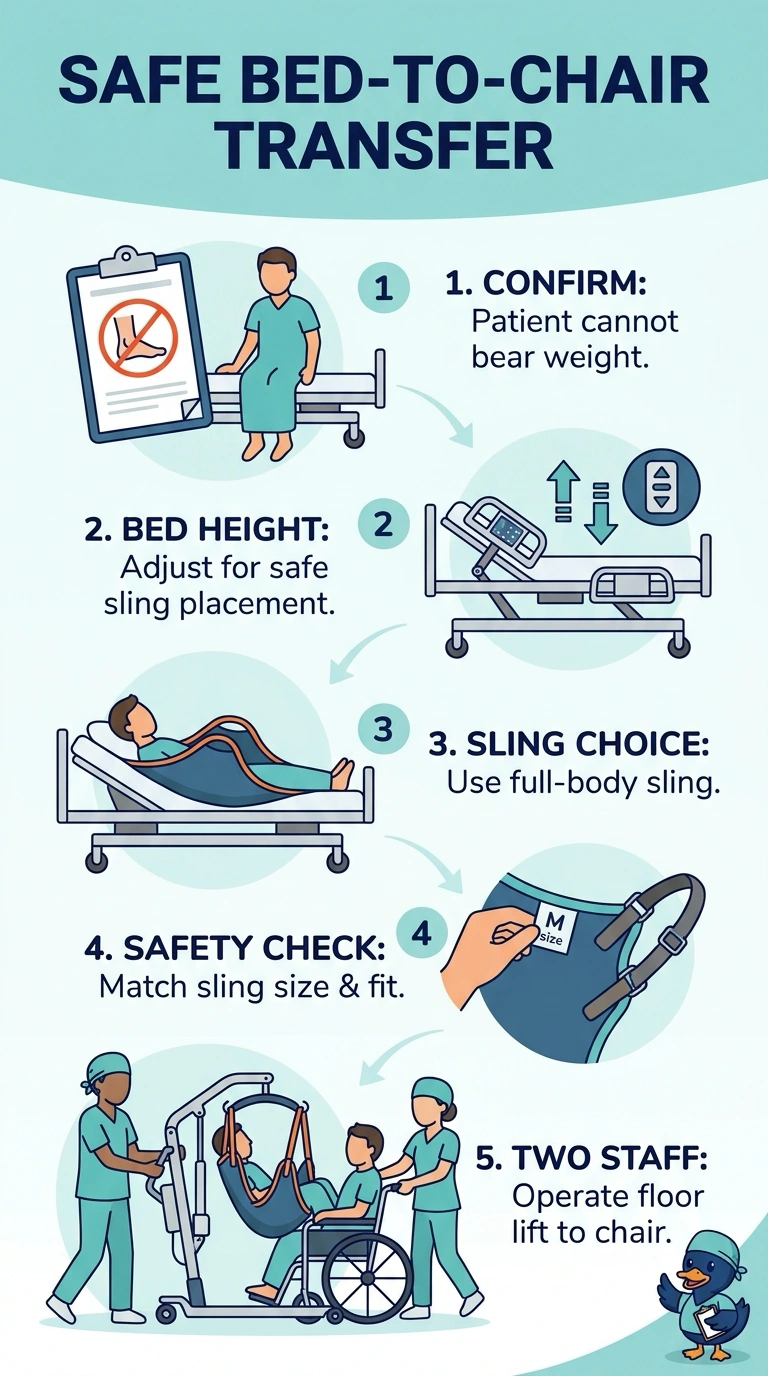
Because the patient cannot bear weight through the legs or push up with the arms, you need a method that carries the patient rather than asking them to help rise or shift. A floor lift with a full-body sling supports the patient as two staff guide the move, like a hammock from bed to wheelchair.
Full Explanation
A floor lift with a full-body sling is appropriate because the patient cannot bear weight through the legs, rise to standing, or use the arms to push up. The sling supports the patient’s body while the lift completes the transfer, and two staff can guide the move. A powered sit-to-stand lift is intended for a patient who can participate in a supported rise; it still depends on some weight bearing and effort to stand, which this patient cannot provide. A transfer board is used for a seated lateral slide when the patient can contribute enough upper-body effort to help unweight or shift the hips. The stated lack of arm strength to push up makes that contribution unavailable. A two-person gait-belt stand-pivot transfer requires the patient to stand and bear weight while staff assist with balance and turning. This patient cannot meet that prerequisite, and asking for an arm push does not change the limitation. Exam caveat: choose the method based on the patient’s current functional ability, not merely the number of staff or equipment available; a sit-to-stand aid is not a substitute for a full-body lift when the patient cannot bear weight. Practical check: before moving, confirm the lift’s weight capacity, sling fit and attachment points, wheelchair brakes, and a clear transfer path.