
A patient having a blood-pool study says the signed consent form is fine but still has questions about what the injected tracer will do, and their spouse is waiting just outside the room. Which response best applies the ARRT Standards of Ethics at this moment?
Select an answer to reveal the explanation.
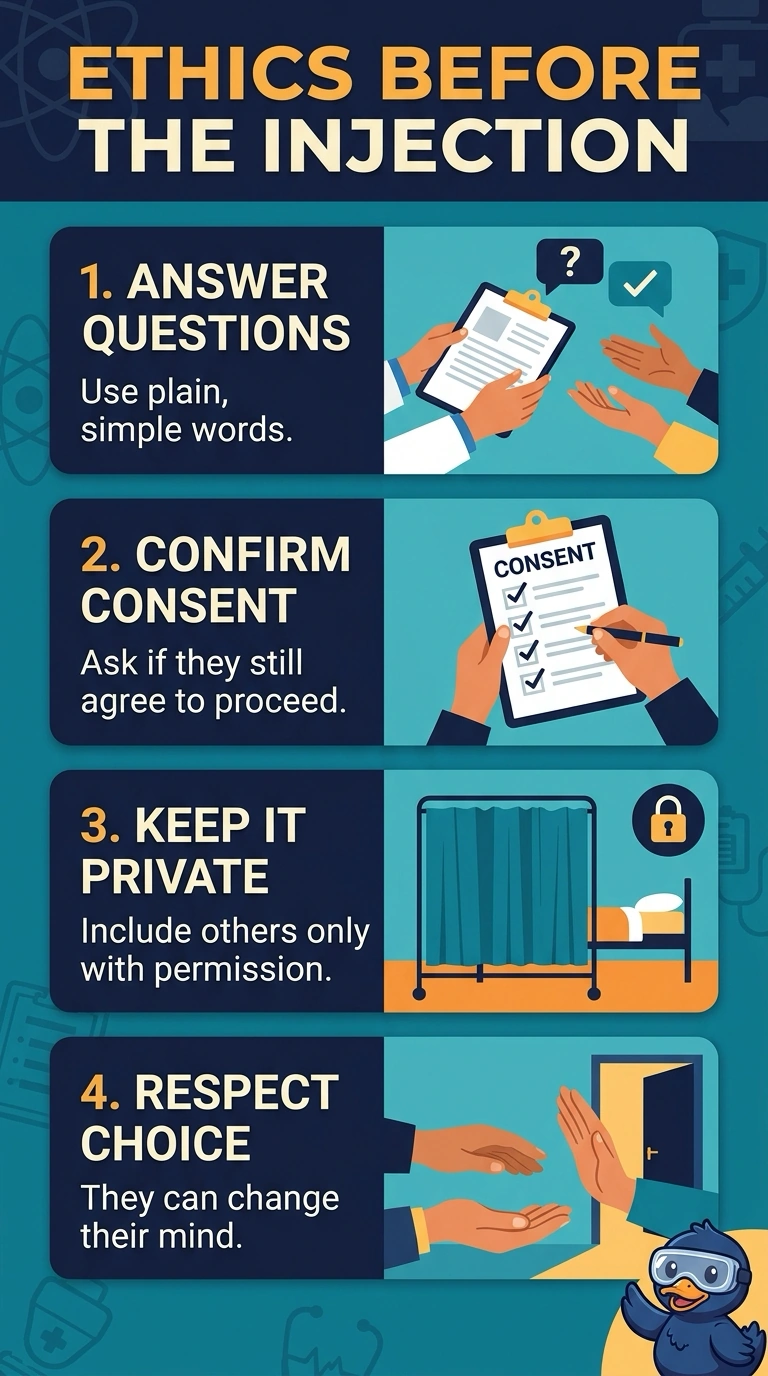
Short Explanation
A signed form does not end the conversation, so you should answer the patient’s questions plainly and check that they still want to proceed. Keep the discussion private; you can explain what is within your role and arrange appropriate follow-up for anything beyond it. Verifying the form, referring questions without addressing them, or using technical terms alone may leave the patient’s concern unresolved.
Full Explanation
The response that answers the patient’s questions plainly, confirms they still agree to proceed, and keeps the discussion private addresses the immediate concern while respecting the patient’s choice and confidentiality. A signed form documents consent, but it does not replace the opportunity to ask questions or the patient’s ongoing agreement. Referring tracer questions to the supervising provider can be appropriate when they exceed your scope, but referral alone does not address questions you can answer within your role; arrange appropriate follow-up for anything beyond it. Verifying the signed consent is a useful workflow step, but the form does not establish that the patient still agrees after raising concerns. Explaining the tracer in standard technical terms may provide accurate information, yet it can leave the patient without a clear understanding; tailor your explanation to their language and comprehension. Exam caveat: do not make unsupported claims about tracer effects or substitute for the provider’s discussion of risks, but do not treat a signature as a reason to dismiss questions. Practical check: pause before injection, invite the patient to describe any remaining concern, answer within scope in plain language, confirm their choice, and ensure the conversation is private.