
A patient is booked for a vasodilator-stress myocardial perfusion SPECT study to evaluate chest pain, with ECG gating planned for both rest and stress acquisitions. The patient fasted as instructed but mentions having a cup of coffee shortly before arriving. Which preparation decision keeps the stress portion of the study valid?
Select an answer to reveal the explanation.
Short Explanation
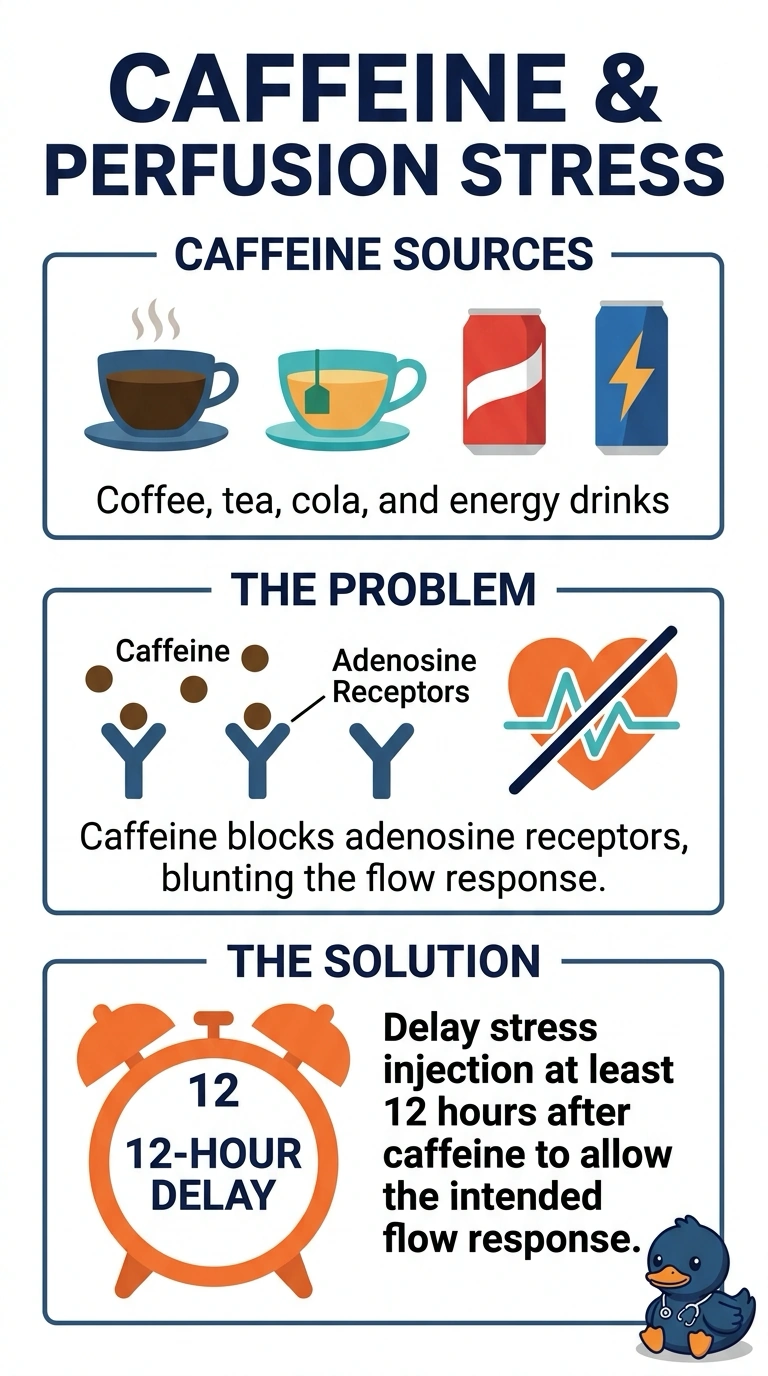
Your coffee can act like a brake on the vasodilator’s effect, weakening the heart’s blood-flow response during stress. Wait at least 12 hours after caffeine before giving the stress injection so the test remains valid.
Full Explanation
Caffeine is a competitive antagonist at adenosine receptors that vasodilator stress agents rely on to dilate the coronary circulation, so recent coffee intake can blunt hyperemic flow and affect the perfusion pattern. Standard preparation calls for avoiding caffeine for at least 12 hours before vasodilator stress; if the patient has just had coffee, delay the stress portion until that interval has passed. Holding a beta blocker to reach a target heart rate applies to some exercise protocols, because vasodilator stress does not depend on reaching a heart-rate goal. Extra fluids may support tracer clearance but do not address caffeine’s interaction, and avoiding strenuous activity does not prevent that interaction. Caffeine can also be present in tea, cola, energy drinks, and some medications, so ask about all sources.