
During an outpatient visit, a dose is pushed through an existing catheter when the patient reports sharp pain and the site blanches and swells; some drug has entered the tissue, the syringe still holds the rest, and department policy requires physician assessment before the patient leaves. Which immediate response best limits tissue damage from this infiltration?
Select an answer to reveal the explanation.
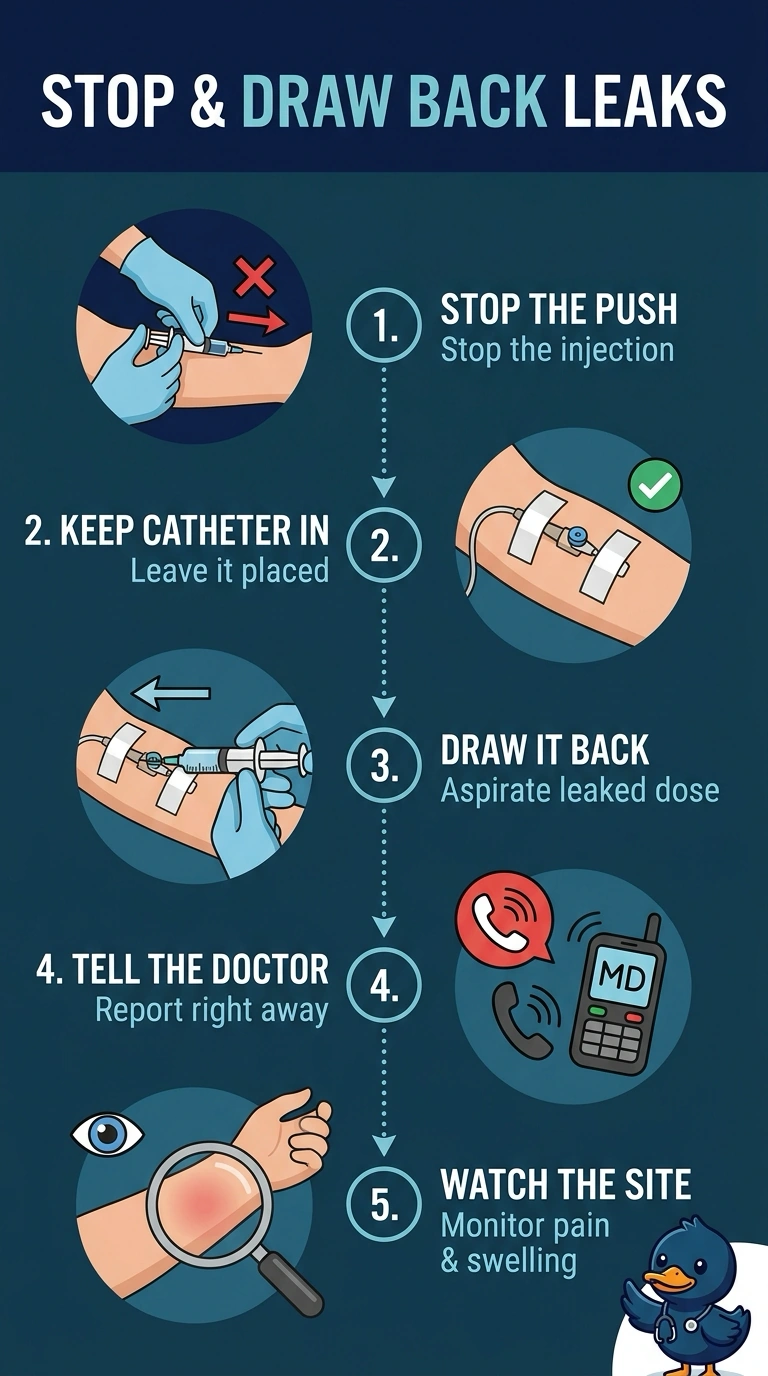
Short Explanation
Stop the injection, then use the catheter to aspirate what you can before the drug spreads farther into the tissue. Like catching a spill before it soaks in, aspiration can limit damage; call the physician for assessment before you let the patient leave.
Full Explanation
Extravasation means the radiopharmaceutical has left the vein and entered subcutaneous tissue, where it can irritate tissue and, with some agents, break it down. The immediate goal is to stop more drug from entering and recover what has leaked. Stopping the injection halts the leak, and aspirating through the catheter while it remains in place creates negative pressure that can draw pooled drug back into the syringe before it disperses. Calling the physician is essential because the site needs clinical follow-up, the study may need to be rescheduled, and department policy requires assessment before the patient leaves. Elevating the arm while watching the swelling is supportive, but leaves the drug in the tissue and does not replace aspiration. Aspirating and documenting later omits the required physician assessment before departure. Flushing with saline can drive additional dose deeper into the tissue and enlarge the injury, even if you then aspirate and inform the physician. The exam caveat is that compress temperature and follow-up care vary by institution and agent. Practical check: keep the catheter secured and watch for numbness, blistering, or swelling that continues to grow.