
A patient with a metastatic neuroendocrine tumor is booked for Ga-68 DOTATATE PET/CT, and the chart shows a monthly long-acting somatostatin analog injection, with the last dose given a few weeks ago. The patient eats normally and the medication list shows only that injection. Which medication step best protects receptor availability for this scan?
Select an answer to reveal the explanation.
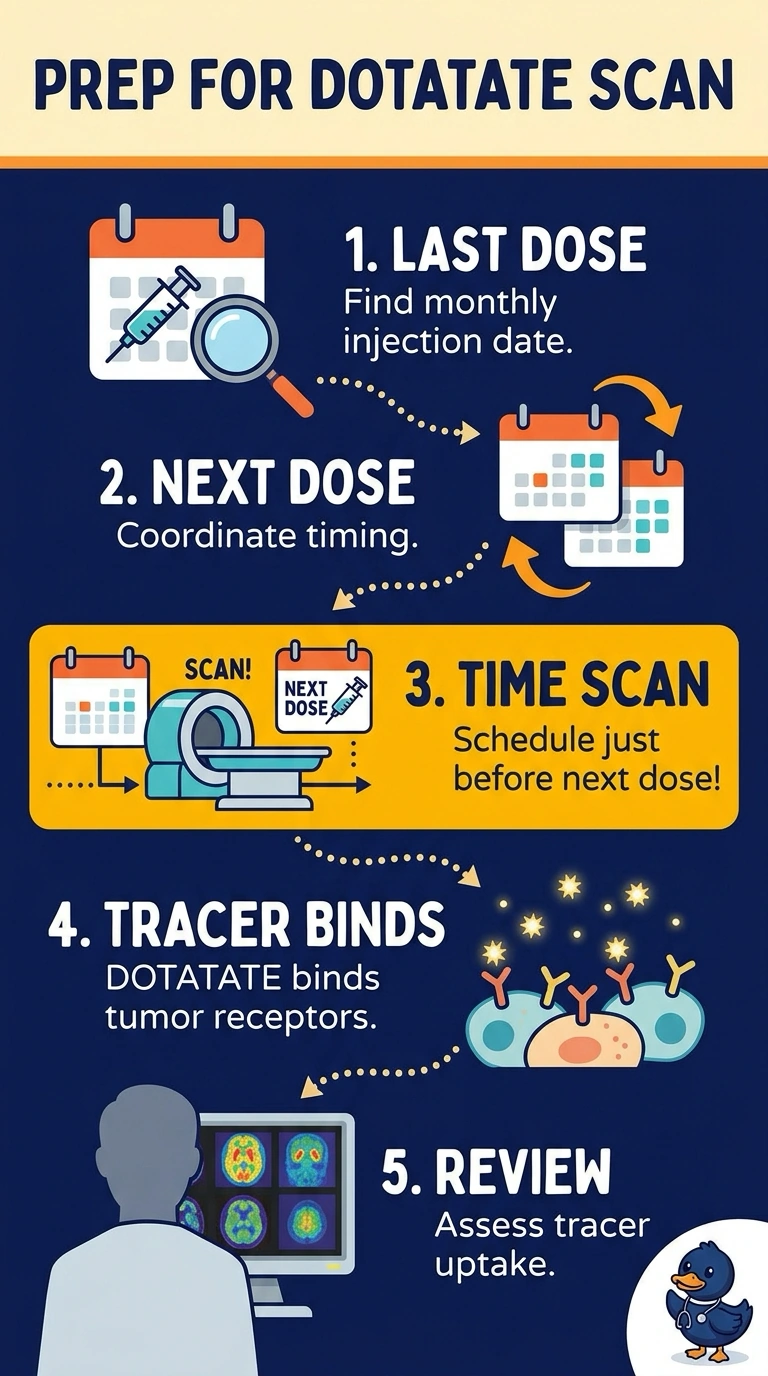
Short Explanation
Your long-acting somatostatin analog can occupy receptors that DOTATATE needs to bind, like seats already taken. Schedule your scan just before your next dose to give the tracer the best chance to bind, without withholding or changing your medication.
Full Explanation
Ga-68 DOTATATE binds somatostatin receptors, and a long-acting somatostatin analog can affect tracer binding by occupying or altering the availability of those receptors. Schedule the scan just before the patient’s next monthly dose, when the timing relative to treatment best follows the NETSPOT prescribing information and protects receptor availability. Recording the last dose and scheduling without regard to the next dose is medication reconciliation, not a timing strategy; it misses the recommended relationship between imaging and the upcoming dose. Overnight fasting and a checked glucose level are metabolic-preparation steps commonly associated with FDG imaging, but they do not address somatostatin-receptor availability for DOTATATE. Hydration and frequent voiding may reduce urinary-tract activity, but they do not resolve medication effects on receptor binding. Exam caveat: do not independently withhold, delay, or reschedule the analog; follow the prescribing information and local department protocol. As a practical check, verify the exact last-dose date and planned next-dose date with the patient, then coordinate scan timing with the nuclear medicine team.