
A 74-year-old with fatigue, a history of bilateral carpal tunnel release, and preserved ejection fraction is scheduled for Tc-99m PYP imaging to evaluate suspected cardiac amyloidosis. Renal clearance and background activity both influence how clearly myocardial uptake appears. Which preparation instruction matches current published guidance for this study?
Select an answer to reveal the explanation.
Short Explanation
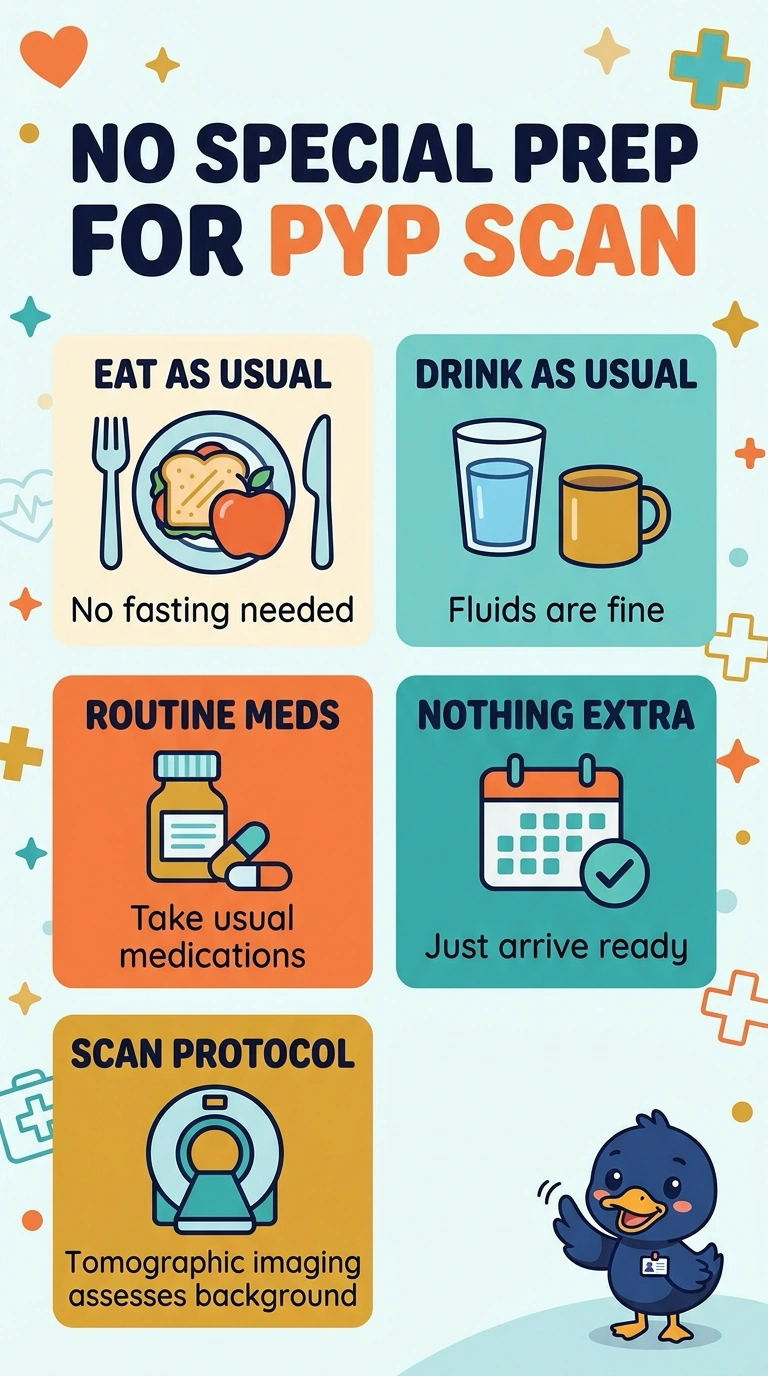
You can eat and take your usual medications before Tc-99m PYP imaging unless your imaging service gives you a separate, patient-specific instruction. No fasting or special preparation is needed, so you can feel reassured that no specific preparation is required.
Full Explanation
No specific preparation or fasting is required for Tc-99m PYP imaging, which matches published guidance. You can generally eat and take your usual medications unless your imaging service provides a separate, patient-specific instruction. Fasting overnight is familiar for some abdominal examinations, but it is not needed to improve PYP cardiac imaging; requiring it adds a step without a protocol-based benefit. Avoiding caffeine and caffeinated drinks is used before certain pharmacologic cardiac stress tests because caffeine can interfere with the stress agent. PYP imaging is not a stress test, so that restriction applies to a different procedure. A high-fat, low-carbohydrate diet is used in some cardiac FDG-PET protocols to suppress normal myocardial glucose uptake. That goal does not apply to PYP scintigraphy, which assesses radiotracer uptake associated with suspected transthyretin cardiac amyloid. Exam caveat: distinguish PYP imaging from stress perfusion imaging and FDG-PET, because preparation instructions are modality-specific even when all involve cardiac imaging. Practical check: verify the ordered tracer and local nuclear medicine instructions; hydration or voiding may be advised to reduce background activity, but that does not make fasting or a special diet necessary.