
A 33-year-old scheduled for a myocardial perfusion scan arrives anxious after reading about radiation online and asks what the tracer does, what the benefit is, and how much dose the scan adds. The department requires the tracer, benefit, radiation risk and alternatives to be covered in everyday words, with understanding confirmed before the tracer is given. Which patient-education approach best meets those requirements for this patient?
Select an answer to reveal the explanation.
Short Explanation
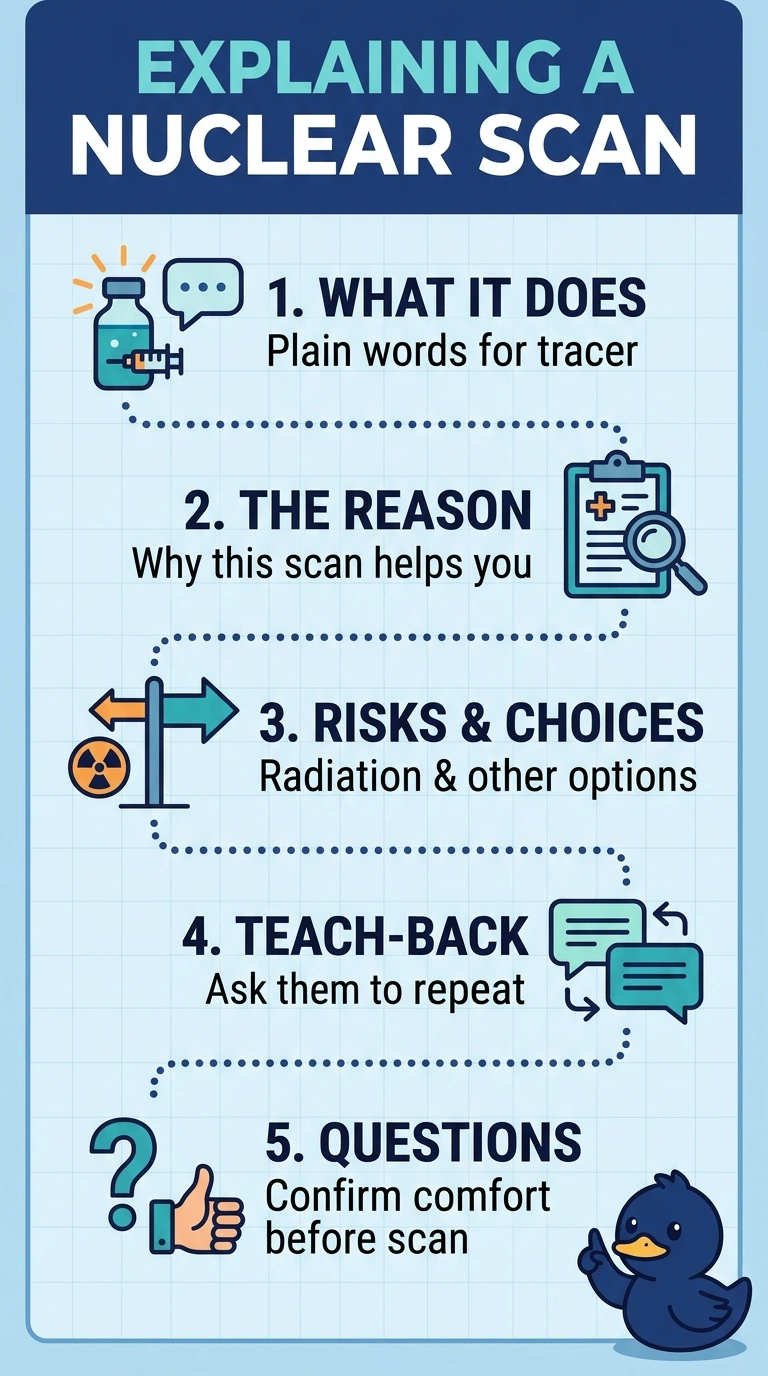
You need a plain-language explanation of the tracer, its benefit, radiation risk, and alternatives, then teach-back to check what you understood. A handout can be a helpful backup, but it’s like a map with missing roads if topics are left out—and it can’t show whether you understand.
Full Explanation
For this scenario, the department requires discussion of what the tracer does, the scan's benefit, radiation risk and alternatives in everyday words, followed by confirmation of understanding before administration. Teach-back—asking the patient to explain the information in their own words—can help identify misunderstandings and clarify what needs further explanation. A printed summary may be useful, but it does not by itself confirm understanding. Explaining scan timing and sensations does not cover all the required topics. Reviewing a consent form and checking understanding of risks alone also does not establish that the patient understands the benefit, alternatives and tracer purpose in everyday words. Consent requirements and who provides education can vary by setting; this item asks which approach meets the stated departmental requirements.