
A 57-year-old who had a thyroidectomy for papillary carcinoma arrives for a diagnostic I-131 whole-body scan to check for leftover or spread disease. She has been off her thyroid hormone for several weeks as instructed, feels well, and this morning's labs are already in the chart. Which lab value must be verified before the I-131 dose is given?
Select an answer to reveal the explanation.
Short Explanation
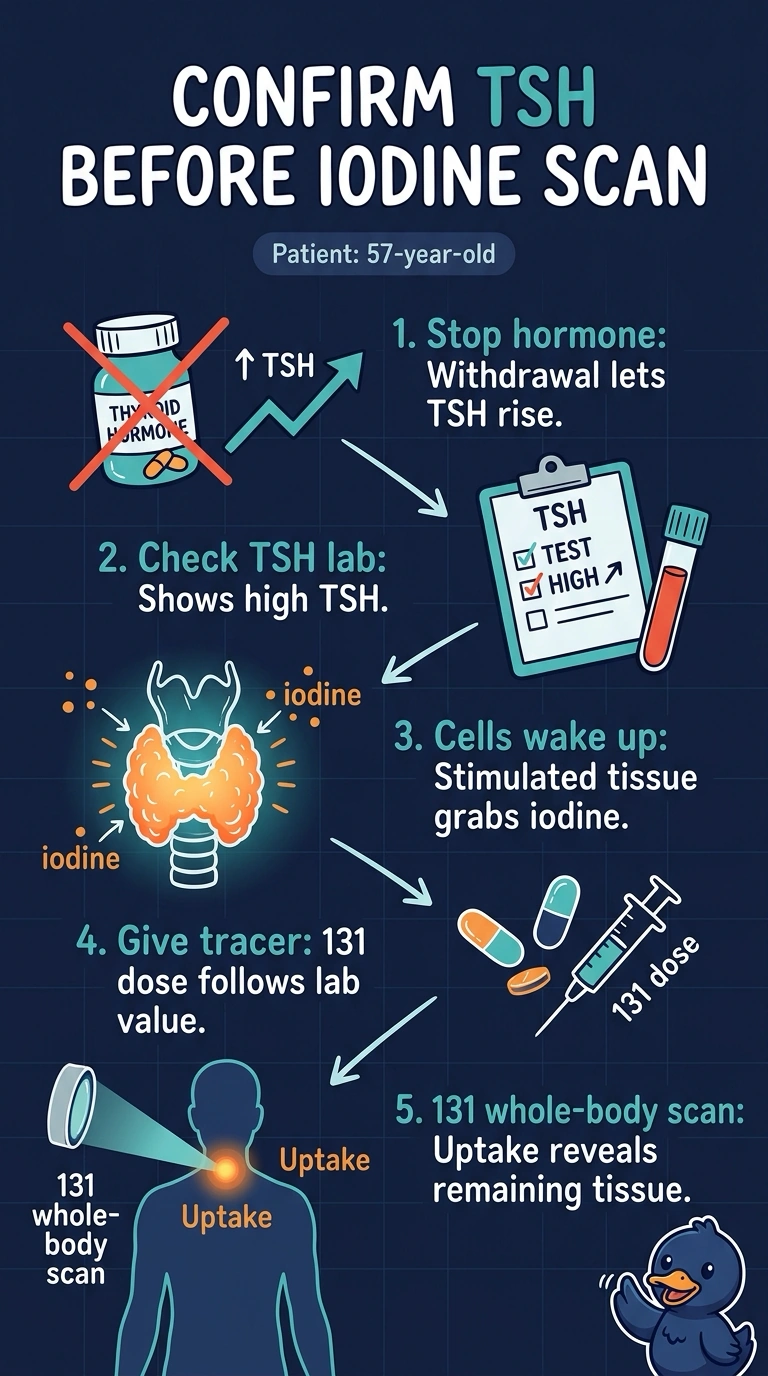
Your dose waits on one number: TSH must be clearly elevated, because that signal encourages leftover thyroid cells to take up iodine. Suppressed TSH, free thyroxine, and thyroglobulin tell you about hormone suppression, circulating hormone, or tumor burden—not whether adequate TSH stimulation has been achieved. It’s like turning the lights on before you search the room for what’s left.
Full Explanation
Diagnostic iodine imaging depends on the sodium-iodide symporter, and thyroid-stimulating hormone (TSH) stimulates its expression and activity, enhancing iodine uptake by residual or metastatic thyroid tissue. Confirming an elevated TSH after thyroid hormone withdrawal before injection helps ensure adequate stimulation for the scan; uptake can still vary with the amount and iodine-handling ability of any remaining tissue. A suppressed TSH at the patient’s usual therapy target does not meet the stimulation goal, since ongoing hormone therapy holds the pituitary quiet and may reduce uptake. Thyroglobulin monitoring does not establish that stimulation has been achieved: it is a marker of thyroid tissue or tumor burden, not the pituitary signal driving uptake. Free thyroxine measures circulating hormone rather than that signal, so a value at the usual suppression level says nothing about whether TSH is sufficiently elevated. Exam caveat: recombinant TSH can be used instead of hormone withdrawal in selected patients, so follow the prescribed protocol for confirming adequate stimulation before the dose. Practical check: read the TSH result beside the withdrawal dates in the chart, then confirm your department’s threshold before drawing up the dose.