
A patient with an akinetic inferior wall after an old infarction is being evaluated for revascularization. The cardiologist wants resting perfusion and myocardial metabolism compared within a single session so hibernating tissue can be identified, and the metabolic preparation has already started. Which viability protocol plan best meets those requirements?
Select an answer to reveal the explanation.
Short Explanation
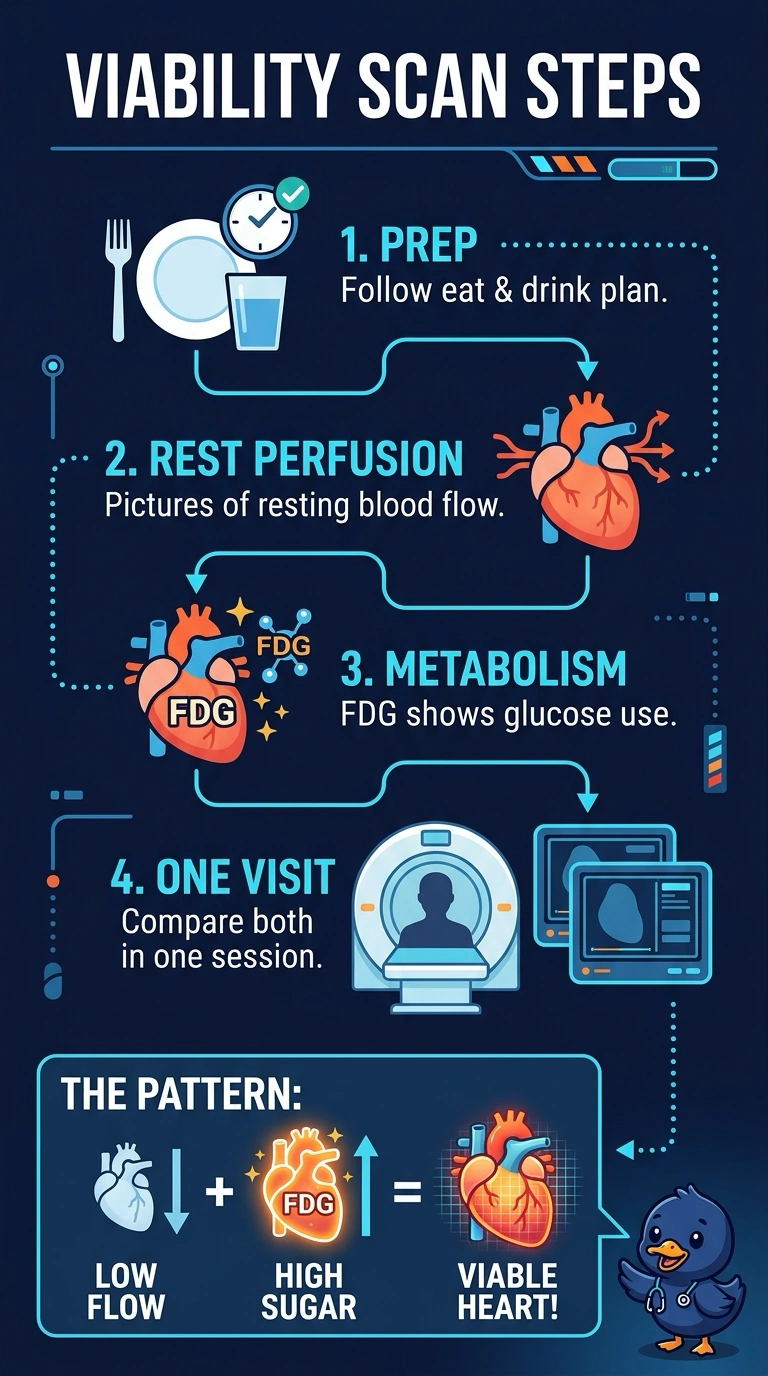
Viability shows up as a mismatch: poor resting flow but preserved glucose use in muscle that's still alive, and that's the viability signal you're hunting. Getting both halves in one sitting allows direct comparison of the same wall segments. A rest-only perfusion study tells you flow but leaves metabolism unanswered, like checking a fuel gauge while ignoring the engine.
Full Explanation
Viability is established by demonstrating a mismatch between perfusion and metabolism in segments with impaired wall motion, because reduced flow alongside preserved glucose utilization identifies hibernating myocardium that may recover after revascularization. Acquiring the resting perfusion phase and the FDG metabolic phase in a single session allows direct comparison of the same segments. Resting perfusion alone, even with nitrate enhancement that may improve tracer delivery to hibernating segments, supplies flow information only, so the metabolic half of the mismatch is never demonstrated. Scheduling the two phases on separate days may introduce differences in loading conditions, hydration, or uptake timing that complicate direct comparison, though it does not make comparison inherently invalid. Combining a stress phase with FDG imaging adds a flow-reserve assessment; it does not replace the resting perfusion phase needed for the requested viability comparison. On the exam, viability uses a rest-based perfusion-metabolism comparison, while stress imaging assesses inducible ischemia. As a practical check, confirm both phases and the preparation status are on the schedule before injection.