
A 47-year-old outpatient becomes flushed and itchy two minutes after an IV Tc-99m injection, then develops stridor, audible wheeze, and a blood pressure of 78/40. Epinephrine, diphenhydramine, oxygen, and IV fluids are stocked in the injection room, and the waiting area is busy. Which first-line treatment should you give for this suspected anaphylaxis?
Select an answer to reveal the explanation.
Short Explanation
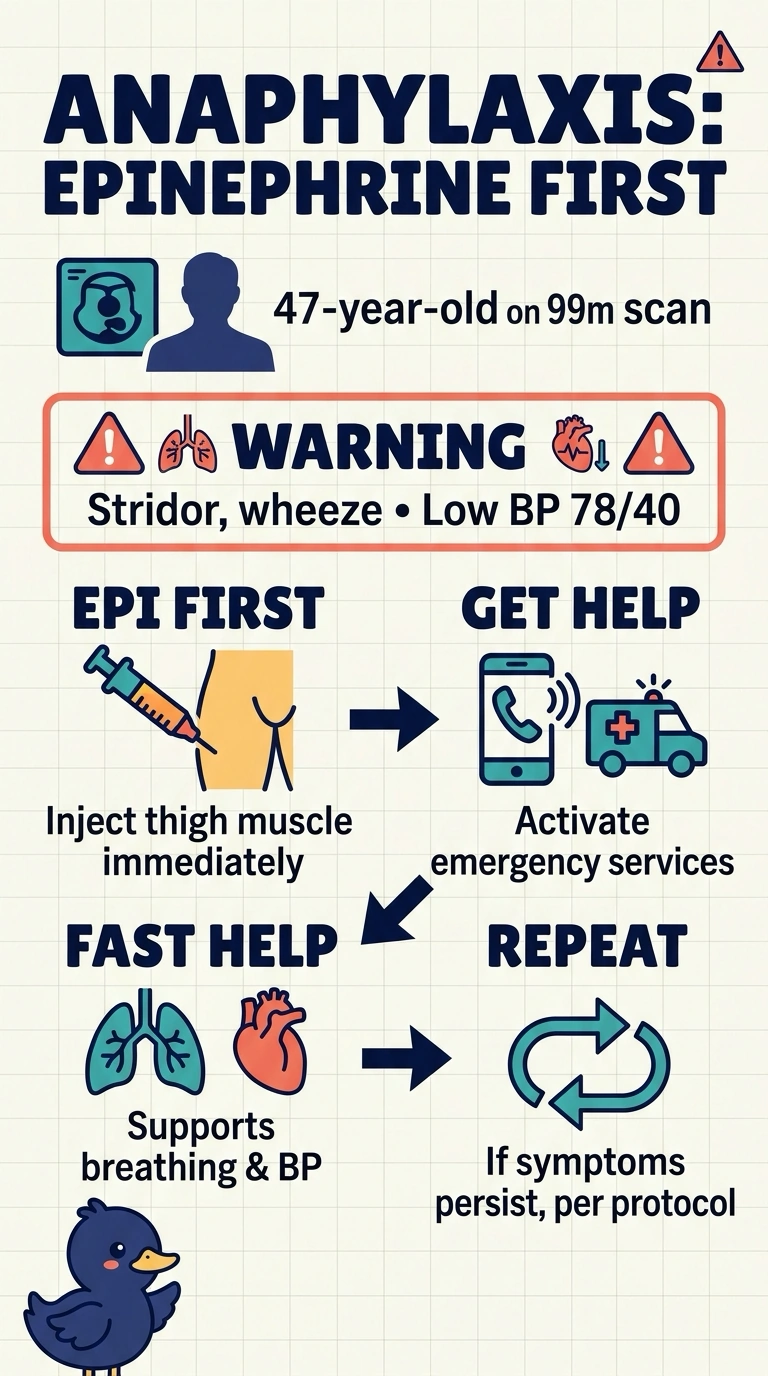
Your patient has signs of severe anaphylaxis, so give epinephrine into the muscle right away and activate emergency medical services. It’s the first step that can turn this rapidly worsening reaction around.
Full Explanation
Immediate intramuscular epinephrine is first-line for suspected anaphylaxis with stridor, wheeze, and profound hypotension; it treats airway swelling and circulatory compromise, and emergency medical services should be activated for urgent transfer and ongoing care. The subcutaneous route is not preferred because absorption is slower and less reliable than with IM injection, particularly during shock. Giving IM epinephrine but arranging transfer without activating EMS omits the needed emergency response: this patient may deteriorate rapidly and requires monitored transport and escalation of care. Keeping a markedly hypotensive patient seated upright risks worsening venous return and collapse; unless breathing needs dictate otherwise, position the patient supine with legs elevated, avoiding sudden standing. Oxygen and IV fluids are useful adjuncts, but neither replaces prompt IM epinephrine. Exam caveat: antihistamines may relieve skin symptoms, but they do not reverse laryngeal edema or shock and must not delay epinephrine. Practical check: use the anterolateral thigh, record the administration time, and reassess airway, breathing, and circulation while help is on the way; repeat IM epinephrine after about five minutes if severe symptoms persist, according to local protocol.