
After a mild anxiolytic before a myocardial perfusion study, a patient dozes on the imaging table and begins to slide toward the foot of it. The technologist tucks a foam wedge under the knees that the patient could push aside, and fastens a padded strap across the thighs that the patient would be unable to remove even when awake. Which classification applies to each device under patient-rights restraint rules?
Select an answer to reveal the explanation.
Short Explanation
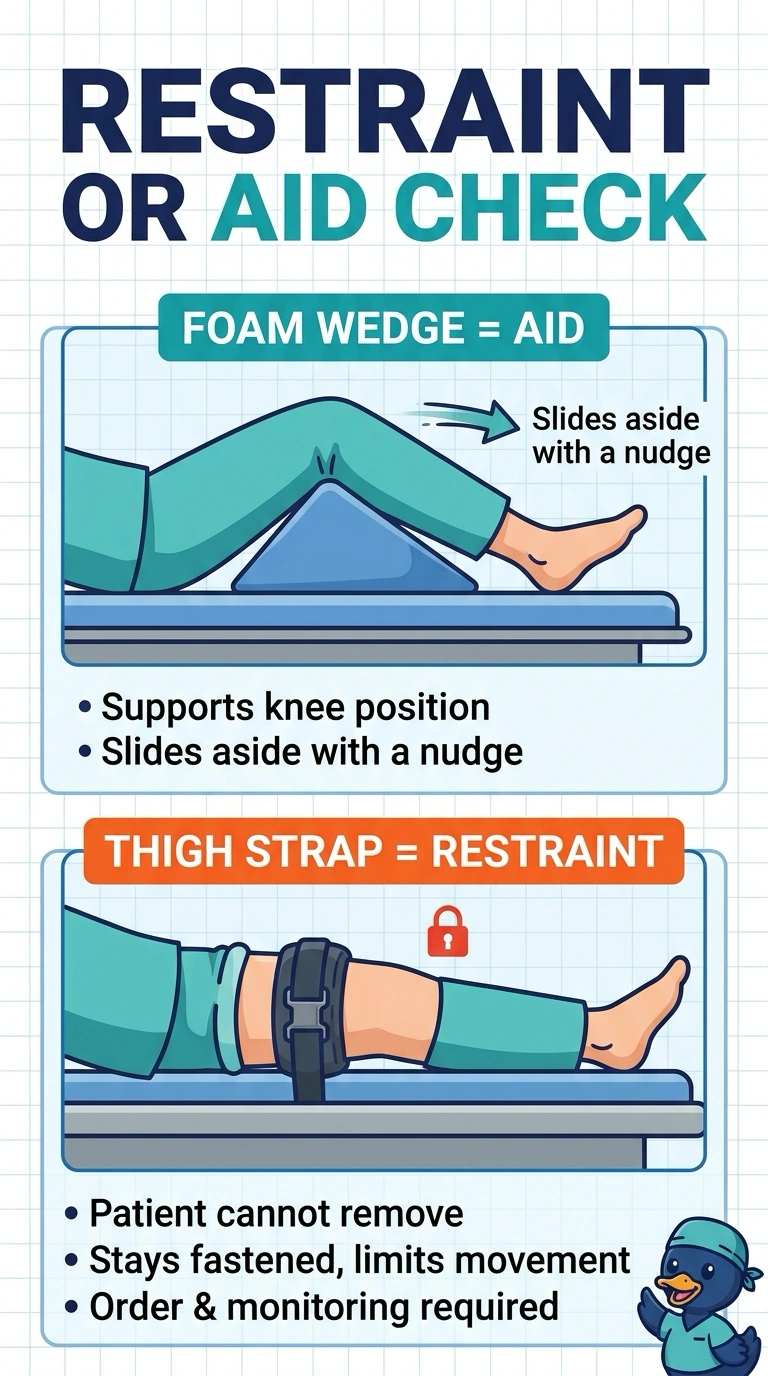
Your key clue is whether you can move the device yourself: the padded strap is a restraint because you can’t remove it and it limits your movement, while the wedge is a positioning aid. It’s like the difference between a cushion you can shift and a barrier that holds you in place.
Full Explanation
The classification turns on whether a device restricts the patient’s freedom of movement and whether the patient can readily remove it, not simply on its purpose, padding, or use during a procedure. The foam wedge is a positioning aid: it helps maintain the patient’s position, but the patient can push it aside. The thigh strap is a restraint because it limits movement and the patient cannot remove it, even when awake. Calling both devices positioning aids relies on their alignment purpose but overlooks the key fact that the strap is not removable by the patient. Calling both restraints recognizes that each may affect movement while the patient is drowsy, but overlooks that the wedge can be pushed aside; its presence alone does not meet the relevant restraint criterion. Classifying the wedge as a restraint and the padded strap as an aid gives undue weight to the wedge’s physical effect and the strap’s comfort or positioning purpose, rather than applying the same movement-and-removability test to each device. An exam caveat: sedation by itself does not make every positioning aid a restraint, and a device’s label or intended purpose does not settle its classification. In practice, assess the device as actually used, determine whether the patient can readily remove or move it, and follow facility policy for documentation and required clinical review.