
A patient with clear fluid draining from the nose after a fall is referred for a study to locate the leak, and the physician wants the site confirmed as well as followed through the day because drainage can be intermittent. Which imaging plan best localizes this CSF leak?
Select an answer to reveal the explanation.
Short Explanation
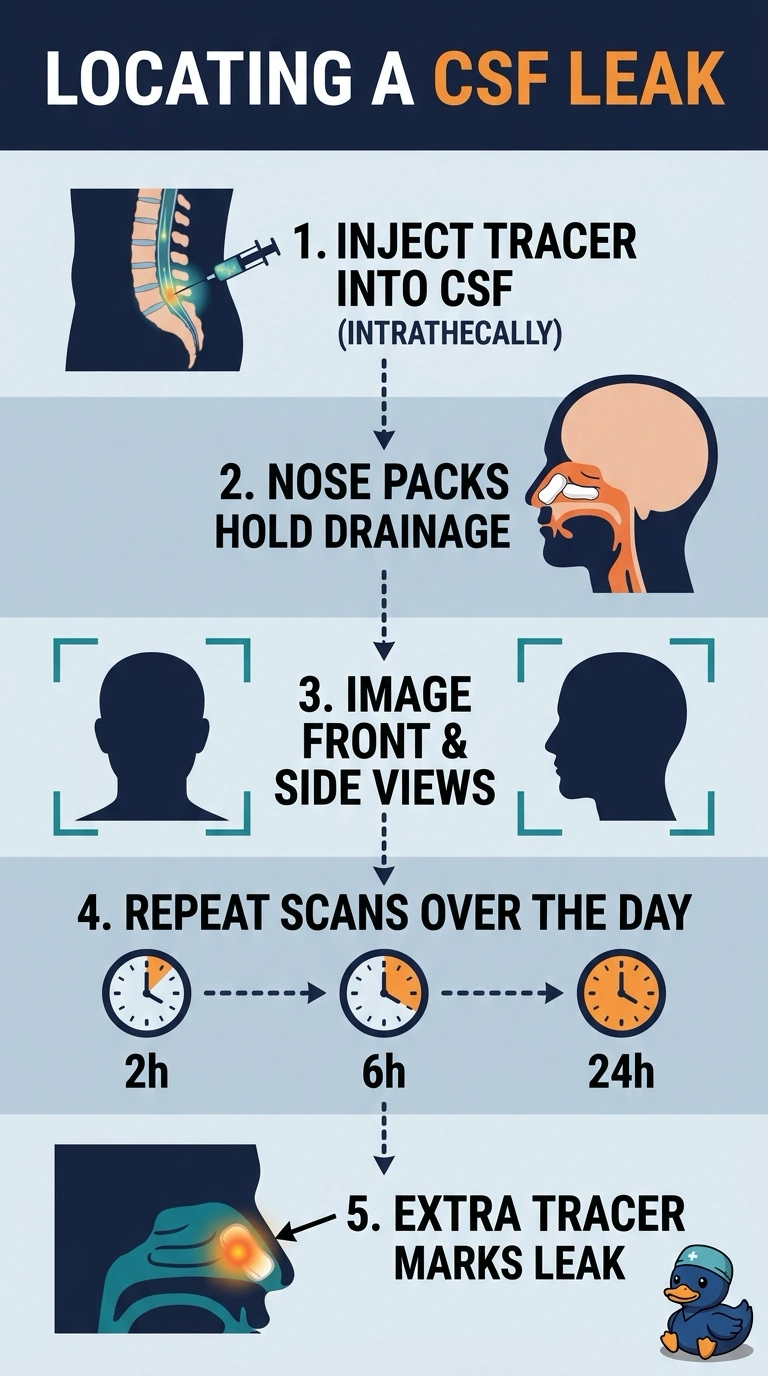
You’ve got the right plan: intrathecal tracer plus repeated head images can help detect a leak that comes and goes. Nose packs collect drainage so it can be checked for tracer activity.
Full Explanation
To localize a CSF leak, tracer must enter the CSF space, and imaging must look for activity outside it. Intrathecal tracer followed by anterior and side views of the head at intervals through the day, with nose packs, can show abnormal activity near the leak or tracer in collected drainage. Serial imaging matters because drainage can be intermittent: a slow leak may not appear during the first hour, so one early set of head images may miss it. Packs also provide a sample that can be checked for tracer activity. Timing tracer arrival at the basal cisterns and cortical sulci assesses CSF flow and circulation, but does not by itself localize a leak. Imaging the whole spine in anterior and posterior views is not the best plan for this suspected cranial leak. Anterior and lateral head views can help localize abnormal activity but do not necessarily identify the exact defect. Protocols vary, so confirm the route on the order and follow local protocol for pack placement and imaging timing.