
During a myocardial perfusion study, an adult outpatient who reports fainting with past blood draws becomes pale, clammy, and lightheaded a few minutes after a radiopharmaceutical injection through a peripheral IV, and the pulse is slow. Which immediate intervention best reverses the mechanism behind this injection reaction?
Select an answer to reveal the explanation.
Short Explanation
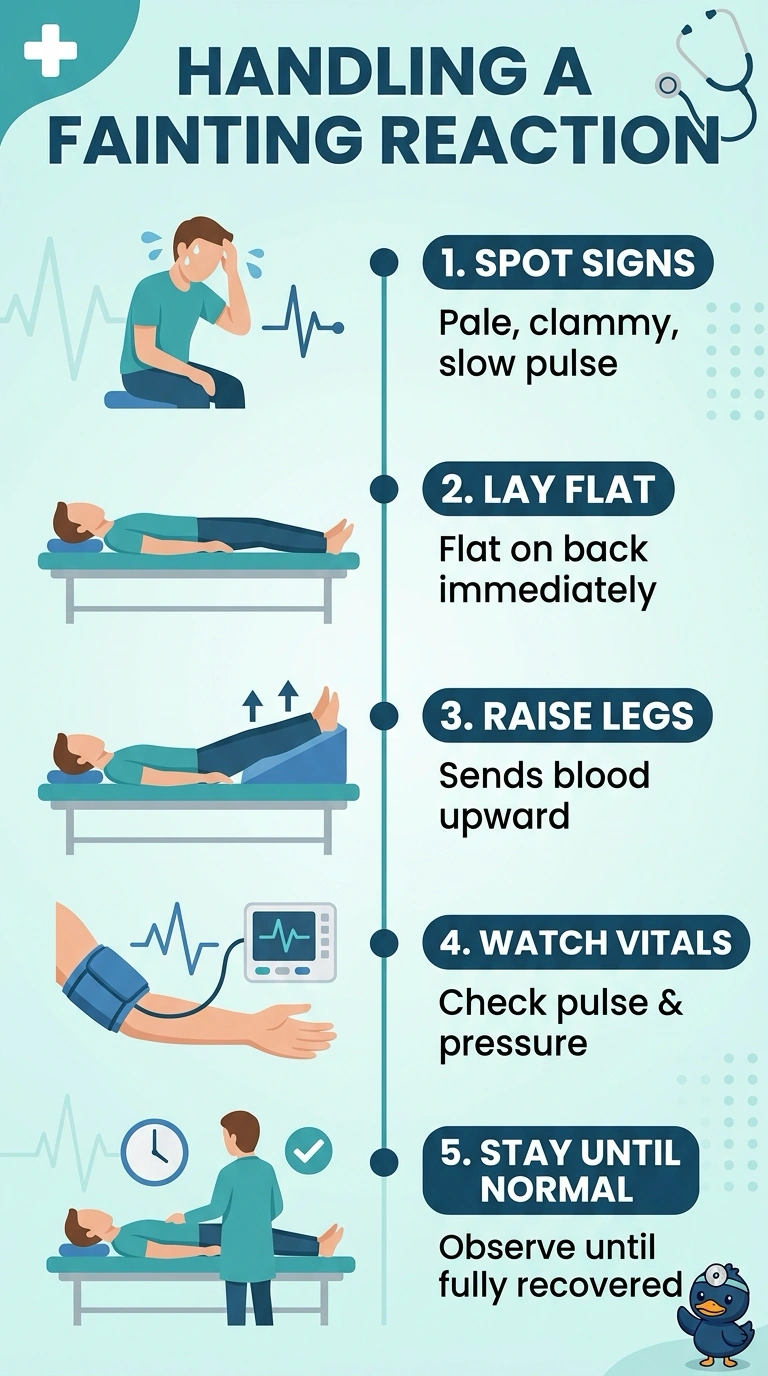
You're seeing a classic vasovagal response, where the body overreacts to the needle by slowing the heart and dropping blood pressure so the brain gets less of it. Laying the patient flat and lifting the legs lets gravity push blood back toward the head, so positioning does the work a drug would only attempt. It's a plumbing problem: change the slope of the pipe rather than pour in a chemical.
Full Explanation
A vasovagal episode is a brief loss of vascular tone: the vagus nerve slows the heart while peripheral vessels relax, so blood pressure falls, cerebral perfusion drops, and the patient turns pale, clammy and bradycardic. The first-line response is mechanical rather than pharmacologic - laying the person supine with the legs elevated uses gravity to return venous blood to the heart, which raises cardiac output and restores brain perfusion within seconds, while continuous vital-sign monitoring confirms recovery. The antihistamine approach assumes a histamine-mediated hypersensitivity, which shows up as hives, bronchospasm or airway swelling instead of pallor with a slow pulse, so the drug targets the wrong mechanism. The upright-positioning approach is the classic postural error, because raising the head lets blood pool in the legs and deepens the hypotension you are trying to correct. The oxygen-and-notify approach is defensible supportive care that does no harm, but it skips the positioning action that actually reverses the event. Exam caveat: fainting is managed by position and observation, whereas a true allergic reaction is managed by drug and airway. Practical check: lay the patient back with support before you start the injection and keep needle time short, since a nervous patient plus a prolonged stick sets up exactly this scene.