
The PACS server will be offline all morning while the full schedule keeps running, and the assigned reader is off site and wants to work through the cases during that window. Every study must also stay traceable with its original images recoverable for later loading. Which interim approach keeps the studies readable and recoverable until the system returns?
Select an answer to reveal the explanation.
Short Explanation
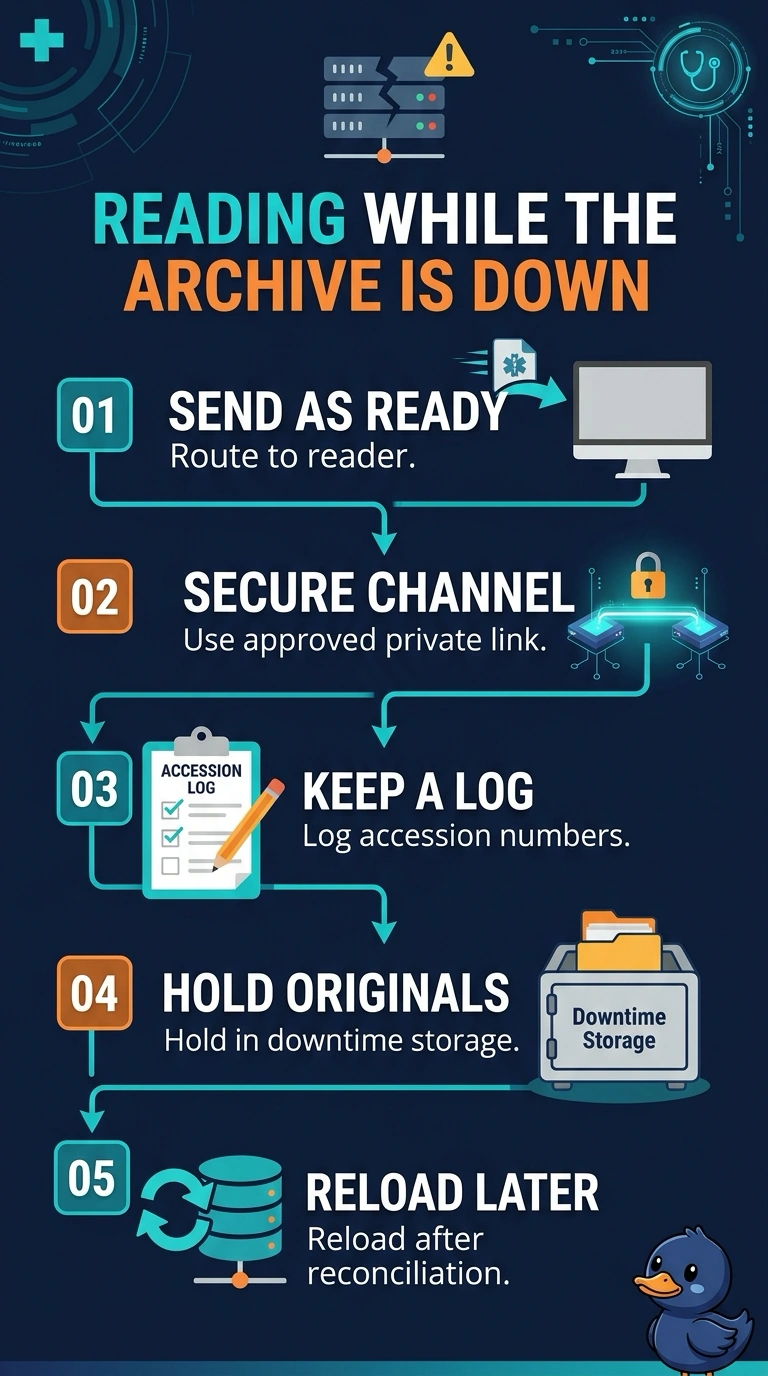
You can keep the cases readable during the outage by sending each study to the off-site reader through an approved secure channel. Keep a verified original in approved downtime storage and use an accession log to trace each study for reloading later.
Full Explanation
Sending each study to the off-site reader through an approved secure channel lets the reader review cases while PACS is offline. Keeping a verified original in approved downtime storage makes the images recoverable for later loading, and recording each accession provides reliable case-level traceability. Retaining originals and recording accessions but waiting until the morning queue is complete to send the cases preserves and tracks them, yet delays access until after the reader needs to work through them. Transmitting each study securely and retaining a verified original protects confidentiality and recoverability, but reconciling only by patient name and exam time does not provide the specified accession-based tracking and can make case linkage ambiguous. Queuing studies on the workstation, retaining originals, and logging accessions also preserves them, but sending the complete queue only after the final scan prevents review during the outage window. Exam caveat: distinguish eventual delivery from access within the required time, and do not substitute demographic matching for accession tracking. Practical check: confirm that downtime storage is approved and the retained copy is verified, then reconcile each logged accession against the transmitted study and the later PACS load.