
At the dose-calibration bench, a tech knocks over a bottle of solvent used to clean well-counter parts; the label is soaked through and the vapor is strong. The safety officer asks that cleanup follow the product's safety data sheet. Which SDS section should the responder consult to choose the spill cleanup method?
Select an answer to reveal the explanation.
Short Explanation
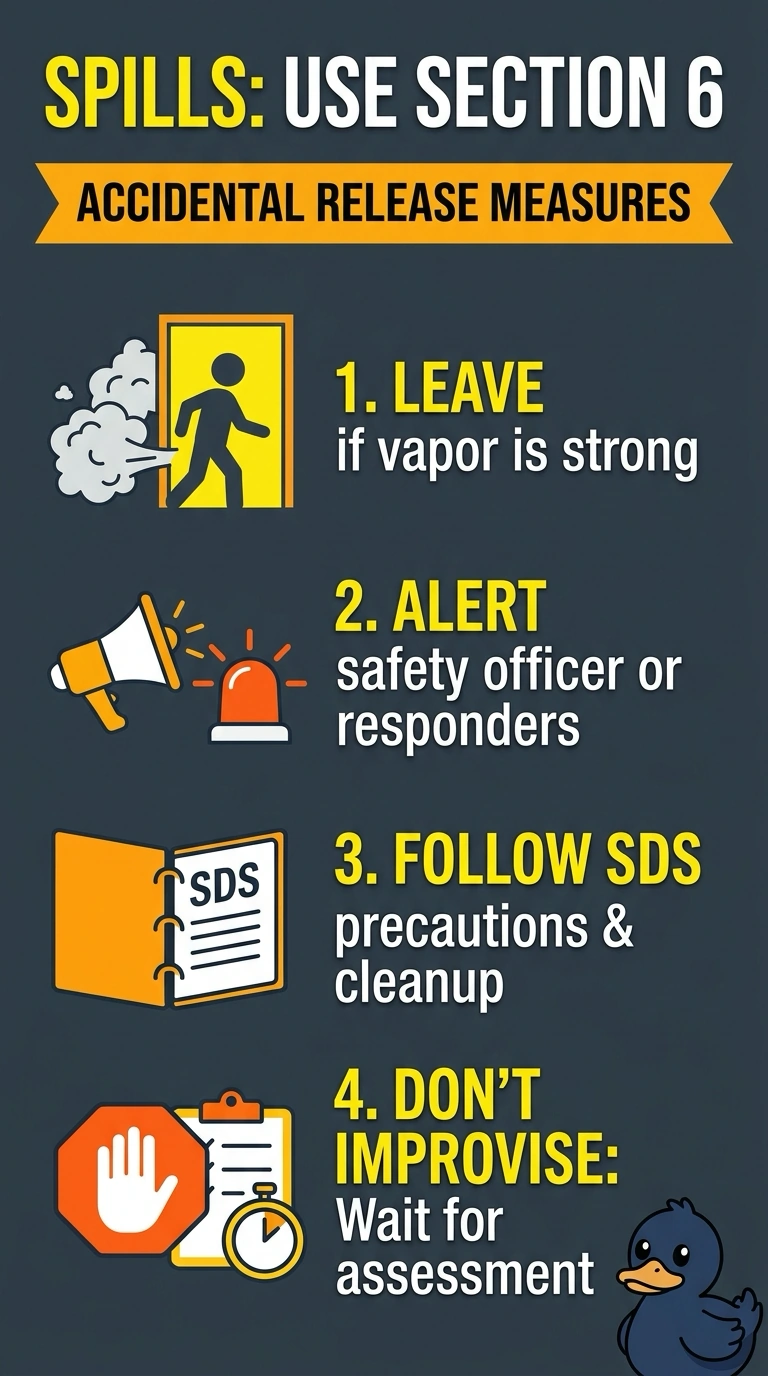
You'll find it fast: Section 6 of the safety data sheet covers accidental releases and gives precautions for containing a spill. If vapor is strong and the product is unidentified, leave the area and alert the safety officer rather than attempting cleanup.
Full Explanation
Section 6, Accidental release measures, is the appropriate place to find product-specific spill response information, including precautions, containment methods, cleanup procedures, and recommended protective equipment. Because the label is soaked and vapor is strong, the responder should not rely on appearance or improvise; the SDS and the site’s spill plan should guide whether trained personnel can manage the release or whether the area must be isolated and specialist help called. Section 3 can help identify ingredients and concentrations, which is useful when confirming the substance, but composition data do not tell responders how to contain or remove a spill. Section 4 addresses first aid for people exposed by inhalation, skin contact, or other routes; it supports treatment decisions rather than cleanup of the liquid. Section 8 covers exposure controls and PPE for handling the product, so it can inform protection and ventilation, but it is not the section that specifies spill containment and removal. Exam caveat: SDS numbering is standardized in the familiar 16-section format, but a real SDS may direct readers to related sections or provide additional site-specific instructions. Practical check: verify the SDS product identity and revision against the container or inventory, then follow the facility spill procedure and use only personnel and equipment authorized for that spill.