
A patient arrives for adenosine stress myocardial perfusion imaging after drinking coffee this morning. Rest images are complete, the patient feels well, and vital signs are normal. Which step best handles the caffeine before the pharmacologic stress phase?
Select an answer to reveal the explanation.
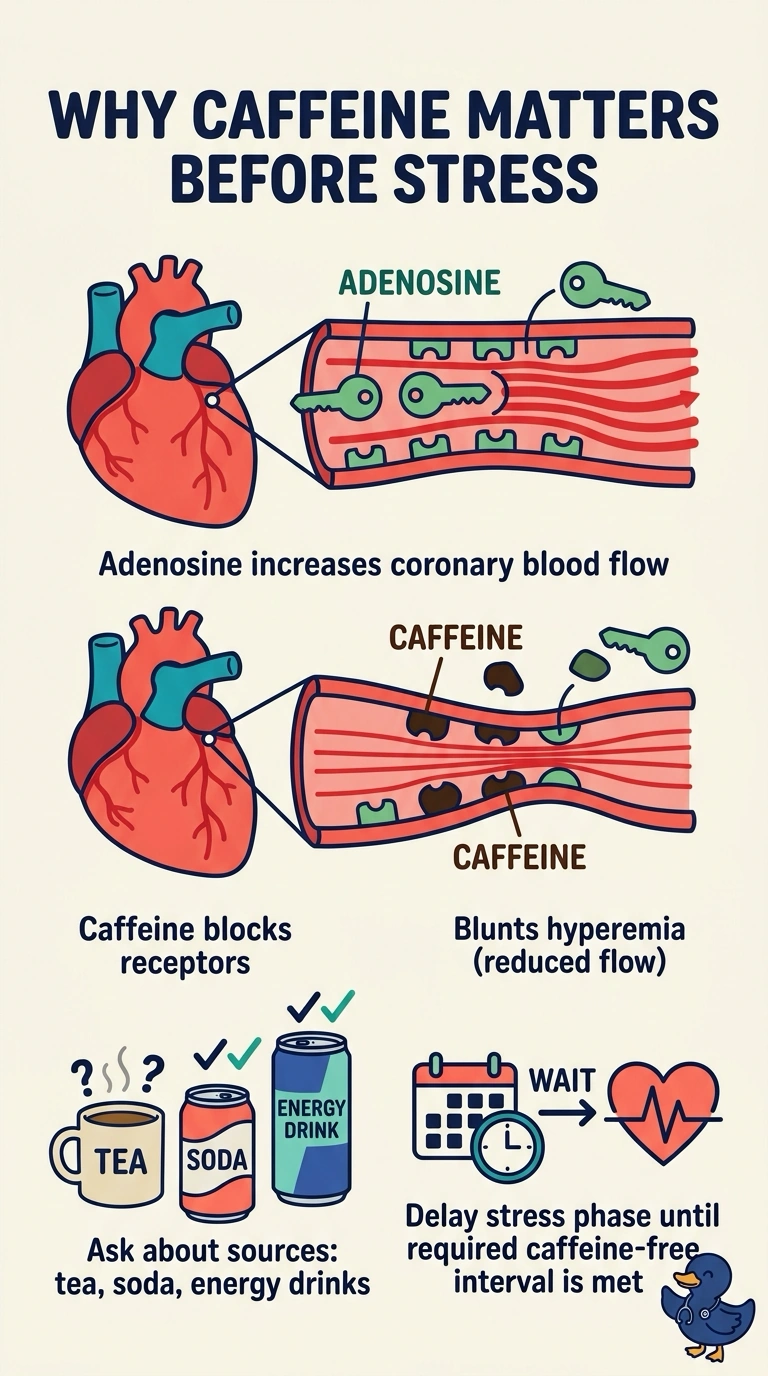
Short Explanation
Caffeine blocks adenosine receptors, which can blunt the increase in coronary blood flow the test relies on—like putting a speed bump in the signal. To keep the study reliable, delay the stress phase until you’ve met the required caffeine-free interval.
Full Explanation
Adenosine stimulates receptors on coronary resistance vessels, producing hyperemia that helps expose flow-limiting disease and drives tracer uptake at stress. Caffeine blocks adenosine receptors and can blunt that response, potentially reducing the sensitivity of the images. Giving the stress agent as ordered with only a note in the record does not restore the receptor response. Rest images alone do not complete the planned stress-rest study; when feasible, delay the stress phase until the required caffeine-free interval has been met. Injecting the stress tracer before adequate pharmacologic stress cannot be corrected by later image acquisition, because myocardial tracer uptake reflects perfusion around the time of injection. Caffeine is also found in tea, soft drinks, energy drinks, and some headache remedies, so ask about all sources and follow the applicable preparation instructions.