
A patient with an old anterior infarct, an ejection fraction of 35% and recurring chest pain is being considered for revascularization. The team must distinguish hibernating muscle from scar, compare flow and metabolism in the same walls, and use a controlled myocardial FDG preparation with a documented glucose value. Which myocardial viability plan meets those requirements?
Select an answer to reveal the explanation.
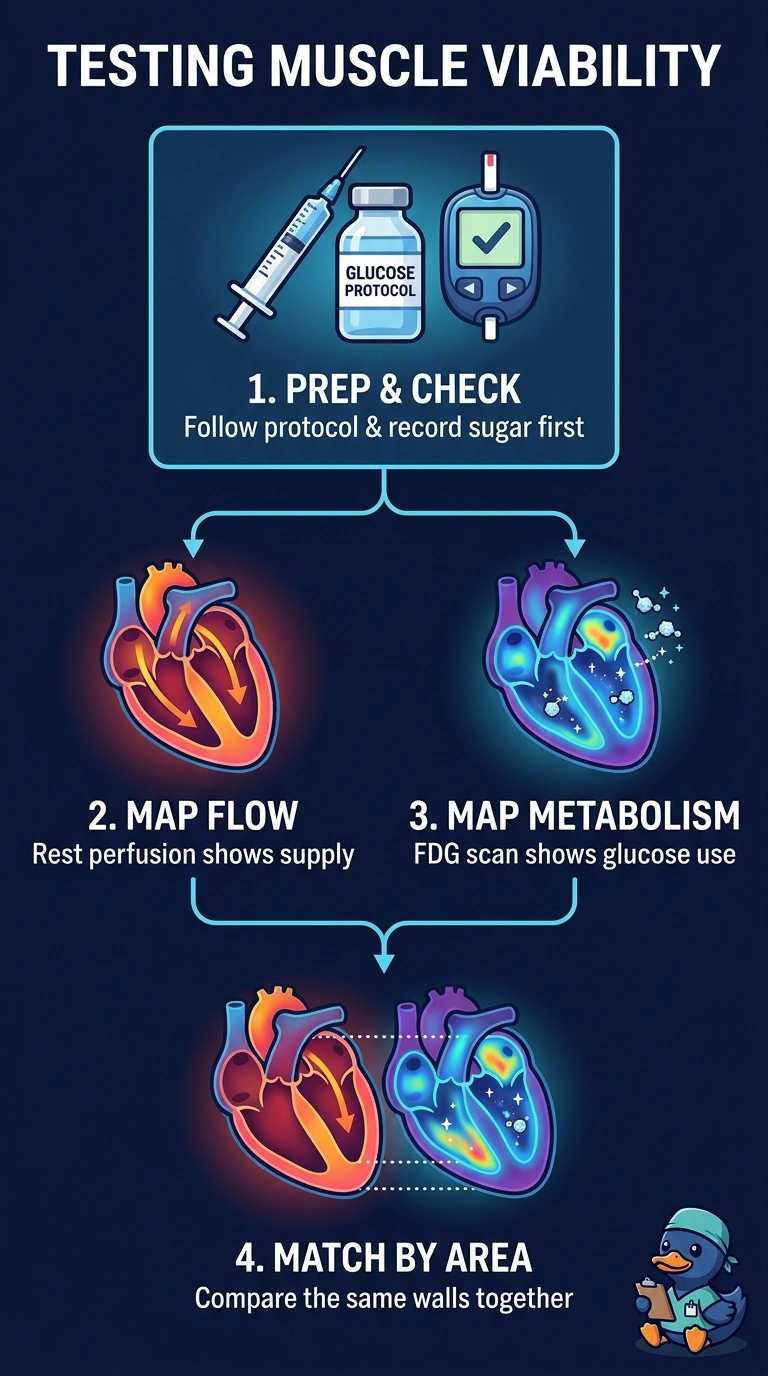
Short Explanation
The flow-versus-FDG mismatch tells you whether muscle is hibernating or replaced by scar, which is what a revascularization decision rests on. Hibernating myocardium is tissue sitting in standby mode; it's still hungry for blood but not dead. Controlled glucose preparation and a glucose check help support interpretable myocardial FDG uptake.
Full Explanation
Viability is decided by comparing perfusion with glucose metabolism in the same myocardial segments: reduced flow with preserved FDG uptake marks hibernating tissue that can recover after revascularization, while reduced flow with reduced uptake marks scar that will not. Wall-by-wall matching is what makes the mismatch interpretable, because a single global uptake value can hide a mismatched territory inside an average. A perfusion-only PET approach fails on mechanism, since quantified flow reserve describes blood supply but says nothing about whether the myocytes are still metabolically active. A breakfast-timed paired study without controlled glucose preparation fails on preparation, because recent intake can alter insulin and blood glucose and affect myocardial FDG uptake. A separate whole-body FDG acquisition reported as overall ventricular uptake fails on comparison, because it does not provide a territory-by-territory comparison with perfusion. Glucose-preparation protocols vary, so follow the local protocol and document the glucose value. Practical check: verify the preparation and documented glucose value before the FDG dose is drawn up.