
During a scheduled study, a competent patient clearly tells the technologist to stop before the tracer is injected, but the team continues because the physician's order is already written. The patient finishes the study, is physically unharmed, and then complains to the department. Which legal concept best describes the violation that occurred?
Select an answer to reveal the explanation.
Short Explanation
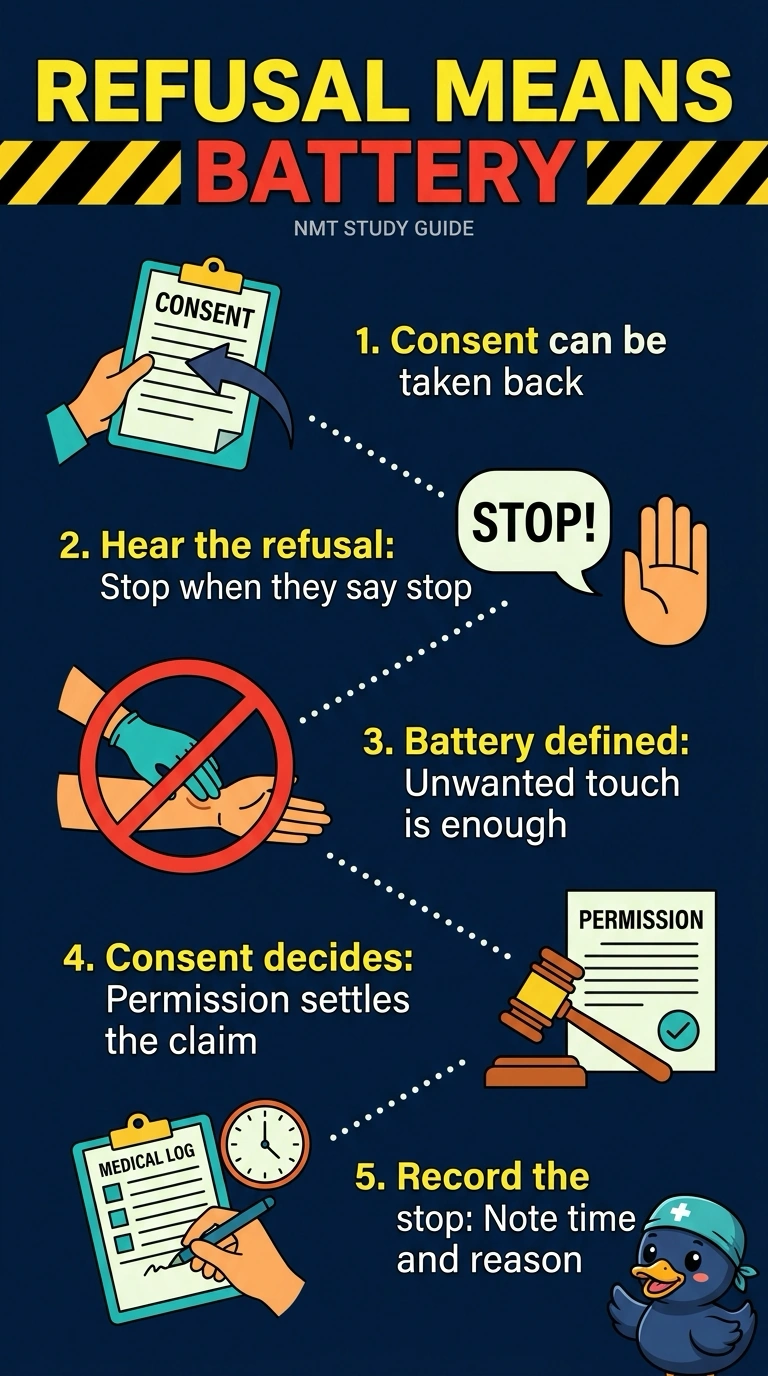
Consent is the whole issue here, because the patient had already taken it back before the injection. It's like a ticket you can reclaim at any moment: withdrawn consent alone makes the contact unlawful, even though everyone walked away uninjured.
Full Explanation
Battery is an intentional, unprivileged contact made without consent, and consent can be withdrawn at any moment, so proceeding after a clear refusal is the textbook example. Damages are not an element of battery, which matters here because the patient finished the study unharmed; the wrongfulness lies in the contact itself rather than in an outcome. A negligence analysis requires duty, breach of the standard of care, proximate cause and actual damages, so without harm the claim stalls and that framing misses the central fact. Malpractice is negligence committed by a professional within the practice of the profession, which means it inherits the same damages problem and also assumes a clinical judgment that went wrong rather than a deliberate act after refusal. An informed consent analysis addresses inadequate disclosure of risks, benefits and alternatives before agreement; because this patient was informed and refused outright, disclosure is not the failing. Exam caveat: jurisdictions differ, and some states handle unauthorized treatment through informed consent statutes rather than battery, so recognize the conduct before the label. Practical check: stop immediately on refusal, document the exact words and time, and notify the physician that the study was halted.