
An elderly outpatient who uses a cane and has fallen twice in the past month stands up in the waiting room and reports light-headedness before a bone scan. The study needs the patient to walk to the camera and empty the bladder first. Which steps should the technologist take before any further standing or walking?
Select an answer to reveal the explanation.
Short Explanation
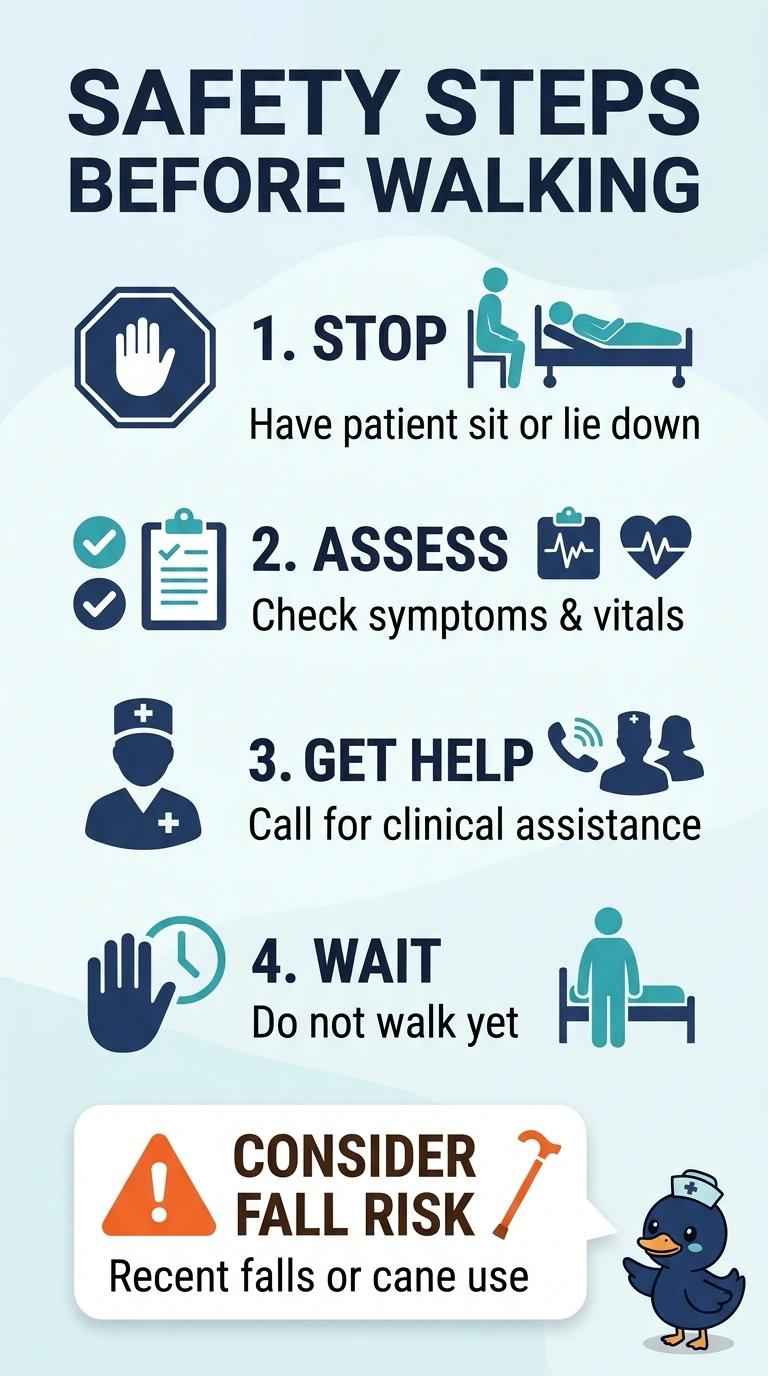
Treat light-headedness like a stop sign: have your patient sit or lie down, then check their symptoms and vital signs and get clinical help. Don’t let them stand or walk again just because the dizziness seems to pass; safety comes first.
Full Explanation
Have the patient sit or lie down, assess symptoms and vital signs, and obtain clinical assistance before any further standing or walking. Recent falls, cane use, and active light-headedness make a routine trip to the camera unsafe to treat as a simple escort. Seating the patient and checking symptoms and vital signs, then walking with them once the light-headedness settles without clinical assistance, is inadequate: symptom resolution alone does not establish that walking is safe in this high-risk situation. Seating the patient and calling clinical staff, but escorting them once they deny dizziness without checking vital signs, leaves an important part of the assessment undone; a patient may feel better while still having clinically relevant changes. Obtaining vital signs and assistance but proceeding when readings are within usual limits without reassessing symptoms also falls short, because usual readings do not establish that the patient is no longer light-headed or safe to mobilize. Exam caveat: orthostatic measurements may be appropriate when indicated, but they involve position changes and should be done only when clinically directed and with suitable support—not as a reason to resume unassisted mobility. Practical check: before any transfer or walk, confirm the patient’s current symptoms, review vital signs, and ensure the responsible clinical staff member has assessed and agreed on a safe plan.