
An outpatient scheduled for rest and stress myocardial perfusion imaging cannot use the treadmill because of severe leg pain, and the nurse hears audible wheezing before the stress phase begins. The patient is otherwise stable and ready to proceed today. Which stress approach should the team use for this study?
Select an answer to reveal the explanation.
Short Explanation
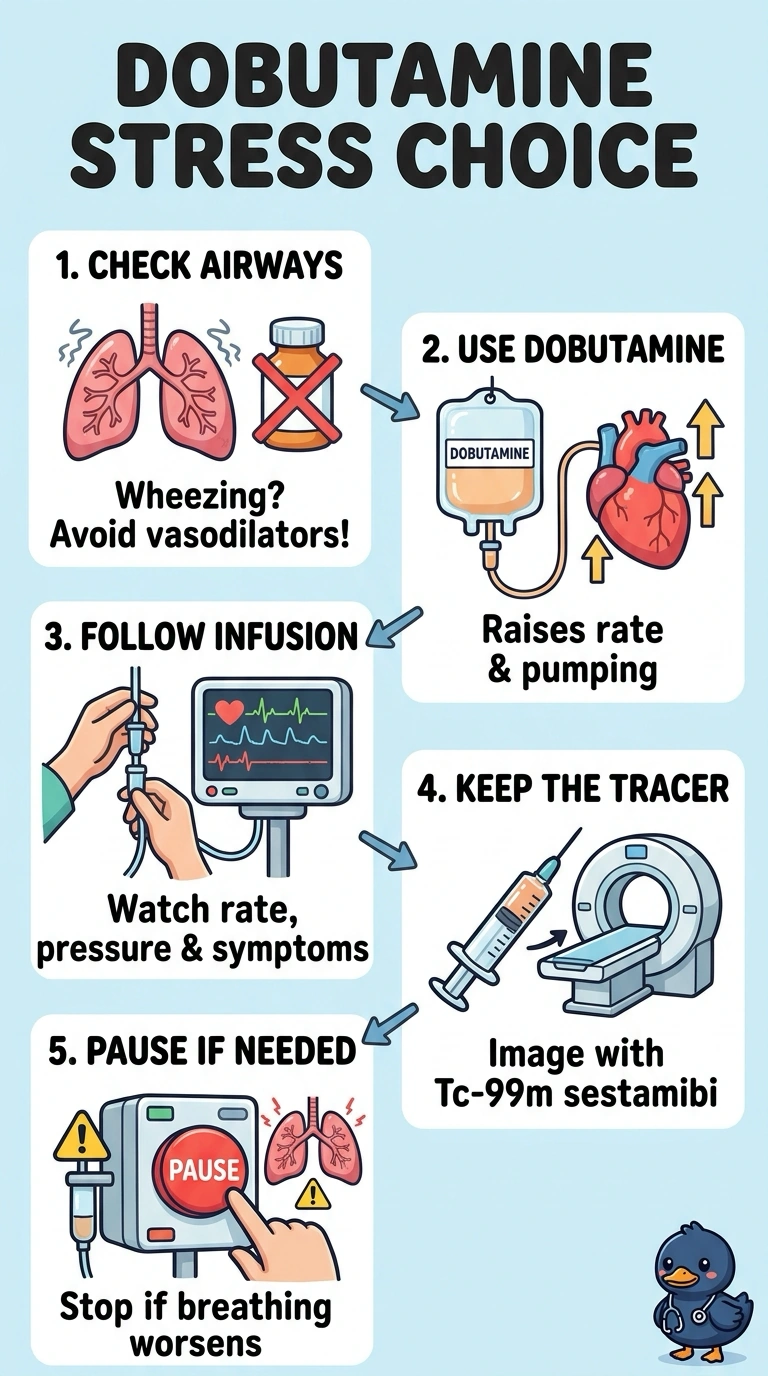
Wheezing is the deciding detail, because the usual rapid vasodilator drugs can tighten the airways further. Dobutamine drives heart rate and contractility through another pathway, so you'll still get a solid pharmacologic stress while the airways stay calm.
Full Explanation
Dobutamine is the appropriate stress agent because severe leg pain prevents treadmill exercise, while audible wheezing signals active bronchospasm and makes pharmacologic coronary vasodilators a poor choice. Dobutamine increases myocardial oxygen demand and can provoke ischemia without relying on exercise or directly inducing coronary vasodilation; Tc-99m sestamibi is a standard perfusion tracer for this study. Adenosine is a commonly used pharmacologic stress agent when exercise is not possible, but it can cause bronchoconstriction, so active wheezing is the decisive reason not to use it here. Regadenoson also provides pharmacologic vasodilator stress without requiring a treadmill, but its relative selectivity does not make it appropriate to ignore active wheezing. Dipyridamole is another established vasodilator stress approach and avoids exercise-related leg pain, yet it can also provoke bronchospasm and is unsuitable with active wheezing. Exam caveat: regadenoson may be considered in some patients with stable, well-controlled obstructive lung disease under appropriate protocols; that is different from audible wheezing before stress. Practical check: reassess respiratory symptoms and lung sounds, review relevant medications and contraindications, and confirm the chosen stress protocol and tracer with the imaging team before proceeding.