
A radiopharmacy checks a Mo-99/Tc-99m generator eluate against its release sheet: aluminum ions and pH are within limits, radiochemical purity of pertechnetate exceeds 95%, and 99.9% of the activity is Tc-99m. Which purity aspect does the 99.9% figure describe for this eluate?
Select an answer to reveal the explanation.
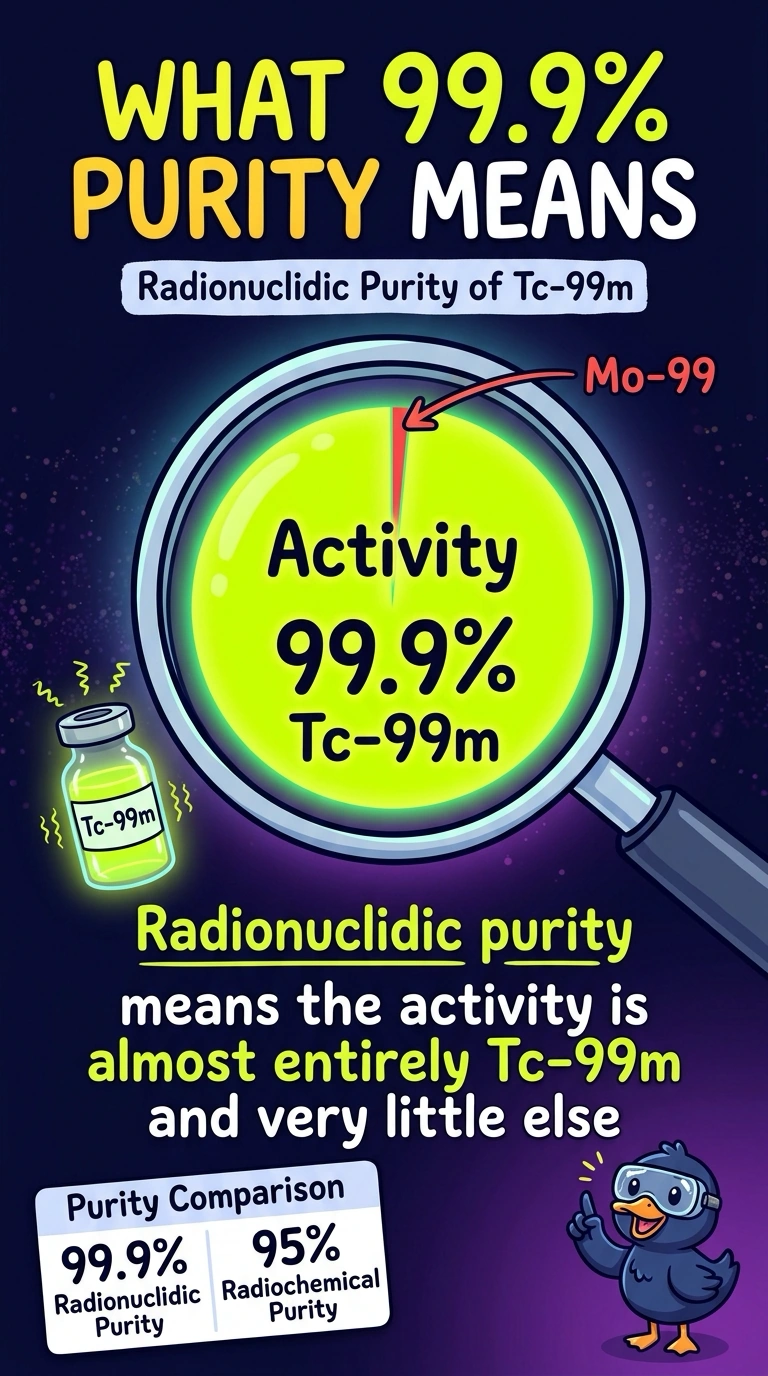
Short Explanation
You're confirming which nuclide is actually present, rather than how it is chemically bound or how clean the solution is. It's like checking the ingredient list instead of the recipe. That tells you contaminant nuclides add almost nothing to the dose.
Full Explanation
Radionuclidic purity is the share of total activity that is the intended nuclide, so a value above 99.9% means Tc-99m itself accounts for essentially all the activity at the time of measurement. Contaminant nuclides may add unwanted radiation and dose without contributing useful image counts. The radiochemical purity reading fails because it reports the chemical form Tc-99m has taken, such as free pertechnetate versus bound tracer, so a high percentage says nothing about which nuclide is decaying. The chemical purity limits fail because aluminum concentration and pH describe properties of the solution rather than the identity of the emitting source, and those limits mainly protect the kit labelling reaction. The sterility and pyrogenicity properties fail because they concern microbial contamination and fever-causing substances rather than which nuclide is producing the activity. Exam caveat: these purity terms swap easily under time pressure, so anchor each one to a keyword, nuclide, chemical form, foreign substance. Practical check: on the release sheet, match the radionuclidic figure to the nuclide identity line and confirm it is a share of total activity.