
A patient checks in for a vasodilator stress myocardial perfusion study at an outpatient clinic. The patient had caffeinated coffee at breakfast, uses an albuterol inhaler for mild asthma, and takes metformin for type 2 diabetes. The order specifies regadenoson as the stress agent. Which preparation step must be completed before the regadenoson injection proceeds?
Select an answer to reveal the explanation.
Short Explanation
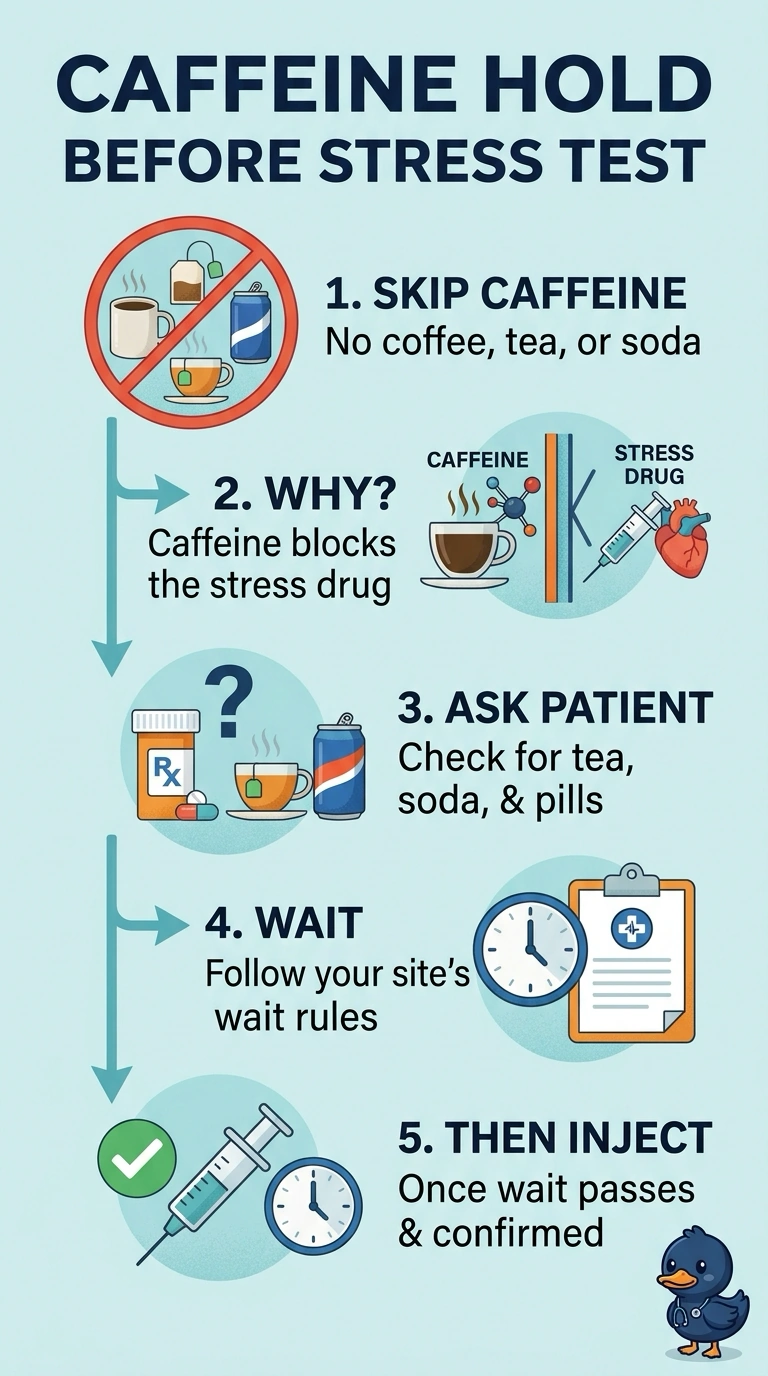
Nice catch, you spotted the classic trap: caffeine sits on the same receptors regadenoson needs, so the stress images could look falsely abnormal. It's like taping the door shut before the guest arrives. The caffeine hold is what protects the study.
Full Explanation
Caffeine is a methylxanthine that competes for the adenosine receptors regadenoson is designed to stimulate, so residual caffeine blunts coronary hyperemia and can make the stress images look abnormal for the wrong reason. Waiting out the department's caffeine hold restores the expected hyperemic response, which is the only way to keep the stress phase diagnostic. The proceed-as-ordered approach trusts the paperwork and ignores receptor competition, the aminophylline pretreatment approach adds another methylxanthine that blocks the very receptors needed for hyperemia, and the rest-first plan still delivers the stress injection while caffeine is active, so both timing shortcuts leave the stress images uninterpretable. One exam caveat: caffeine hides in tea, cola, chocolate, and some headache or energy products, and the hold interval is set by each department's protocol rather than one universal number. Before you inject, ask the patient about every source in their own words and document the time of the last dose.