
A clear, solution-type technetium-99m preparation for a renal study appears free of visible matter under backlighting, yet chromatography on the same vial produces a large free pertechnetate peak. The release decision hinges on one quality control measurement for this batch. Which quality control result determines whether this vial is released to the clinic?
Select an answer to reveal the explanation.
Short Explanation
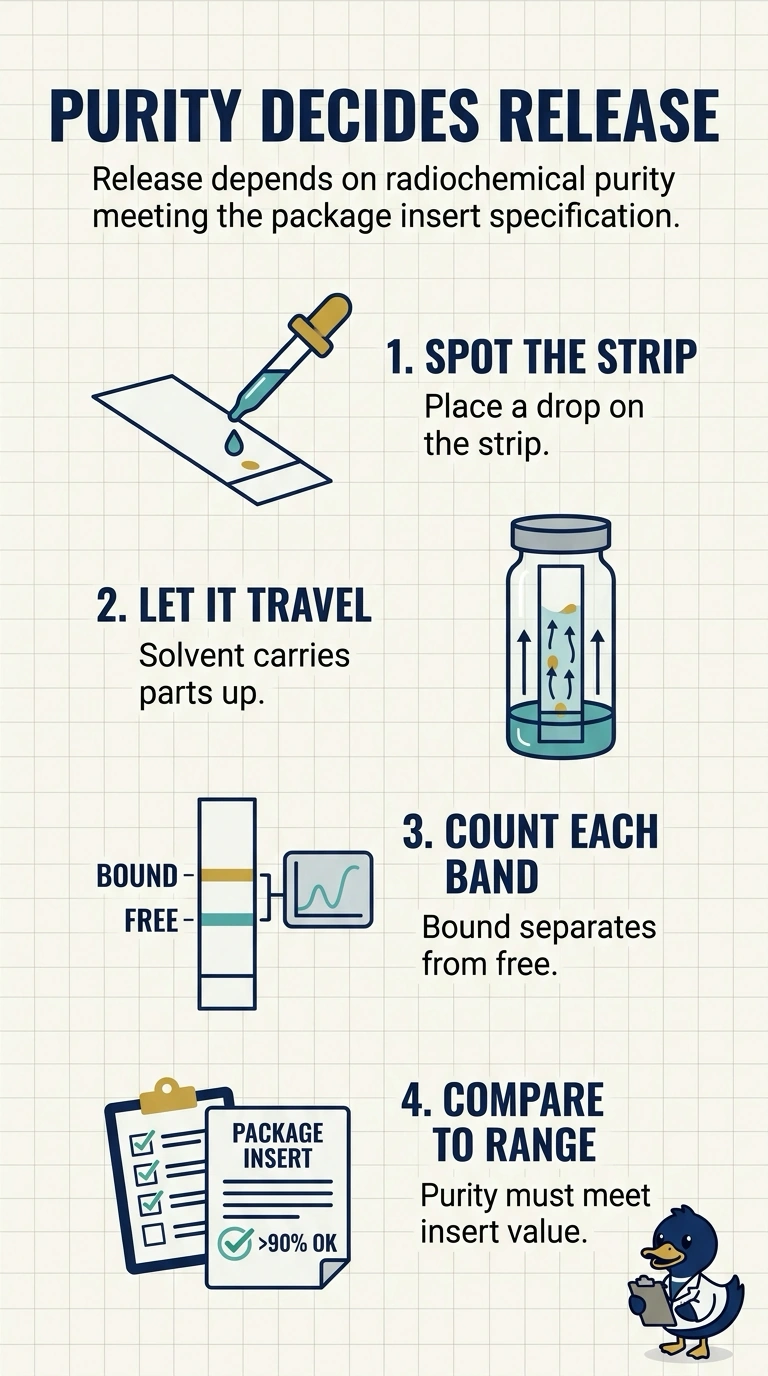
You should let the chromatography result guide release: it shows how much activity remains in the intended chemical form, so radiochemical purity is the key measurement. A clear appearance does not rule out free pertechnetate; radionuclidic purity, aluminum breakthrough, and endotoxin content do not answer whether the chromatographic specification is met.
Full Explanation
The determining measurement is radiochemical purity (RCP), which shows what fraction of the technetium-99m activity is in the intended chemical form rather than present as free pertechnetate. Since chromatography shows a large free-pertechnetate peak, compare the measured RCP with the package insert specification; if it fails that limit, do not release the preparation. A clear appearance does not establish chemical form and cannot resolve this finding. Radionuclidic purity concerns unwanted radioactive nuclides, not the distribution of technetium-99m among chemical forms, so it does not determine whether the preparation meets its RCP limit. Aluminum breakthrough testing checks for aluminum ion contamination; an acceptable result would not show that the labeled product meets its RCP specification. Endotoxin testing assesses pyrogen contamination and does not measure free pertechnetate. These are valid quality attributes, but none substitutes for the specified RCP measurement in this case. Exam caveat: release procedures and acceptance limits are product-specific, so follow the applicable package insert and local procedures rather than assuming identical requirements for every preparation. Practical check: use the chromatography system and solvent specified for this product, calculate RCP by the prescribed method, and compare the result with the stated limit before release.