
A patient two minutes into a slow intravenous radiopharmaceutical injection develops widespread hives, audible wheeze, and throat tightness while the syringe is still connected. The emergency drugs are in the adjacent room and the technologist is alone at the bedside. Which immediate action best manages this administration reaction?
Select an answer to reveal the explanation.
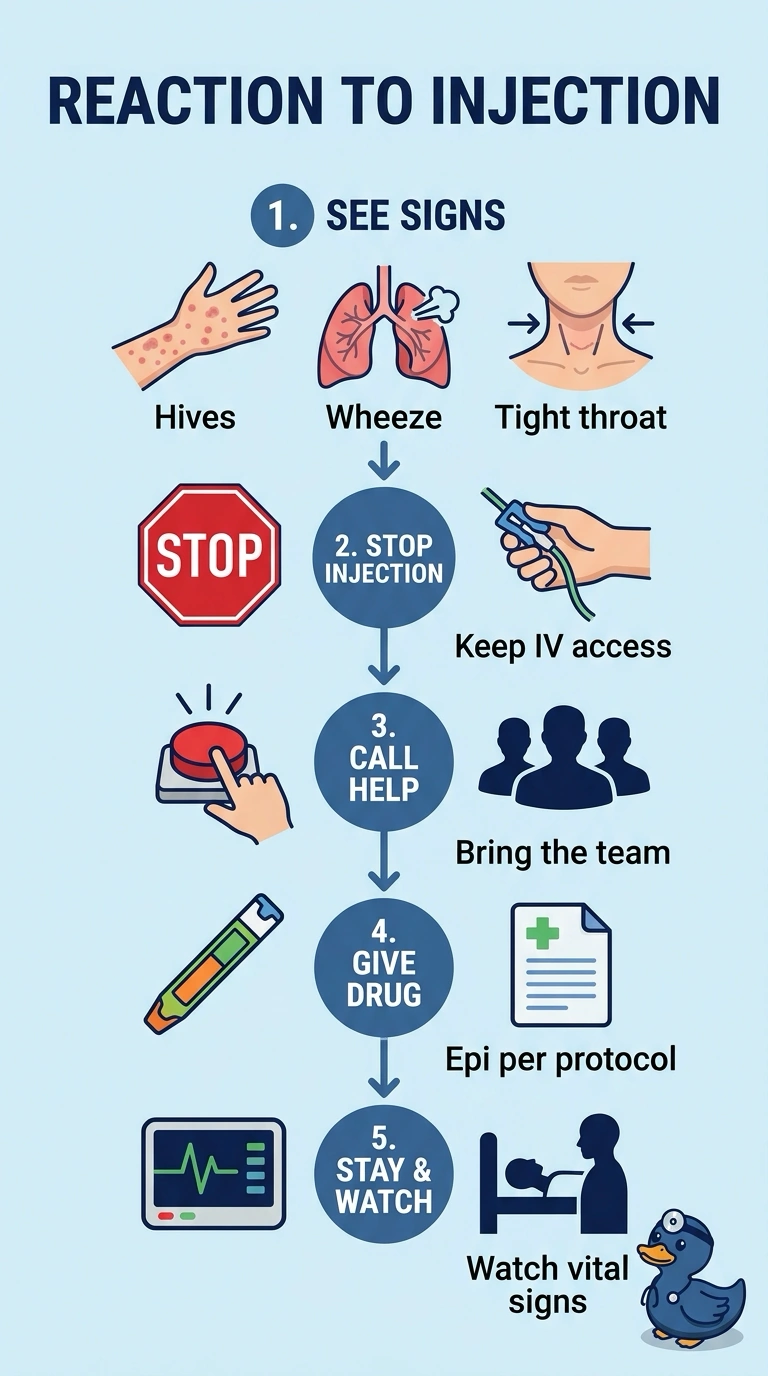
Short Explanation
Widespread hives, wheezing, and throat tightness signal anaphylaxis, not just an IV-site problem. Stop the injection, call for emergency help, and give epinephrine per protocol—like responding to a fire alarm, you act first rather than investigate.
Full Explanation
The correct response addresses the three immediate priorities in suspected anaphylaxis during radiopharmaceutical administration: stop the exposure, summon emergency assistance, and give epinephrine promptly according to the reaction protocol. Widespread hives together with wheeze and throat tightness indicates a potentially life-threatening systemic reaction; treatment should not wait for progression or for a complete assessment. Intravenous epinephrine through an existing line is not the preferred initial route for anaphylaxis: dosing errors and serious cardiovascular effects are more likely, and IV epinephrine is generally reserved for selected refractory cases with appropriate monitoring and expertise. Obtaining a complete set of vital signs before intramuscular epinephrine is also a harmful delay; assessment should occur alongside treatment, not serve as a prerequisite. Stopping the injection, calling for help, giving oxygen, and monitoring the airway are valuable supportive measures, but retrieving epinephrine before administering it leaves the primary life-saving treatment delayed. Exam caveat: epinephrine route and dose depend on the local protocol and patient context, and cardiac arrest or refractory shock may require a different advanced-care approach. Practical check: confirm the protocol-designated epinephrine formulation, dose, and route, while ensuring someone is dispatched to bring emergency equipment and summon the response team.