
An outpatient arrives for a gastric emptying study planning to have coffee and juice with the usual breakfast, and the patient follows a special diet at home. The radiologist wants the emptying curve compared with the laboratory's normal range. Which instruction keeps the gastric emptying result comparable to that normal range?
Select an answer to reveal the explanation.
Short Explanation
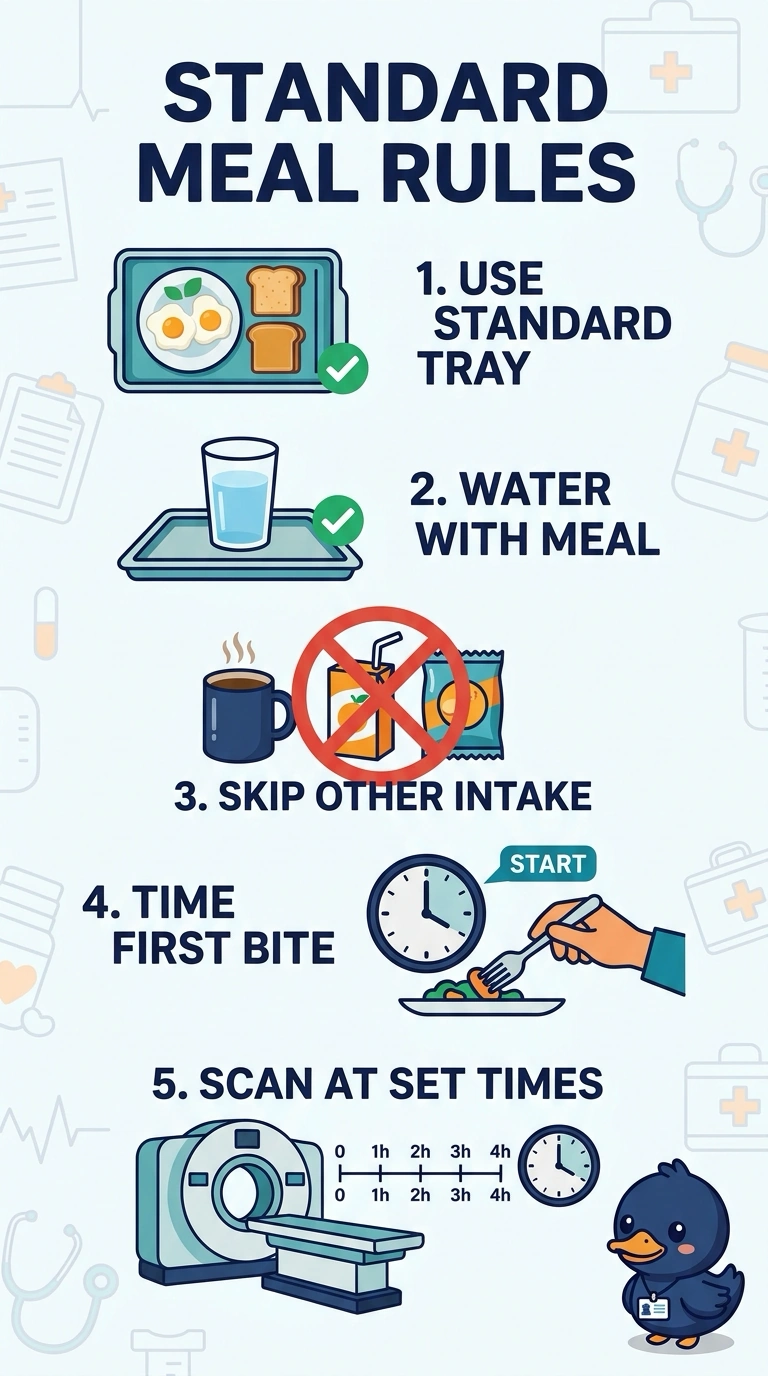
Your emptying curve only means something next to a range that was built from the same meal. Keep the patient to the standardized meal and its accompanying water, and the numbers line up with the lab's normals. Extra coffee or juice is like swapping rulers halfway through a measurement.
Full Explanation
Reference values for gastric emptying come from a defined solid meal of known composition, typically low in fat, and the imaging schedule is tied to the first bite. Meal composition can affect emptying, so coffee, juice, or a personal meal may change the result, and the half-time you report may not be comparable with the reference curve. Serving the specified meal with its accompanying water while other intake waits keeps the stimulus consistent with the standard used for the laboratory's normal range. Letting the patient keep the usual coffee and juice adds intake not included in the standard meal, and everyday habits are not what the reference range was measured on. Substituting a high-fat liquid meal changes both calorie density and the physical form of the test meal, so the numbers may not be comparable with the solid-meal reference range. Starting with an overnight fast and offering a free-choice meal skips the standard stimulus and leaves no valid comparator. Exam caveat: some labs validate an alternate meal, but the reference range must come from that same meal. Practical check: verify the tray contents and the first-bite time before the patient starts eating.