
A patient in the injection room begins to cry after learning the scan will run late and asks what happens next. Other patients are within earshot, the patient is upset, and the plan has to be clear enough to repeat back. Which combination of verbal and nonverbal communication meets all three needs?
Select an answer to reveal the explanation.
Short Explanation
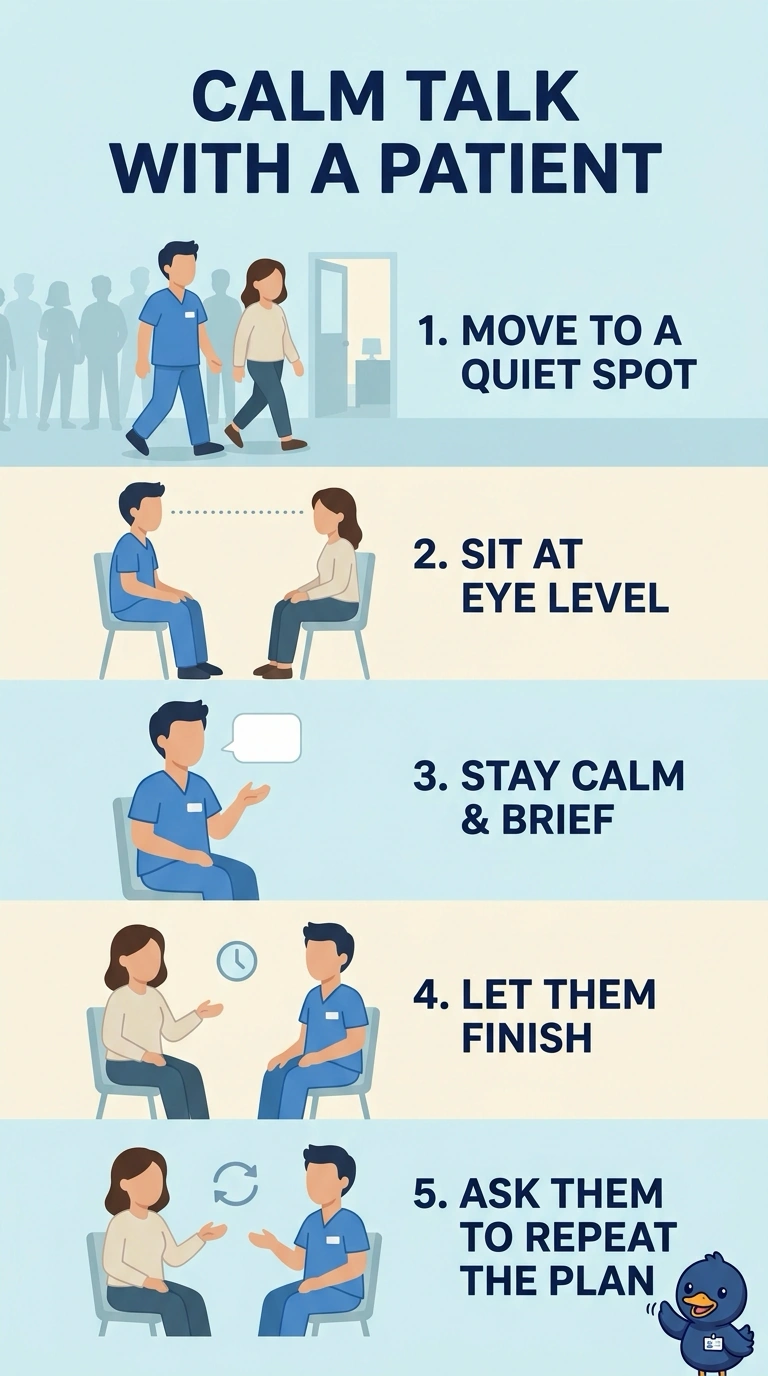
You’ll help the patient feel safer by moving somewhere quiet, sitting at eye level, and explaining the next steps in calm, brief sentences—like giving them a clear route to follow. Then use teach-back and ask them to repeat the plan; asking if they have questions is helpful, but it doesn’t confirm they understood.
Full Explanation
Moving to a quiet spot supports privacy and lets the patient speak more freely. Sitting at eye level can help make the interaction feel more approachable. Calm, brief sentences can make the information easier to process when someone is upset; a lengthy explanation in clinical language may be harder to follow. Teach-back asks the patient to explain the plan in their own words, helping the technologist check understanding. An invitation to ask questions is useful, but does not by itself verify understanding. The detailed clinical explanation is less suitable for this upset patient, and speaking where other patients can hear does not protect privacy. Frame teach-back collaboratively, as a way to check how clearly you explained the plan. First check for listeners, then speak calmly and give the patient time to respond.